
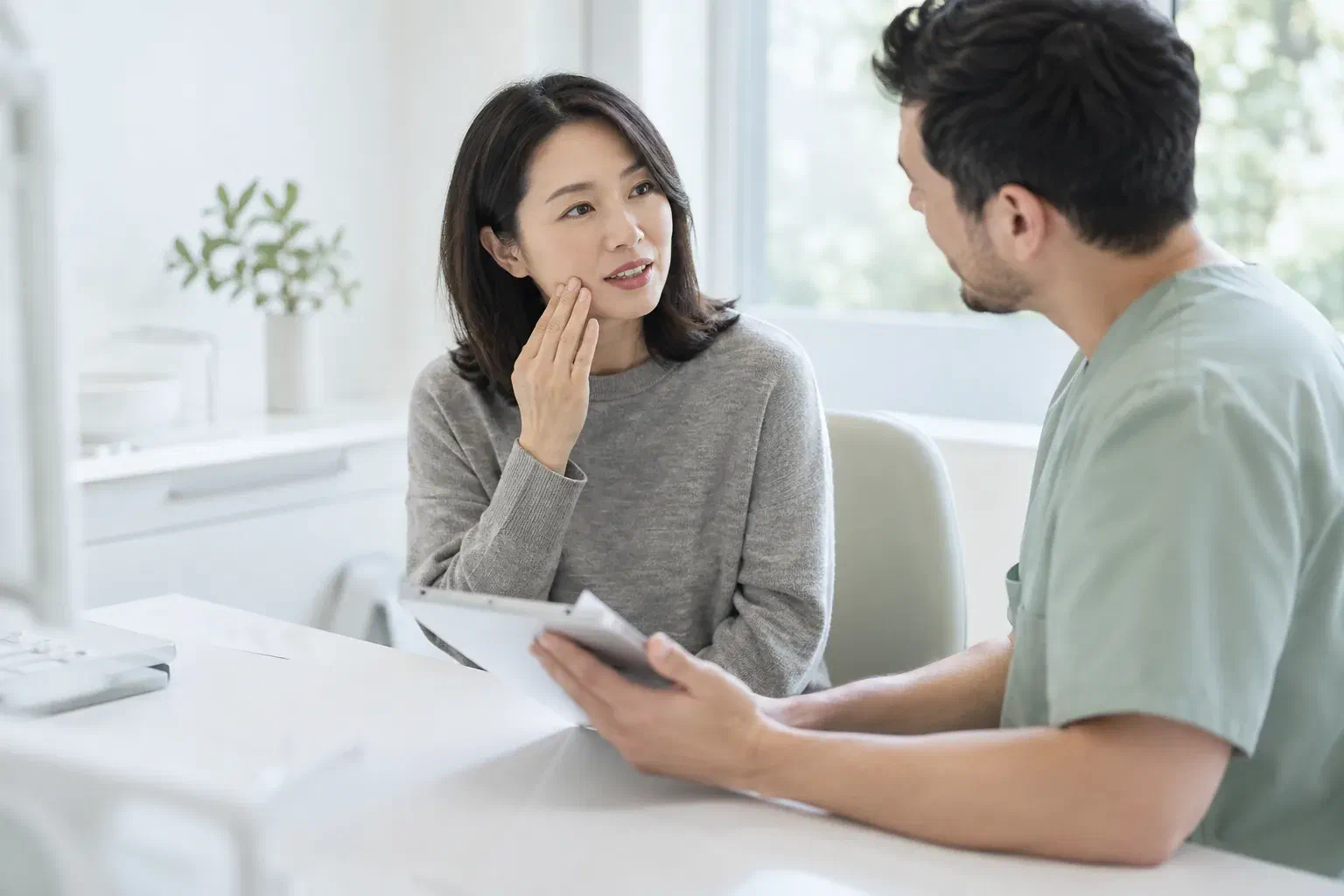
Illustrative patient describing tooth sensitivity during a dental conversation
General & Family Dentistry

Treatment for Sensitive Teeth in Old Milton

A tooth that has been fine for decades can suddenly object to cold or the toothbrush. Close to Old Milton, our team finds out why an older filling or a familiar tooth has started reacting, then explains the care that fits.

When a familiar tooth changes

Why would a tooth that never bothered you start now?

Teeth and gums keep changing over the years, even when your routine stays the same. A gum line can slowly recede, enamel can wear at the edges, and a filling placed long ago can develop a gap or crack. Any of these may show up first as a new reaction to cold tea, winter air, or a brush stroke along the gum.

That is why a fresh sensitivity in a long-trusted tooth deserves a look rather than a new tube of toothpaste. Our practice on Bronte Street, near Milton’s historic downtown, starts by asking what you feel and then examines the teeth, the gums, and any older dental work. Exposed root surface is common, though it is far from the only explanation.

There is no need to keep testing the tooth to convince anyone. Describe how it behaves in daily life and whether it is steady, improving, or getting worse. With that history and the examination, the dentist can tell you what seems to be happening, which treatment suits it, and how you will know if it is working.

Talk to us about a changed tooth
Illustrative soft toothbrush, toothpaste, and drinking water for gentle daily care
Reading the signs

Similar feelings, different stories

Pay attention to three things: the place, the trigger, and how long it lasts. Leave the diagnosis to the examination and simply report what you notice.

A sharp flash that fades fast

Cold drinks, a breath of cold air, or the bristles near the gum are typical triggers. Say whether the reaction comes from several teeth or a single spot. Brief does not always mean minor, particularly when it is new or getting harder to ignore.

Discomfort that hangs on or starts by itself

Let us know if the ache continues once the cold is gone, keeps you awake, or appears with no obvious cause. That kind of pattern can change how quickly you should be seen and which tests make sense, so mention it when you call.

A reaction that followed recent work or a new habit

Fresh dental treatment, whitening, a switch in toothpaste, a bump to the mouth, or a bite that feels different are all worth reporting. The timing is a helpful hint, yet it does not settle the question, so the area should still be examined.

Call without delay about swelling, a broken tooth or filling, pain on biting, or symptoms that are steadily worsening. If you have a checkup on the calendar, tell us about the new concern so we can judge whether it should be moved up.

The value of a proper look

Name the cause, then choose the care.

Underneath enamel, and below the gum on the root, lies dentin. Once that layer loses its covering, temperature and touch can register sharply. A worn filling, a cracked cusp, or decay along an old margin can feel almost identical, so examination is what sorts them out. Care then follows the finding, whether that means a home product, an in-office application, or a repair.

Relief may build gradually or need adjusting, and it cannot be promised to last. Ask what the chosen treatment is supposed to do, exactly how to use it, and when your response will be checked. You should also leave knowing what to do if the discomfort stays the same or changes character.

Patient information: ADA MouthHealthy — sensitive teeth and possible causes

A clearer picture of old dental work

Fillings and crowns placed many years ago can be part of the story. The examination helps show whether a restoration has worn, opened, or is unrelated. Ask the dentist to explain what they see so any recommendation makes sense to you.

No more trial and error on the shelf

Tell us which toothpastes and rinses you have tried, for how long, and with what effect. Knowing that saves you from buying the same kind again, and the team can explain whether a different product would act in a different way.

A cleaning routine that respects the sore spot

It is easy to start skipping a tender area, especially along a receding gum. Point out where brushing hurts so the method and tools can be reconsidered. You want a routine you can keep up comfortably while the treatment is given time and reviewed.

A visit from Old Milton

Listen, look, explain, then plan

The steps that follow depend on what turns up. If you worry a test might set the tooth off, tell the dentist first, and each part can be described before it starts.

  1. Your account of the problem

    Explain when it began, what sets it off, roughly where it is, and how long each episode lasts. Note any night pain and recent treatment. It is perfectly fine if you cannot point to one exact tooth; that is part of what the visit is for.

  2. An examination of teeth, gums, and restorations

    The dentist looks at the surfaces involved, any older fillings or crowns, and the gum line. X-rays or simple tests may be suggested to clarify the source. You can ask what each test is for, and you can pause whenever you need to.

  3. A plain-language explanation

    The dentist describes what has been found and what remains uncertain. If a gentle approach is appropriate, you will hear how to use it and how it will be followed up. If a filling or tooth needs treatment, ask about choices, limitations, and timing.

  4. Instructions and a time to reassess

    Before leaving, confirm your home routine, any treatment done that day, and when to check in. Ask which signs mean you should call sooner. A product trial needs a defined goal and review, rather than continuing open-ended while the cause is still unclear.

Looking after tender teeth

Soft brush, steady habits, no testing

Your instructions should match your diagnosis and whatever product or treatment you received. Advice following a repair is not the same as advice for a desensitizing paste.

Resist checking with cold

Sipping ice water to see whether the tooth has settled keeps irritating it. Brush with a soft head and the method you were shown, without bearing down on the tender area. If you still cannot clean it comfortably, let us know.

Use products the way they were meant

Desensitizing pastes usually need steady use over time before their effect is clear. Follow the label and the dentist’s advice instead of layering several products or using them more often. Ask before carrying on with any whitening that seems to make things worse.

Keep track of what matters

If it helps, jot down the trigger, how long the discomfort lasts, and whether meals and brushing are easier. Avoid provoking the tooth deliberately. Call us if pain increases, begins happening on its own, or is not improving the way it should.

Treatment directions

Different causes, different decisions

For each option, ask what it is meant to accomplish. Exposed root surface, a worn or broken restoration, and a problem within the tooth each call for their own approach.

When the findings point to conservative care

Calming an exposed surface

The dentist may suggest a home desensitizing product or a professional application on a suitable surface. Ask how often to use it, what it will not fix, and when it will be reviewed. It belongs after a diagnosis, never in place of one.

When a restoration or tooth needs work

Repairing a tooth or an older filling

A worn, leaking, or damaged filling, or decay around it, may need a repair or another protective measure. The right choice depends on the problem and the amount of tooth remaining. Ask why one option is preferred and what else might be reasonable.

When the diagnosis calls for more

Treatment for the gums or the tooth’s interior

Certain findings lead to a separate conversation about gum care or treatment inside the tooth, and a referral may be considered. Sensitivity by itself does not mean a root canal is needed; that decision rests on the diagnosis and the available options.

Old Milton questions

Straight answers for teeth with a long history

Ask about old fillings, gum changes, the products you have tried, and how progress will be measured. Sensitivity is one word for several possible problems.

(905) 876-4488
Can a filling I have had for twenty years suddenly cause sensitivity?
It can be involved. Restorations can wear, crack, or develop decay at the edges over time, but sensitivity near an older filling may also have another cause. The dentist examines the filling and the surrounding tooth before suggesting whether anything should be done.
My gums seem lower than they used to be. Is that why cold hurts?
Receding gums can expose root surface, which may react to cold or touch. It is one possible explanation among several. Mention the change, and the dentist will check both the gums and the teeth before recommending care.
Is it normal for teeth to get more sensitive with age?
Changes over the years, such as gum recession or wear, can make sensitivity more likely for some people, but it should not simply be accepted as normal. New or increasing sensitivity is worth having assessed so the cause can be identified.
Do I have to point out the exact tooth before I book?
No. Many people can only describe a general area or one side of the mouth. Tell us what you feel and when; finding the source is part of the examination, and you do not need to test the tooth yourself first.
If a special toothpaste takes the edge off, can I skip the checkup?
Easing the feeling does not rule out decay, a cracked tooth, or a failing filling. Have new or unexplained sensitivity examined and mention the toothpaste you used and how well it worked. The findings decide whether more care is needed.
Does sensitivity near the gum mean I will need a root canal?
Not on its own. The need for any treatment, including root canal treatment, depends on the history, examination, and test results. Ask what has been diagnosed and why the proposed treatment suits that particular tooth.
Sensitivity care near Old Milton

Bring us the tooth that has changed its mind.

Call our Bronte Street practice to describe what you are noticing and arrange a suitable assessment. Tell us if the pain lingers, comes on by itself, or started after recent dental work, and we will help you choose the next step.

The right treatment depends on the cause. Report new swelling or strong, worsening pain promptly rather than relying on products alone.

Visit Milton Dental Clinic
Unit 1, 342 Bronte St. S, Milton, ON L9T 5B7
Get directions Clinic hours
Monday–Thursday
11am–7pm
Friday–Sunday
By appointment only

Areas we serve

  • Milton
  • Oakville
  • Mississauga
  • Georgetown
  • Halton Hills
  • Acton
  • Campbellville
  • Brampton
  • Burlington
  • Puslinch
  • Rockwood
  • Erin
  • Caledon
  • Etobicoke
  • Old Milton
  • Bronte Meadows
  • Timberlea
  • Dorset Park
  • Dempsey
  • Clarke
  • Beaty
  • Coates
  • Harrison
  • Scott
  • Willmott
  • Ford
  • Bowes
  • Cobden
  • Walker
  • Mountain View
  • Milton Heights
  • Hawthorne Village
  • Valley View
  • Fallingbrook
  • Nassagaweya
  • Trafalgar
  • Esquesing
  • Nelson
  • Brookville
  • Moffat
  • Glen Williams
  • Norval
  • Limehouse
  • Stewarttown
  • Ashgrove
  • Hornby
  • Silver Creek
  • Speyside
  • Scotch Block
  • North Oakville
  • River Oaks
  • Glen Abbey
  • West Oak Trails
  • Palermo
  • Bronte Creek
  • College Park
  • Joshua Creek
  • Uptown Core
  • Preserve
  • Iroquois Ridge
  • Lisgar
  • Meadowvale
  • Meadowvale Village
  • Churchill Meadows
  • Erin Mills
  • Central Erin Mills
  • Streetsville
  • East Credit
  • Creditview
  • Heartland
  • Sheridan
  • Mount Pleasant
  • Credit Valley
  • Huttonville
  • Churchville
  • Springbrook
  • Northwest Brampton
  • Bram West
  • Fletcher's Meadow
  • Fletcher's Creek South
  • Alton Village
  • Orchard
  • Millcroft
  • Headon Forest
  • Tansley
  • Brant Hills
  • Tyandaga
  • Kilbride
  • Lowville
  • Aberfoyle
  • Morriston
  • Arkell
  • Hillsburgh
  • Freelton
  • Carlisle
  • Waterdown
  • Flamborough
  • Mountsberg

How can we help?

Milton Dental Clinic

Have a question about your smile? Choose the option that works best for you.

For urgent dental concerns, please call.
Messages are reviewed during clinic hours.