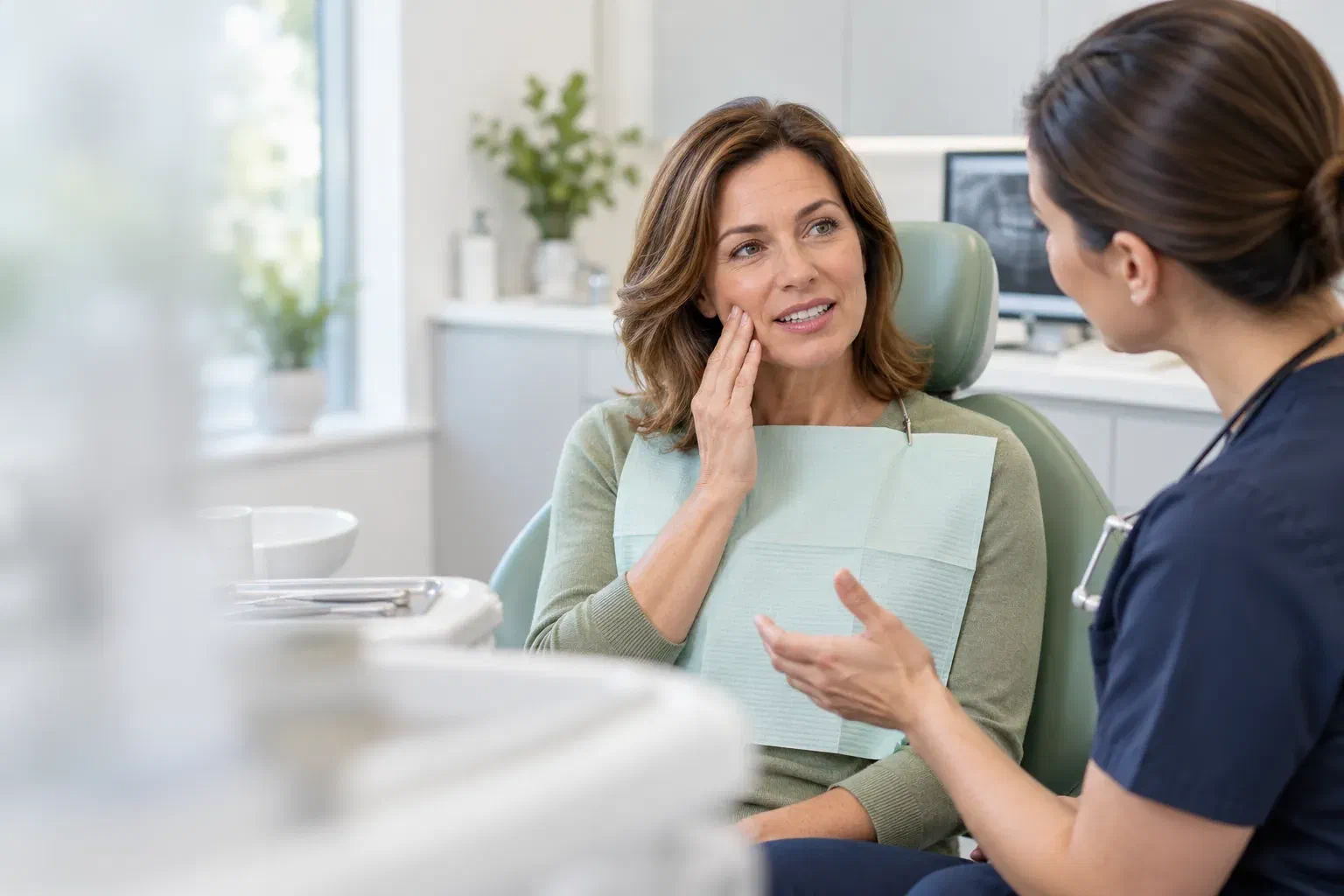
Illustrative consultation about tooth sensitivity and enamel wear
Restorative Dentistry

Acid-Wear Treatment in Brampton

Erosion can show up in a teenager who loves energy drinks as easily as in a parent with reflux. Brampton households can have acid wear assessed, its causes explained, and treatment planned around the whole family.

Erosion at any age

Who in your household is sipping all day?

Erosion is not only an adult problem. Any time acid softens enamel often enough, the surface slowly dissolves, whether the person is fifteen or fifty. It is a separate process from decay, which comes from bacteria, though one tooth can have both. Typical signs are sensitivity, smooth dips and thin-looking edges.

In a busy home, the sources are easy to miss: energy drinks before practice, juice boxes in lunches, an adult's nightly heartburn, or a dry mouth from new medication. The way teeth meet can focus the damage in certain places. Knowing who is exposed to what lets each person's care address the cause.

Brampton parents sometimes book the first visit for themselves and then realize a teenager has similar symptoms. Bring what you know about everyone's drinking habits, when teeth feel sensitive and any bite changes.

Book an assessment for enamel wear
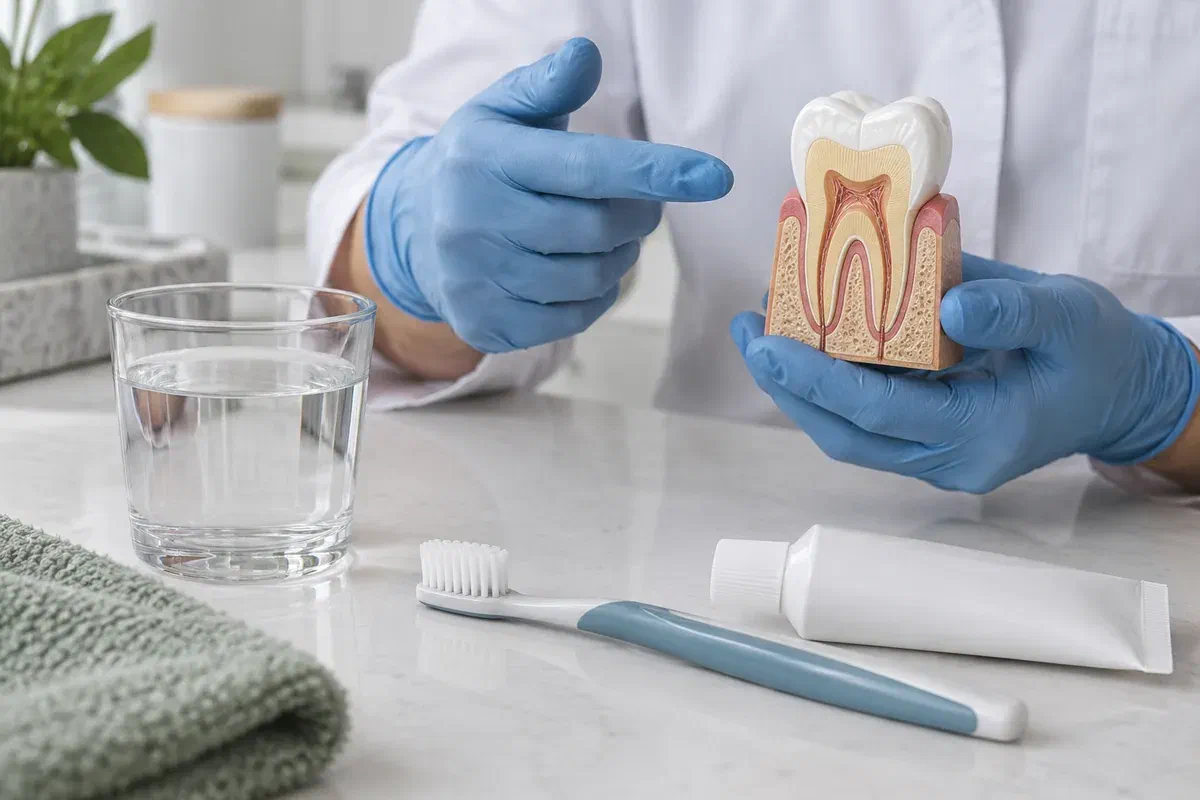
Water and gentle oral-care supplies illustrating an enamel-protection conversation
Signs at home

What to watch for in yourself and your kids

A wince at a cold drink or a tooth that looks different can be the first clue. An exam helps tell erosion apart from cavities, over-brushing, grinding and other reasons for sensitivity.

Wincing at cold

When enamel thins, cold drinks or ice cream can cause a short, sharp feeling. Mention which teeth react, whether heat does too, and how long the feeling lasts afterward.

Edges you can almost see through

Front teeth may look translucent, slightly shorter or chipped at the tips. Photographs and an exam help show whether the wear is still going on, has stopped, or has a different cause.

Smooth dips on back teeth

Shallow, rounded hollows on chewing surfaces, or fillings that look higher than the tooth around them, can point to erosion. The bite is checked too, since grinding often adds to acid wear.

Colour change does not prove erosion on its own. Before buying whitening products or a new toothpaste for anyone in the family, have the cause looked at.

Why early care helps

Catching it early keeps more options open

The first step is usually cutting back repeated acid contact and calming any sensitivity. That might mean changing when certain drinks are served, adding fluoride, or suggesting an adult see their doctor if reflux or frequent vomiting seems to be a factor.

Enamel that dissolves does not grow back, at any age. When the loss affects comfort, chewing or appearance, restorations can be considered along with prevention. How much healthy enamel is left and where the wear is concentrated guide whether a small bonded repair or broader work makes sense.

Patient information: ADA — dietary acids and teeth

Specific, not sweeping

Looking at each person's habits, symptoms and wear pattern makes advice practical, rather than banning every acidic food in the house.

Prevention that protects repairs

Reducing exposure before restoring gives any repair a better chance. It also gives everyone clear habits to work on at home.

The right care for each tooth

Some teeth need only watching and comfort care; others need rebuilding. The plan shows what to deal with now and what to keep an eye on.

How we assess wear

One visit to understand, more if repair is needed

The appointment connects symptoms with what can be seen. Treatment can be staged, especially when several teeth are worn or a medical cause of acid needs follow-up.

  1. Hear the whole story

    Tell us about sensitivity, appearance changes, eating and drinking and health concerns. For teens, sports and energy drinks are worth mentioning; for adults, reflux, dry mouth and medications.

  2. Chart the surfaces

    The dentist examines enamel, fillings and the bite. Photos or scans may record a starting point, and X-rays are only taken when they would answer a specific question.

  3. Explain the options

    You will hear the likely causes, ways to manage sensitivity and whether anything needs restoring now. Ask which steps deal with the cause and which rebuild what is lost.

  4. Track progress

    Follow-up compares symptoms and surfaces with the first records. The plan changes if wear continues, symptoms shift or a restoration needs shaping.

Habits for the household

Small swaps the whole family can make

Follow the steps recommended for each person rather than trying several strong products at once. The best routine is one everyone can stick with comfortably.

Water between meals

Long sipping sessions keep teeth in contact with acid. Talk with us about the drinks your household uses most, including sugar-free ones, and make plain water the usual choice between meals.

Soft brushes all round

A soft toothbrush and the fluoride toothpaste advised for each person are enough. Ask how long to wait after acidic food or drink before brushing, instead of scrubbing straight away.

Note recurring symptoms

Keep track of sensitivity, heartburn or dryness and bring notes to review visits. When a health condition causes repeated exposure, a doctor may need to be involved.

What treatment can look like

From watching closely to rebuilding

No single restoration suits every eroded tooth. Ask how an option fits the damage, the symptoms and the chance of more acid exposure.

For limited wear

Prevention with check-ins

Habit changes, fluoride and recorded reviews may be enough when teeth work well and symptoms are manageable. Each review looks for change rather than assuming wear has stopped.

For specific spots

Composite bonding

Resin can replace a localized area of lost tooth or cover an exposed surface. The dentist checks the available bonding surface and bite before recommending it.

For extensive wear

Broader restoration

Significant wear may call for an assessment of multiple teeth and the bite. Partial-coverage restorations, crowns or staged treatment can be discussed where appropriate.

Family questions

What parents and adults often ask

These questions come up when someone in the household notices sensitivity or thinning teeth. An exam decides what applies to each person.

(905) 876-4488
Can energy drinks cause erosion in teenagers?
Many energy drinks are acidic, and regular sipping can wear enamel at any age. Teens also tend to drink them over long periods. If your teen uses them, mention it at their appointment so the dentist can look for early signs.
Does morning sickness during pregnancy affect enamel?
Repeated vomiting brings stomach acid into contact with teeth. Rinsing with water afterward and waiting before brushing are common suggestions. Let your dentist know if you are pregnant so advice and timing of any care can be adjusted.
What is fluoride varnish, and could it help?
Fluoride varnish is a coating applied to teeth at the dental office. It can help strengthen enamel and may reduce sensitivity for some people. Your dentist will advise whether it suits your teeth and how often it might be repeated.
Do we have to cut out citrus fruit completely?
Usually not. Having acidic foods with meals rather than as frequent snacks can reduce exposure. The aim is a balanced pattern, and the dentist can suggest changes that fit your household rather than strict bans.
Why is one side of my mouth more worn than the other?
Wear patterns can reflect how you chew, how teeth meet, where drinks tend to pool, or a habit such as clenching. Mapping where the loss is helps the dentist work out which factors are most likely in your case.
Can family members from Brampton be seen on the same day?
Ask when you call. We can try to arrange back-to-back appointments so a parent and teen, for example, can be assessed during one trip. Each person still has their own exam and plan.
Acid-wear care for Brampton households

Get answers for everyone at home.

Brampton families can visit our Milton clinic to talk about sensitivity, thinning edges or worn back teeth. We will explain each person's wear pattern and suggest a practical order of prevention, monitoring and repair.

If anyone develops severe pain or swelling, phone us. Online requests are not a substitute for urgent care.

Visit Milton Dental Clinic
Unit 1, 342 Bronte St. S, Milton, ON L9T 5B7
Get directions Clinic hours
Monday–Thursday
11am–7pm
Friday–Sunday
By appointment only

Areas we serve

  • Milton
  • Oakville
  • Mississauga
  • Georgetown
  • Halton Hills
  • Acton
  • Campbellville
  • Brampton
  • Burlington
  • Puslinch
  • Rockwood
  • Erin
  • Caledon
  • Etobicoke
  • Old Milton
  • Bronte Meadows
  • Timberlea
  • Dorset Park
  • Dempsey
  • Clarke
  • Beaty
  • Coates
  • Harrison
  • Scott
  • Willmott
  • Ford
  • Bowes
  • Cobden
  • Walker
  • Mountain View
  • Milton Heights
  • Hawthorne Village
  • Valley View
  • Fallingbrook
  • Nassagaweya
  • Trafalgar
  • Esquesing
  • Nelson
  • Brookville
  • Moffat
  • Glen Williams
  • Norval
  • Limehouse
  • Stewarttown
  • Ashgrove
  • Hornby
  • Silver Creek
  • Speyside
  • Scotch Block
  • North Oakville
  • River Oaks
  • Glen Abbey
  • West Oak Trails
  • Palermo
  • Bronte Creek
  • College Park
  • Joshua Creek
  • Uptown Core
  • Preserve
  • Iroquois Ridge
  • Lisgar
  • Meadowvale
  • Meadowvale Village
  • Churchill Meadows
  • Erin Mills
  • Central Erin Mills
  • Streetsville
  • East Credit
  • Creditview
  • Heartland
  • Sheridan
  • Mount Pleasant
  • Credit Valley
  • Huttonville
  • Churchville
  • Springbrook
  • Northwest Brampton
  • Bram West
  • Fletcher's Meadow
  • Fletcher's Creek South
  • Alton Village
  • Orchard
  • Millcroft
  • Headon Forest
  • Tansley
  • Brant Hills
  • Tyandaga
  • Kilbride
  • Lowville
  • Aberfoyle
  • Morriston
  • Arkell
  • Hillsburgh
  • Freelton
  • Carlisle
  • Waterdown
  • Flamborough
  • Mountsberg

How can we help?

Milton Dental Clinic

Have a question about your smile? Choose the option that works best for you.

For urgent dental concerns, please call.
Messages are reviewed during clinic hours.