Brief, sharp reactions
A cold drink that suddenly stings may mean enamel has thinned over the softer layer beneath. Tell us which teeth react, whether heat does the same, and how long it takes to settle.


Some eroded teeth can safely wait, while others are better repaired soon. For Burlington patients, acid-wear care begins by working out which is which, then building protection and any repair around the real cause.
Not every worn tooth needs a filling. Erosion happens when acid repeatedly softens enamel until thin layers dissolve; it is a chemical loss, unlike the bacterial damage behind a cavity, though the two can appear together. Early signs include sensitivity, smooth hollows and edges that look faint or fragile.
Before anyone reaches for a drill, the useful question is why the enamel is going. Juice or pop through the day, wine, reflux, frequent vomiting, low saliva and the way your teeth meet can each leave a recognizable pattern. When the cause is clear, the decision to repair or monitor becomes much easier.
People visiting from Burlington often tell us they assumed their habits were too ordinary to mention. They rarely are. Describe what you drink, when teeth feel sensitive and whether your bite has changed.
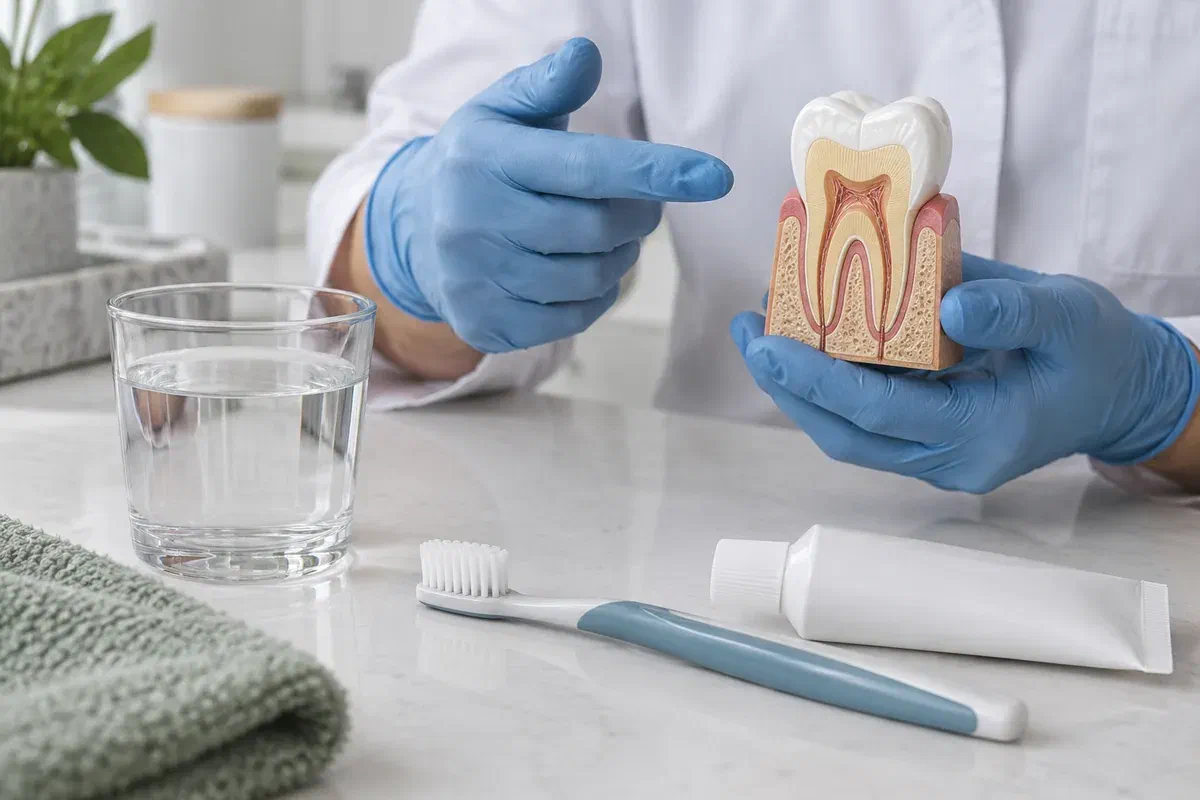
Erosion often first shows up as a reaction to cold or a small change in a tooth's look. An exam helps separate it from decay, abrasion from brushing, grinding and other reasons for sensitivity.
A cold drink that suddenly stings may mean enamel has thinned over the softer layer beneath. Tell us which teeth react, whether heat does the same, and how long it takes to settle.
Front teeth can become shorter or develop translucent, slightly ragged edges. Photographs alongside the exam help show whether the wear is still progressing, has been stable for a while, or is a different issue.
Rounded hollows in chewing surfaces, or fillings that look raised compared with the enamel around them, suggest surface loss. The dentist checks how your teeth meet because grinding and acid often act together.
Colour change on its own does not confirm erosion. It is wise to avoid whitening or switching products until the reason for the change is known.
The early focus is reducing ongoing acid contact and settling sensitivity. Suggestions may involve the timing of certain drinks, a fluoride product, or a word with your doctor if reflux or repeated vomiting might be a factor.
Dissolved enamel cannot be grown back. Where the loss affects comfort, chewing or appearance, restorative work can be planned alongside prevention. How much enamel remains, and where wear is concentrated, shapes whether a small bonded repair is enough or a more involved approach is wiser.
Patient information: ADA — dietary acids and teeth
Your habits, symptoms and the location of wear point to specific changes, rather than a long list of foods to give up.
Reducing exposure first means a restoration starts on steadier ground, and you have practical steps to work on between visits.
Some teeth need observation and comfort care; others need restoring. The plan makes it clear which to address first and which to keep under review.
The appointment links what you feel with what the dentist finds. Care can be staged, particularly when many teeth are involved or a medical cause of acid exposure needs attention.
Describe sensitivity, any changes in appearance, eating and drinking habits and health concerns. Bring a list of medications and mention reflux or dryness, even if they seem unrelated.
The dentist examines each surface, existing restorations and your bite. Photos or scans can document the starting point, and X-rays are taken only when they would answer a particular question.
Go over likely causes, ways to manage sensitivity, and whether restoring anything now makes sense or can wait. Ask which steps address the cause and which replace structure that has already been lost.
Follow-up compares symptoms and surfaces with your first records. The plan is adjusted if wear continues, symptoms change, or a restoration needs shaping.
Use the steps recommended for your teeth rather than layering several strong products at once. The aim is a routine you can keep up comfortably.
Drawing out an acidic drink over an afternoon means hours of exposure. Talk with us about what you drink most, including sugar-free options, and choose water between meals when you can.
A soft toothbrush and the fluoride toothpaste advised for you are usually all you need. Ask how long to wait after acidic foods before brushing, instead of scrubbing at once.
Track when sensitivity, heartburn or dry mouth appears and bring it to reviews. Repeated exposure from a health condition may need medical care alongside dental care.
These questions come up when people weigh repair against waiting. Your own exam determines what is appropriate.
Thinning teeth, worn surfaces or sensitivity you can't explain? Book a visit to our Bronte Street practice from Burlington and talk it through with us. We will explain what the pattern suggests and map out prevention, monitoring and repair in a sensible order.
If pain becomes intense or swelling develops, call us. Online forms are not suitable for urgent needs.
