Sensitivity in several places
Cold may bother teeth on both sides or top and bottom. Tell us roughly where you feel it, whether heat causes it too, and how long it takes to ease after you stop drinking.


When erosion has reached several teeth, the real question becomes where to begin. Caledon patients can have every worn surface assessed, the acid source addressed, and restoration sequenced into a workable plan.
By the time several teeth feel sensitive or look shorter, erosion has usually been at work for years. Acid softens enamel over and over until thin layers dissolve. Bacteria play no part in that, so it is distinct from decay, though cavities can develop in the same mouth. Wide wear may show as cupped molars, translucent edges and fillings that stand proud.
A good plan rests on two things: slowing the acid and deciding the order of repair. Frequent acidic drinks, reflux, vomiting, low saliva and a bite that has shifted as teeth shortened can all play a part. Starting with the cause keeps new restorations from facing the same conditions that wore the originals down.
Across Caledon, from Bolton to the smaller villages, people often wait until several teeth bother them. Bring your history of drinks, health concerns and sensitivity, plus any old records.
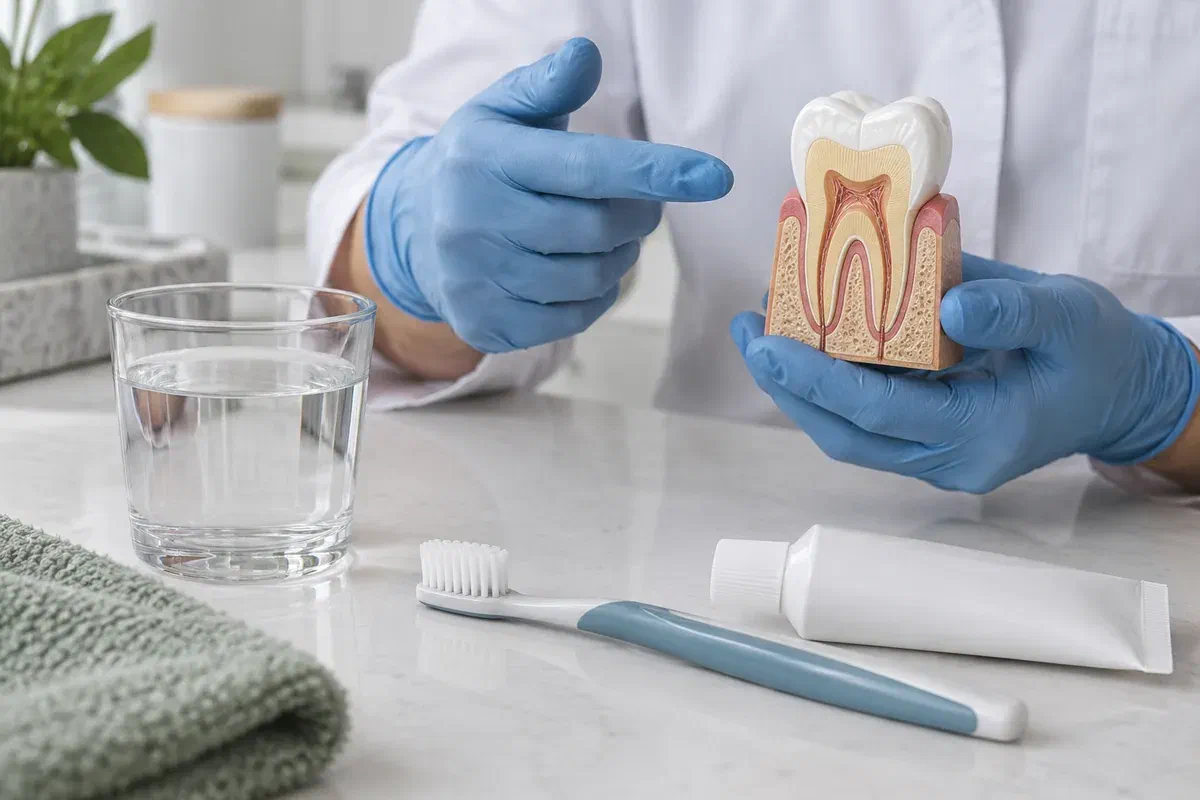
Generalized sensitivity, a changing bite or teeth that look worn across the smile all deserve a careful look. When wear is this extensive, acid, clenching, heavy brushing and decay often overlap, and the exam works out how much each one has contributed.
Cold may bother teeth on both sides or top and bottom. Tell us roughly where you feel it, whether heat causes it too, and how long it takes to ease after you stop drinking.
Front teeth may have lost length or developed thin, glassy rims. Photographs help the dentist judge the overall pattern and, at later visits, whether it is still progressing.
Cupped back teeth, raised fillings or a sense that the teeth meet differently can all follow widespread surface loss. The dentist assesses the bite closely, since grinding often accompanies acid wear.
Teeth looking darker is not, on its own, evidence of erosion. Leave whitening and toothpaste changes aside until the full picture has been assessed.
Prevention still comes first, even when repairs are clearly needed. Reducing acid exposure, using fluoride, easing sensitivity and speaking with your physician about reflux or vomiting give restorations the best environment to last.
Dissolved enamel never comes back. Where wear across the mouth affects comfort, chewing or appearance, restoration is planned as a whole, considering the bite and how teeth will meet once rebuilt. The amount of tooth left on each surface shapes which teeth suit composite and which need onlays or crowns.
Patient information: ADA — dietary acids and teeth
Understanding why the wear happened makes it less likely that new restorations will be damaged in the same way.
Planning teeth as a group helps them meet comfortably, rather than fixing one at a time and unbalancing the bite.
The most urgent teeth can be treated first while others are monitored, so the work is spread sensibly over months rather than crammed into a rush.
The first visit gathers what is needed to plan care across many teeth. Treatment is then sequenced, often after the acid source has been brought under better control.
We ask about sensitivity, diet, reflux, vomiting, dry mouth and medications, as well as grinding and any past dental work. Earlier X-rays or records are welcome.
The dentist examines every surface, existing restorations and the bite. Photos, scans and, where they would answer a specific question, X-rays help build a complete picture.
You will see which teeth need attention first, how prevention fits in and which restorations are being considered. Ask what each stage aims to achieve and what alternatives exist.
Between stages, symptoms and surfaces are compared with the original records. The plan can be adjusted if wear changes or a restoration needs fine-tuning.
Stick to the steps advised for you rather than adding several strong products. Steady home care protects both remaining enamel and new restorations.
Slow sipping through the day keeps teeth exposed for long stretches. Go over the drinks you use most with us, sugar-free ones too, and rely on water in between.
A soft brush and the fluoride paste recommended for you clean well without adding wear. We will explain how to look after restorations and when to brush after acidic food.
Note sensitivity, heartburn or dryness, and anything that feels high or rough after a repair. Bring these to reviews, and keep your doctor involved if a medical cause is suspected.
These questions often arise when erosion affects many teeth. Your own examination determines the right plan.
For households in Caledon, a full assessment at our Bronte Street practice is the place to raise sensitivity, worn edges or a changing bite. We will explain the pattern of wear and propose prevention, monitoring and staged repair that fits your teeth.
For severe pain or swelling, call right away or seek urgent care nearby. Online requests are not for emergencies.
