Short, sharp sensitivity
As outer enamel thins, cold drinks can cause a quick stab of discomfort. Keep track of which teeth react, whether warmth bothers them, and how long the feeling stays.


Acid softens enamel, and grinding then wears the softened surface faster. Campbellville patients can have both forces assessed together, with a plan that protects teeth and repairs only what truly needs it.
Two forces can wear a tooth at once. Acid from drinks, food or the stomach softens enamel and dissolves it chemically, while grinding and clenching rub surfaces away mechanically. Neither is the same as a cavity, which is caused by bacteria, although decay can be present too. Together they can produce sensitivity, flattened tips and smooth hollows.
Telling the two apart matters, because the fixes differ. Reducing acidic sips, reflux or vomiting addresses one side; protecting teeth from night-time clenching addresses the other. A dry mouth or certain medications can make both worse.
People from Campbellville sometimes arrive convinced the problem is only grinding, or only diet. Tell us about your drinks, any morning jaw stiffness, when teeth feel sensitive and how your bite feels now.
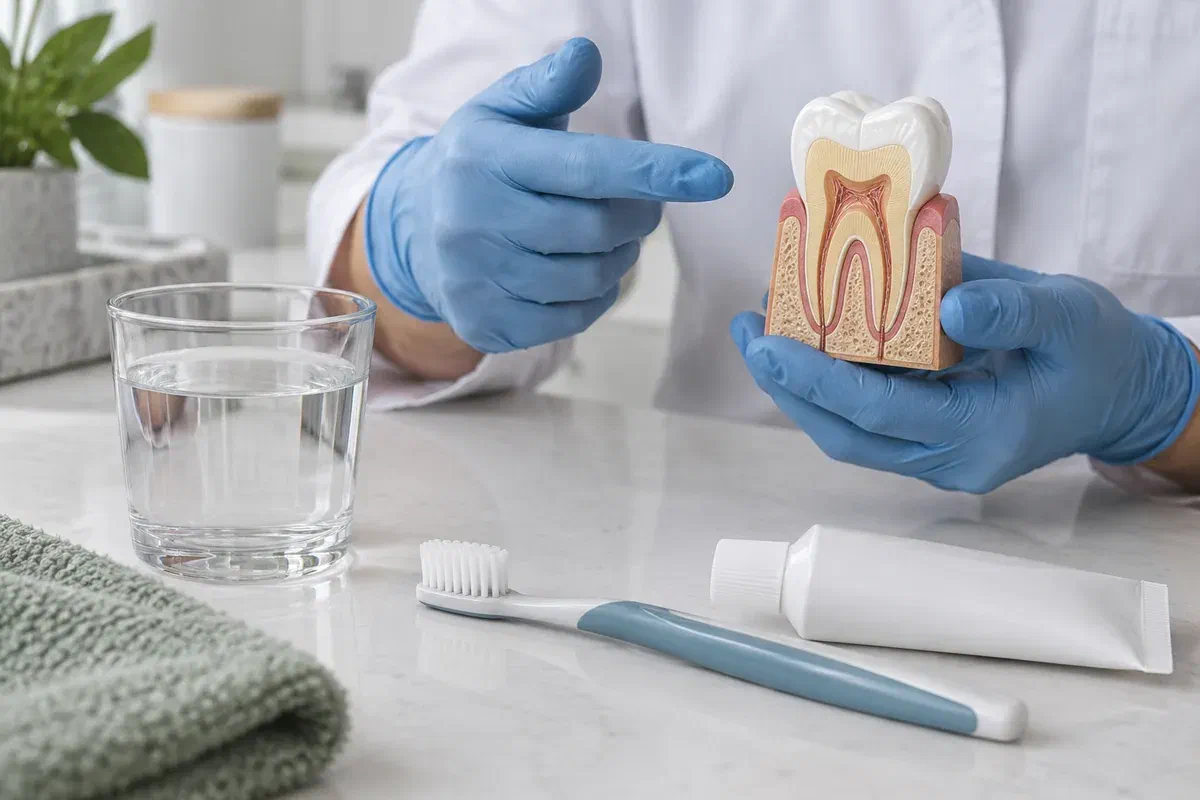
Discomfort with cold or a change in tooth shape is often the first sign. An exam helps sort out how much is acid, how much is grinding, and whether decay or brushing abrasion is also involved.
As outer enamel thins, cold drinks can cause a quick stab of discomfort. Keep track of which teeth react, whether warmth bothers them, and how long the feeling stays.
Grinding tends to flatten edges, while acid often makes them glassy or thin. Photographs and examination help the dentist read the pattern and tell whether the change is ongoing or long settled.
Smooth cups on molars can suggest erosion; flat, polished facets that match an opposing tooth suggest grinding. Fillings standing above the enamel can be a sign of either.
Changes in colour do not by themselves mean acid wear. Avoid whitening or switching toothpaste as a fix until someone has looked at the cause.
Treatment usually starts by tackling the causes: cutting down acid exposure, easing sensitivity with fluoride, and suggesting a medical conversation if reflux or vomiting may play a role. If clenching is involved, protecting the teeth at night may be discussed too.
Worn enamel does not regenerate. Where combined wear is causing discomfort, weakening teeth or changing your bite, restorations may be planned once the forces behind it are better controlled. The enamel that remains, and how the teeth meet, help decide between a limited composite repair and a wider plan.
Patient information: ADA — dietary acids and teeth
Separating acid from grinding means advice targets what is actually wearing your teeth, rather than guessing.
Reducing both acid and pressure gives new work a better chance, and you have practical steps to take between visits.
Some teeth need only watching, others need rebuilding. The plan makes clear which come first, which is handy for Campbellville households trying to keep appointments few and well grouped.
Your appointment connects symptoms with what the dentist sees on each surface. Care can be staged, especially when several teeth are affected or grinding and acid both need attention.
We discuss sensitivity, diet, jaw stiffness, clenching, reflux, dry mouth and medications. A partner's comments about grinding sounds at night can be useful too.
The dentist examines enamel, fillings and how the teeth come together, including side-to-side movement. Photos or scans can document wear, and X-rays are only arranged to answer a defined question.
You will hear what seems to be causing the wear, how sensitivity can be managed and whether anything needs restoring now. It is fair to ask, for each suggestion, whether it slows the wear or rebuilds tooth that has already gone, and whether it guards against acid, grinding or both.
Follow-up looks at whether surfaces and symptoms have changed since the baseline. The plan is adjusted if wear continues or a repair needs refining.
Stay with the steps recommended for you rather than trying several strong products at once. A routine you can keep up matters more than an intense one.
Sipping acidic drinks slowly through the day prolongs softening, and softened enamel wears faster under grinding. Review what you drink most, including sugar-free choices, and keep water as the everyday option.
Soft bristles and a fluoride paste recommended for you are enough. Wait a while after acidic food before brushing; we can suggest how long.
Keep note of daytime clenching, morning jaw tightness, sensitivity or reflux, and bring those notes to reviews. Health-related exposure may need medical attention too.
These questions often come up when wear seems to come from more than one source. Your exam decides what applies.
Flattened edges, worn back teeth or new sensitivity are worth a conversation, and the short hop from Campbellville into town makes our Bronte Street practice easy to plan around. We will explain how acid and grinding are contributing and outline prevention, monitoring and repair in a practical order.
If pain becomes severe or swelling develops, phone the clinic. Online booking is not for urgent problems.
