A zing from something cold
Thinner enamel leaves the inner layer less shielded, so a cold sip may bring a quick sharp feeling. Let us know which teeth respond, whether heat does the same, and how long it lingers afterward.


Enamel can thin so slowly that the first clue is a twinge from iced water. Acid-wear care in Milton looks for what keeps softening your teeth, then protects and, where needed, rebuilds the surfaces involved.
Dental erosion is the slow loss of tooth surface as acid softens enamel and dissolves it a little at a time. Bacteria are not the cause, so it differs from a cavity, though a person can have both. Teeth may grow touchier, look see-through at the tips, or develop shallow scooped areas.
For many people in Milton, the trigger is a pattern rather than one habit: flavoured water topped up all afternoon, heartburn at night, or a mouth that runs dry. The way your teeth meet matters too. Knowing which applies lets the dentist treat the source as well as the damage.
At a Milton visit, small details are the useful ones. Tell us what you drink between meals, which teeth react and when, and whether your bite feels different. That conversation, plus a close look at each surface, is where a plan begins.
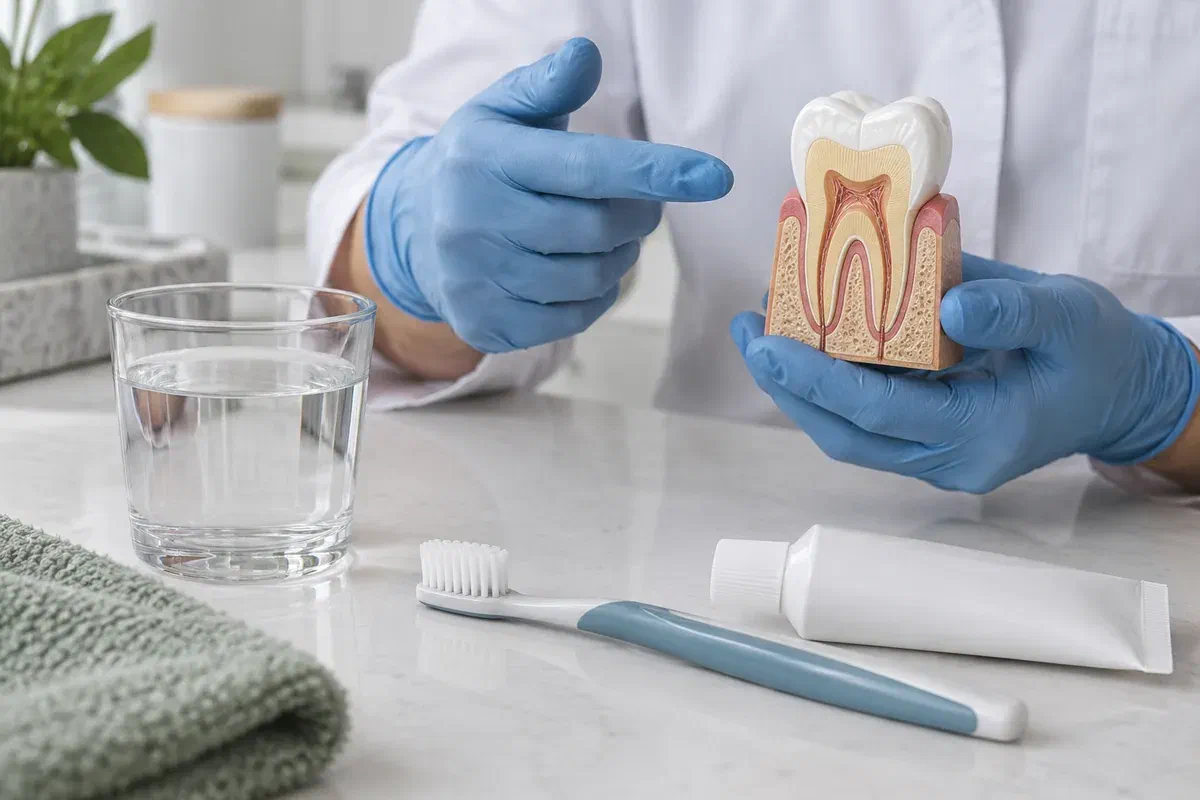
Erosion often shows up first as a moment of discomfort or a tooth that simply looks different in the mirror. An examination sorts acid wear from decay, toothbrush abrasion, clenching and other reasons a tooth might be sensitive.
Thinner enamel leaves the inner layer less shielded, so a cold sip may bring a quick sharp feeling. Let us know which teeth respond, whether heat does the same, and how long it lingers afterward.
The biting edges may seem shorter, more translucent or slightly chipped. A careful exam, often with photographs, helps tell whether you are looking at wear that is still happening, older changes that have settled, or a different problem.
Rounded dips on chewing surfaces, or fillings that now sit higher than the enamel beside them, can point to surface loss. Your dentist also checks how the teeth meet, because chemical and mechanical wear often work together.
Teeth that look more yellow are not proof of erosion on their own. Hold off on whitening kits or switching toothpastes until someone has looked at what is actually changing.
The first priority is usually to cut down whatever keeps exposing enamel to acid and to calm sensitivity. That might mean adjusting how you drink, adding a fluoride product, or speaking with your Milton family doctor if reflux or repeated vomiting seems involved.
Enamel that has dissolved will not come back on its own. Where the loss is affecting comfort, function or the way your smile looks, restorations can be planned alongside prevention. How much healthy enamel remains, and where the wear sits, guides whether a small bonded repair or something more involved makes sense.
Patient information: ADA — dietary acids and teeth
Putting your diet, symptoms and the location of the wear together makes advice specific, instead of a vague instruction to give up everything sour.
Restorations tend to do better when the acid exposure behind the damage has been reduced first, and you leave with concrete things to try between visits.
Some teeth only need watching and symptom relief, while others need rebuilding. The plan sets out which areas come first and which can safely be reviewed later.
This appointment links what you have been feeling with what the dentist can see. Care can be spread across several visits, especially when a number of teeth are involved or the source of the acid needs medical follow-up.
Share when sensitivity happens, any changes you have noticed in how your teeth look, typical meals and drinks, and health matters such as reflux or dry mouth. Bringing a current medication list saves guesswork.
Each tooth surface, existing filling and the bite are examined. Photographs or scans may be taken to record a starting point, and X-rays are only suggested when they would answer a particular clinical question.
Together you go over the likely causes, ways to manage sensitivity and whether any tooth needs restoring now. It helps to ask which steps tackle the cause and which replace structure that is already gone.
At follow-up, your symptoms and tooth surfaces are compared with the first records. If wear is progressing, symptoms shift, or a restoration needs refining, the plan is adjusted rather than repeated.
Stick with the specific steps recommended for you instead of stacking several strong products at once. A routine you can keep up without discomfort will do more than an ambitious one you abandon.
Sipping slowly over hours keeps acid against the teeth for longer. Talk with us about the drinks you reach for most, sugar-free ones included, and try to make plain water the default between meals when you can.
A soft-bristled brush and the fluoride toothpaste suggested for you are usually enough. Ask how long to wait after something acidic before brushing, rather than scrubbing straight away to clear a sour or rough feeling.
Jot down when sensitivity, heartburn or dryness shows up and bring those notes to your next Milton review. Exposure linked to a health condition may need your physician involved too.
These come up often once someone notices sensitivity or a tooth that looks thinner. Your own examination decides which advice and treatment actually fit.
Bring your questions about sensitivity, thinning edges or worn chewing surfaces to our Milton clinic. We will look at the pattern of wear and talk through a realistic order of prevention, monitoring and repair for your teeth.
Severe pain or any swelling means you should phone us directly. An online request cannot stand in for urgent care.
