New reactions to cold
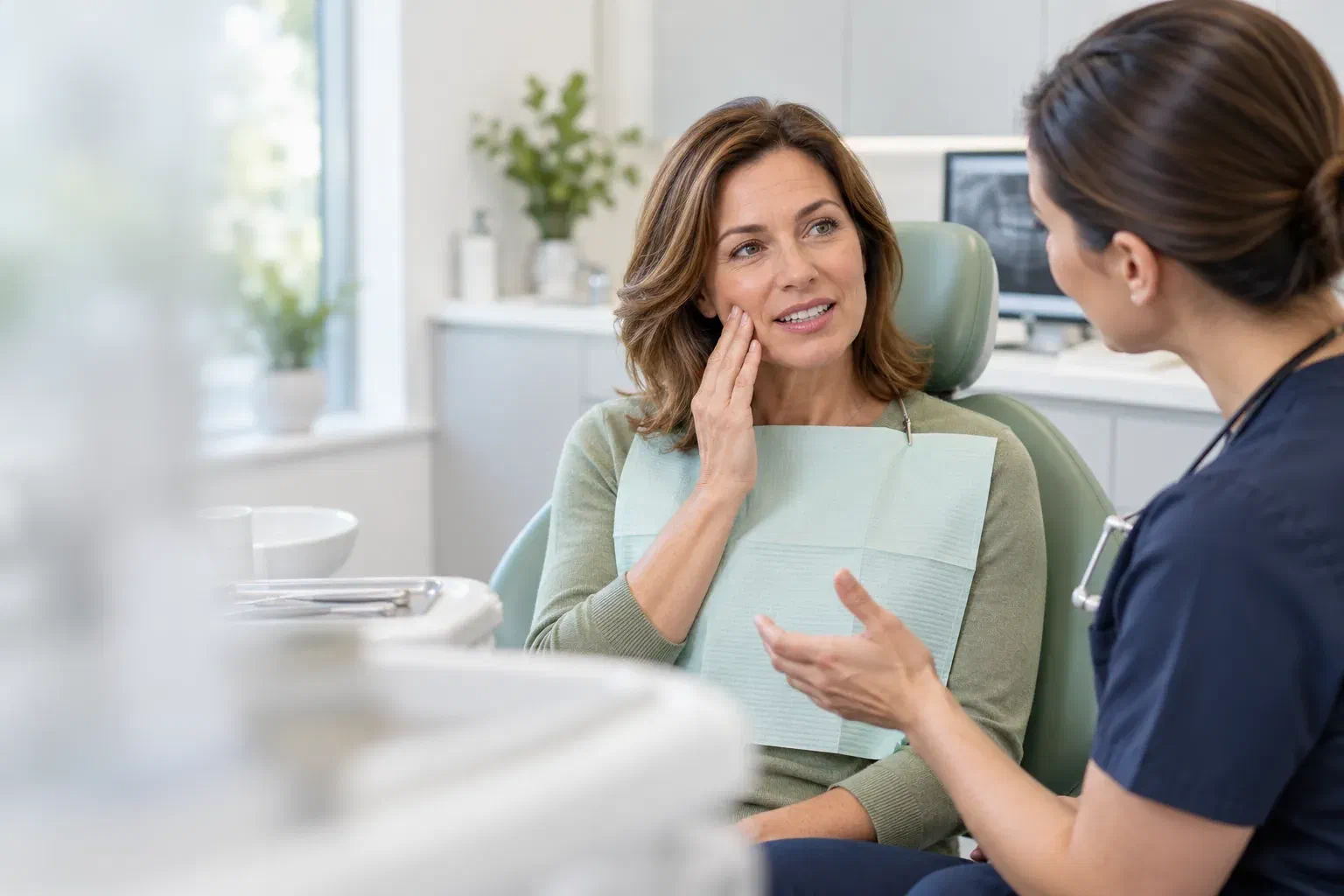
When enamel thins, cold food or drink can cause a brief, sharp ache. Noting which teeth react, whether heat bothers them and how long the feeling lasts helps the dentist interpret the exam.

Erosion moves quietly, so the most useful step is often measuring where your enamel stands today. Puslinch patients can have acid wear recorded, its causes explained, and future visits planned around real change.
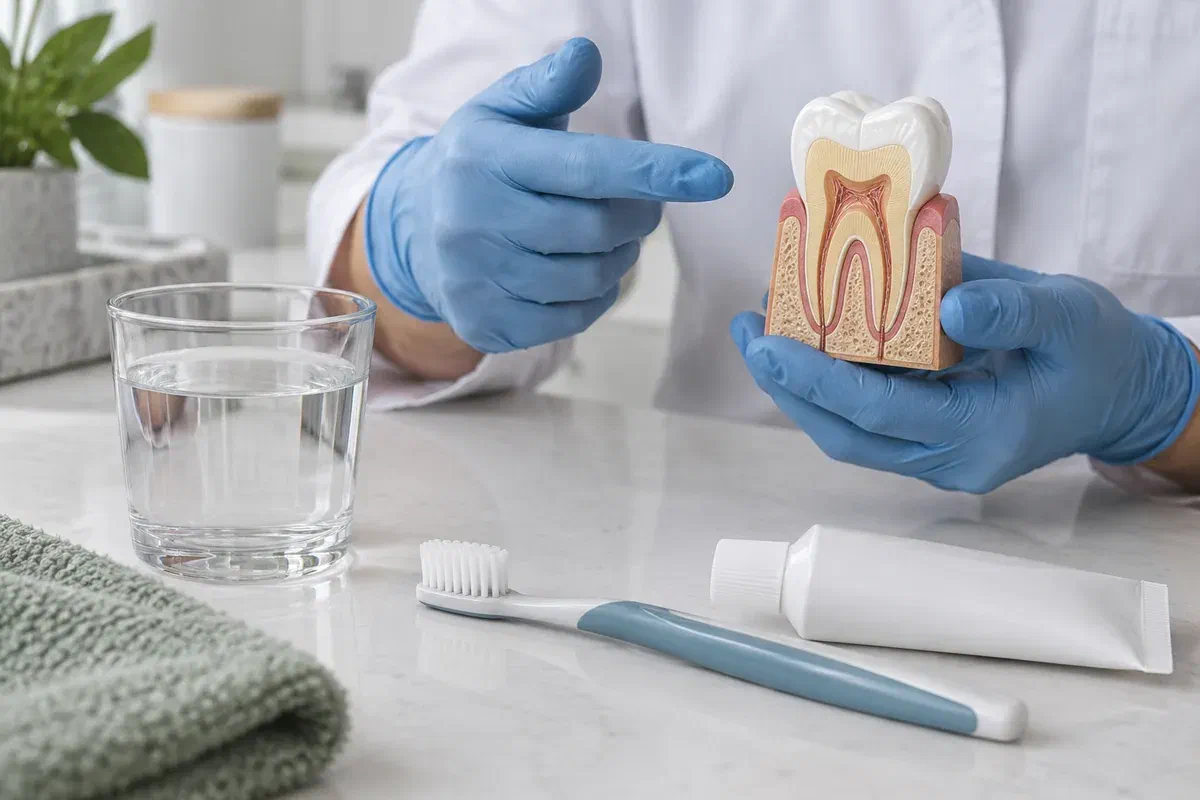
Erosion is easiest to manage when someone has recorded where it started. The process itself is chemical: acid softens enamel and, with repeated exposure, dissolves it. It is not driven by bacteria the way a cavity is, but decay can show up alongside it. Signs include sensitivity, faint translucent edges and shallow cupped areas.
Without a record, it is hard to know whether wear is active or decades old. Juice and soft drinks, smoothies, reflux, vomiting, dryness from medication and the way the teeth meet can all shape the pattern. Matching those factors to good records lets the dentist judge which areas need action.
For Puslinch households who prefer fewer, well-planned trips, that first visit carries a lot of weight. Bring details of your drinks, when teeth react and whether chewing feels different.
Sensitivity or a slight change in appearance is often the starting point. The exam distinguishes acid wear from decay, toothbrush abrasion, grinding and other conditions.
When enamel thins, cold food or drink can cause a brief, sharp ache. Noting which teeth react, whether heat bothers them and how long the feeling lasts helps the dentist interpret the exam.
Edges can become translucent, uneven or shorter. Without photos it is difficult to say whether that is happening now; with them, later visits can show whether the change is active or stable.
Rounded dips and fillings that seem to stand proud can indicate surface loss on back teeth. You may also feel a slight roughness with your tongue. Your bite is examined as well, because grinding and erosion often combine.
Colour alone is not a reliable sign of erosion. Before trying whitening or new products, have the reason for the change confirmed.
Prevention comes first for most people: reducing acid exposure, settling sensitivity with fluoride, adjusting drinking habits, and involving your doctor if reflux or vomiting may be a factor. Good records then show whether those changes are working.
Enamel does not rebuild itself once it is lost. If wear is affecting comfort, chewing or your smile, restorations can be planned alongside prevention. The amount of tooth remaining and the shape of the wear guide whether a conservative composite repair or a wider plan is appropriate.
Patient information: ADA — dietary acids and teeth
Comparing records over time shows whether wear is moving, so decisions are based on change you can see.
When exposure is reduced, follow-up records can confirm the effect, and restorations start on a steadier base.
Stable areas can be watched while active ones are treated, which keeps care in proportion to the damage and avoids removing healthy tooth before it is warranted.
Your appointment pairs your symptoms with a careful look at each surface. Treatment can be staged, especially when several teeth are involved or a medical source of acid needs attention.
Tell us about sensitivity, appearance changes, food and drink, and health concerns such as reflux or dry mouth. Your medication list is useful too.
The dentist examines enamel, restorations and the bite, and may take photographs or scans to document today's condition. X-rays are added only where they would answer a particular clinical question.
Go over the likely causes and ways to relieve sensitivity, then look at the records together to see which teeth, if any, would benefit from repair at this stage. Ask which recommendations slow the wear and which replace structure already lost.
New photos or scans are compared with the baseline to see whether surfaces or symptoms have changed. The plan adjusts if wear progresses or a restoration needs refining.
Follow the steps chosen for you rather than piling on several strong products. A comfortable, consistent routine gives the clearest results at review.
Smoothies, juice or pop sipped through the afternoon keep enamel soft for longer. Discuss your usual drinks with us, including sugar-free ones, and choose water between meals.
A soft brush and the fluoride toothpaste we suggest are enough. Scrubbing harder does not remove more acid, and brushing straight after something sour can rub at softened enamel, so we can suggest a sensible pause.
Write down when sensitivity, reflux or dryness occurs. Bring the notes to your review, and involve your doctor if a health condition is causing repeated exposure.
These questions often come up when people are told their wear will be monitored. Your exam decides what is right for you.
From Puslinch, one well-planned visit to our Bronte Street practice is a good way to raise sensitivity, thinning edges or worn surfaces. We will document what we find and set out a practical order of prevention, monitoring and repair.
If pain becomes severe or swelling appears, call us directly. Online requests are not for urgent care.
