
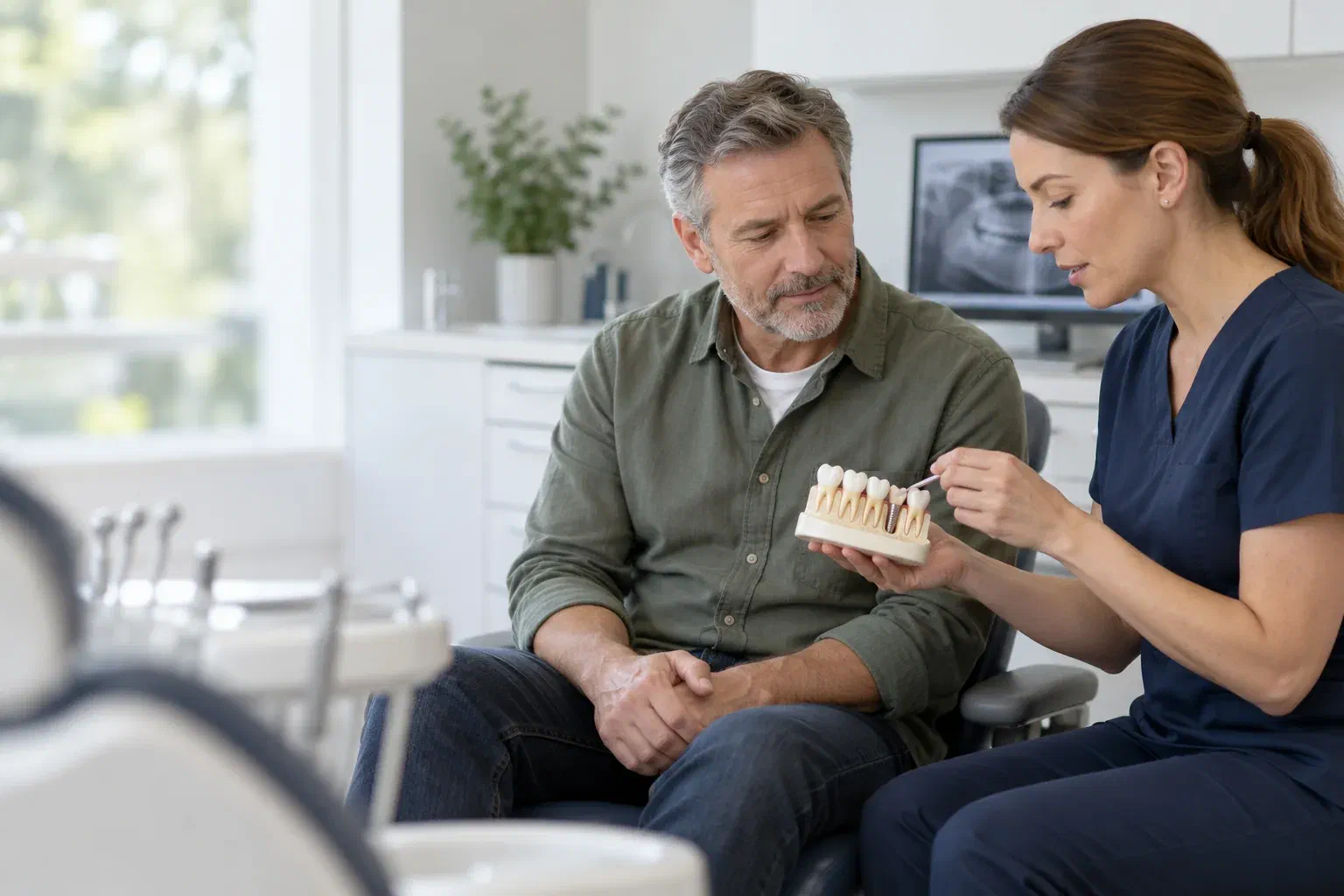
Illustrative discussion of tooth extraction and future replacement planning
Restorative Dentistry

Alveolar Ridge Preservation

Planning for a missing tooth can begin before its removal. Discuss alveolar ridge preservation in Milton and how care at an extraction site may support future tooth-replacement choices.

Looking beyond the extraction

Consider the foundation before the tooth is gone.

The alveolar ridge is the part of the jaw that supports your teeth. After a tooth is removed, the bone and gum around its socket change as they heal. Ridge preservation is a procedure intended to limit some of that change, often using a graft material placed at the extraction site.

This is a planning decision, not an automatic addition to every extraction. The condition of the socket, surrounding tissues, your health, and the type of tooth replacement being considered all influence whether preservation is worthwhile and how it would be carried out.

If an extraction has been recommended, ask about the next chapter before the appointment. At Milton Dental Clinic, the discussion can begin with what matters to you: keeping replacement options open, understanding the healing period, or deciding whether an implant is something you want to explore.

Discuss extraction-site planning
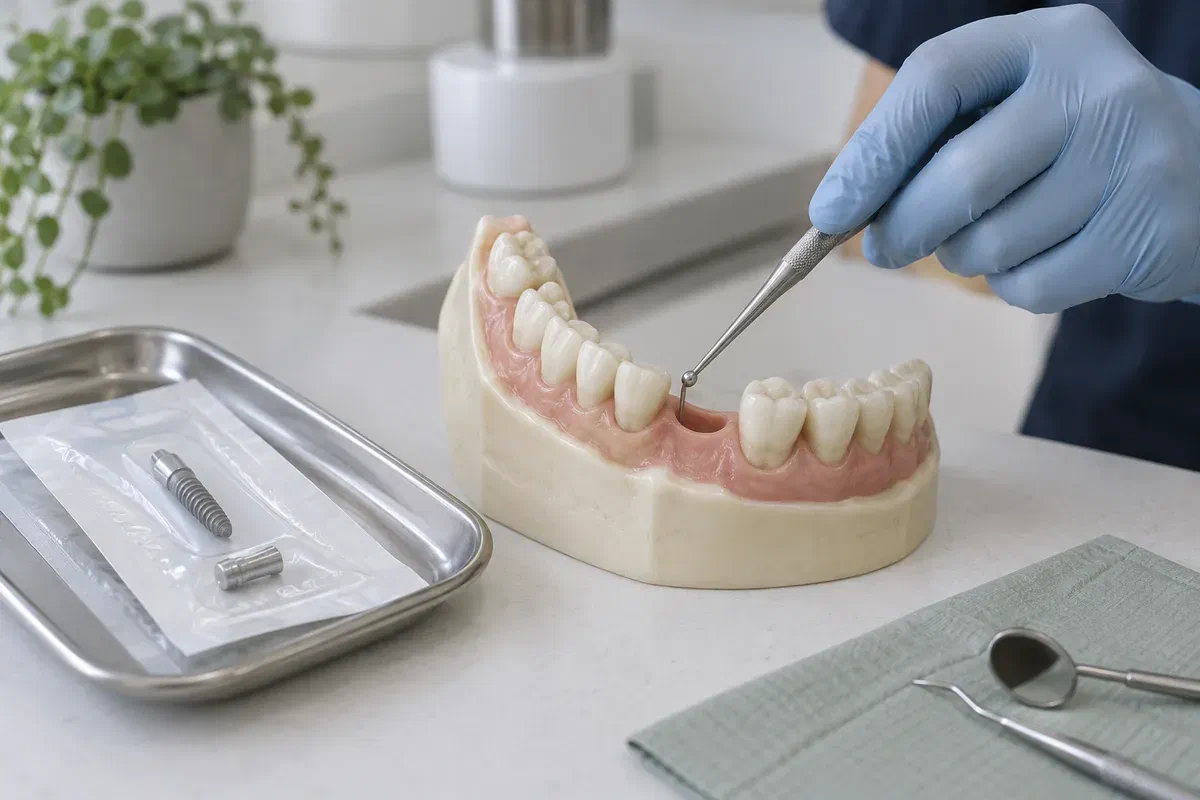
Dental study model showing a missing molar space for a ridge-preservation discussion
When to raise the question

A planned extraction is also a chance to plan ahead.

The best time to discuss ridge preservation is often before a tooth is removed. Your dentist can explain whether the procedure fits the site and whether an additional surgical opinion is needed.

An implant may be considered later

An implant needs suitable supporting bone and healthy tissues. Preserving an extraction site may be relevant to that future assessment, although it cannot guarantee that an implant will be suitable or eliminate every later grafting need.

The shape of the ridge matters

Changes beneath a missing tooth can affect the contour of the gum and the space available for a replacement. The location of the tooth and the proposed restoration help determine how important those changes may be.

Replacement decisions need time

You may be ready to address an unhealthy tooth without having chosen its replacement. A pre-extraction conversation can explain what preservation may offer, its limitations, and how that choice relates to a staged treatment plan.

If a tooth has already been removed, a consultation can still assess the ridge. Treatment at a healed site may involve a different procedure from preservation performed during extraction.

The purpose of preservation

Support future planning while the site heals.

Ridge preservation aims to reduce the loss of ridge dimensions that can follow extraction. It provides a framework for healing rather than placing a replacement tooth, and it does not stop all natural changes in the surrounding bone.

The procedure also involves additional cost, surgical care, and a healing period. Graft exposure, infection, or inadequate bone development are possible. A useful recommendation explains why the expected benefit for your particular site justifies those considerations.

Patient information: AAP — ridge modification

A considered starting point

The extraction and potential replacement can be discussed together, so decisions about the socket reflect the longer-term plan rather than being made separately.

Attention to ridge contour

Maintaining useful bone and soft-tissue form may support the shape of a later restoration. The result depends on the starting anatomy and healing response.

A review before the next stage

After healing, the dentist can reassess the site and explain what further treatment, imaging, or referral is needed before a replacement is made.

How the plan comes together

Assessment, extraction-site care, and a measured review.

The exact technique varies with the tooth and surrounding tissues. Ask which clinician will carry out the procedure, what material is proposed, and how the extraction and replacement appointments fit together.

  1. Assess the tooth and site

    The dentist reviews the reason for extraction, examines the gums, and assesses available imaging. Your medical history, medications, smoking, and previous healing problems are relevant to deciding whether grafting is appropriate.

  2. Agree on the approach

    Discuss the material, expected benefits, alternatives, fees, and recovery instructions before consenting. Some situations call for specialist assessment or a different sequence if infection, tissue loss, or anatomy complicates the plan.

  3. Preserve the socket

    When suitable, graft material is placed in the prepared extraction site under appropriate anaesthesia. A membrane, covering, or sutures may be used according to the technique and the condition of the surrounding tissues.

  4. Allow healing and reassess

    Review visits check the soft tissues and progress toward the next stage. The site is assessed again before implant or restorative decisions are finalized; appearance alone does not confirm that the bone is ready.

Looking after the healing site

Protect the area and follow the instructions for your graft.

Your written aftercare directions take priority because extraction and grafting techniques differ. Ask for clarification before leaving if you are uncertain about brushing, rinsing, eating, or a temporary denture.

Avoid disturbing the socket

Do not probe the graft with your tongue, fingers, or cleaning tools. Follow the recommended food choices and instructions about pressure on the site, including whether a removable appliance needs adjustment.

Use the prescribed cleaning routine

Keep the rest of your mouth clean and use any recommended rinse as directed. Ask when and how to clean close to the healing area rather than assuming normal brushing should resume there immediately.

Attend the planned reviews

Healing reviews allow the clinician to check the wound and discuss progress. Share any change in comfort, unexpected discharge, or difficulty following the care instructions before the next planned treatment stage.

Considering the alternatives

Preservation is one part of a larger replacement decision.

Discuss what is likely to happen with each option, including the implications of allowing a socket to heal without grafting. A clear explanation should cover both immediate recovery and the possible next stages.

Without a preservation procedure

Natural socket healing

The extraction site can heal without graft material when that is the agreed approach. Changes in ridge shape are expected, and their effect on future replacement options should be discussed for the particular tooth.

For an appropriate fresh socket

Preservation during extraction

Grafting at the extraction appointment may help limit dimensional change. Suitability depends on local conditions and the treatment plan, with further assessment still required before any implant is placed.

When a healed ridge needs support

Reconstruction after healing

A later bone-augmentation procedure may be considered if the ridge is inadequate for the proposed restoration. This can involve a different extent of surgery and a separate healing interval.

Questions about ridge preservation

Know what the procedure can—and cannot—do.

The decision often involves a tooth you have not yet had removed. These questions can help you discuss timing, materials, and the purpose of preservation before committing to care.

(905) 876-4488
Is alveolar ridge preservation the same as getting an implant?
No. Preservation addresses the extraction site and its healing environment. An implant is a separate component placed to support a replacement tooth. Preservation may be part of implant planning, but it does not confirm that an implant can or will be placed.
Does every extraction need a bone graft?
No. The recommendation depends on the socket, future replacement plans, health considerations, and the expected value of limiting ridge changes. Ask why grafting is being proposed for your site and what the alternative would mean for the care you are considering.
Where does the graft material come from?
Materials can have different origins, including human donor, animal-derived, synthetic, or your own bone, depending on the procedure. Ask which material is proposed and why. Religious, personal, and medical concerns should be discussed before you consent to its use.
Can preservation guarantee that I will not need more grafting?
No. Healing varies, and some sites still need additional treatment before an implant is appropriate. The goal is to improve the starting conditions for future planning, not to promise a particular bone volume or remove the need for a later assessment.
How long do I wait before a replacement tooth is planned?
The sequence depends on healing, the type of replacement, and whether further procedures are needed. Bone healing is assessed over months rather than only by how the gum looks. Ask for an expected timetable and the findings that would change it.
Can I wear a temporary denture while the graft heals?
Possibly, but it must not put harmful pressure on the surgical site. Bring any existing appliance to the appointment and ask whether it needs adjustment or a period out of your mouth. Follow the clinician’s instructions for your specific graft.
Alveolar ridge preservation in Milton

Plan the extraction with the next step in mind.

Book a discussion at our Bronte Street clinic before a planned extraction, or bring your existing treatment recommendation for review. We can assess the site, explain the relevant choices, and identify whether specialist care should be part of the plan.

For a problem after surgery, contact your treating clinician directly. Please call for urgent concerns rather than relying on an online request.

Visit Milton Dental Clinic
Unit 1, 342 Bronte St. S, Milton, ON L9T 5B7
Get directions Clinic hours
Monday–Thursday
11am–7pm
Friday–Sunday
By appointment only

How can we help?

Milton Dental Clinic

Have a question about your smile? Choose the option that works best for you.

For urgent dental concerns, please call.
Messages are reviewed during clinic hours.