Keeping the implant door open
Implants need sufficient healthy bone and gum. A preserved socket may give that future evaluation a better starting point, but it cannot promise an implant will be suitable or rule out further grafting.


Is a socket graft worth adding to your extraction? Adults from Brampton can get a plain explanation of the benefits, risks and limits before deciding on ridge preservation.
Adding a graft to an extraction means more cost, more time in the chair and a healing period to manage. So the honest question is whether your site will gain enough from it. That starts with understanding the problem it addresses: once a tooth is removed, the jawbone ridge beneath it usually shrinks as the socket heals.
Ridge preservation places graft material in the socket to limit part of that shrinkage. For some teeth and some plans it can make a real difference; for others it adds little. Socket condition, gum health, your medical picture and the replacement you want are what tip the balance.
For people in Brampton weighing this up, we start with your priorities. Do you want to keep an implant possible, do you prefer a simpler route, or are you still undecided? Your answer, together with the exam, shapes whether grafting makes sense.
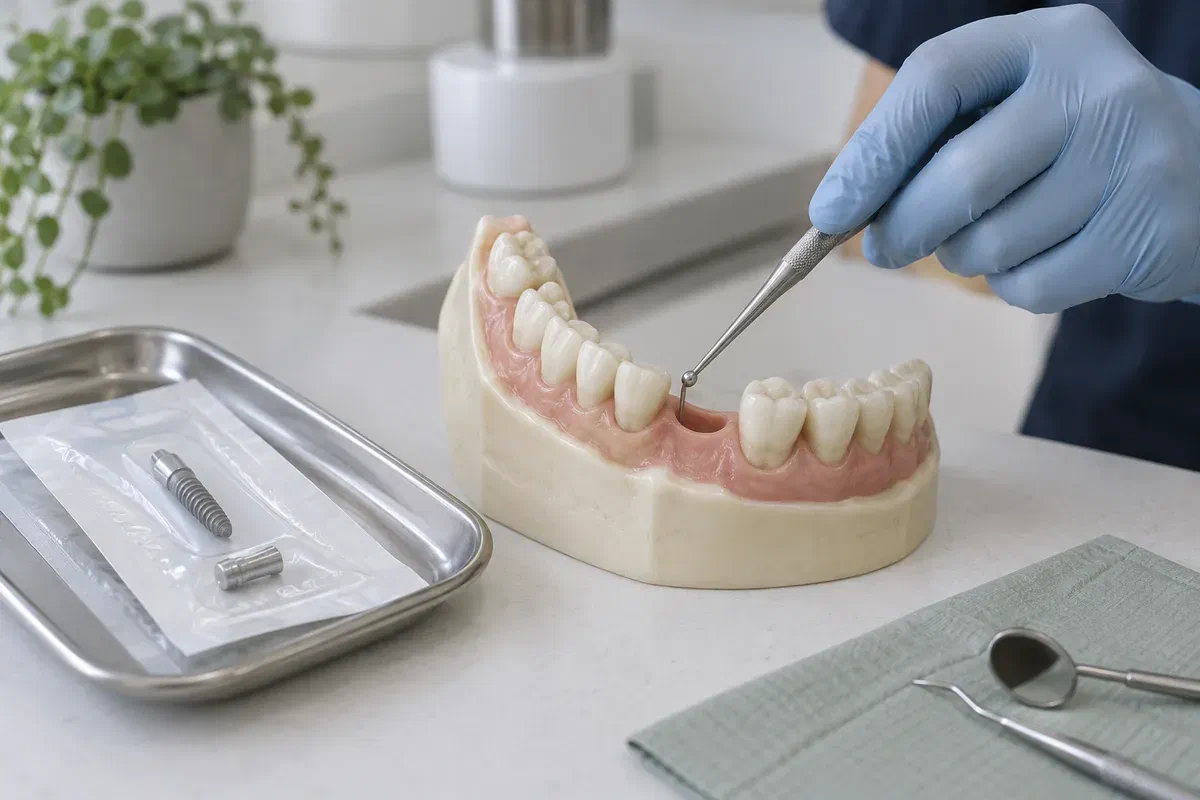
Because grafting happens as the tooth comes out, the choice is best made beforehand. Your dentist can tell you whether the site looks like a good candidate and whether a specialist opinion is worth getting.
Implants need sufficient healthy bone and gum. A preserved socket may give that future evaluation a better starting point, but it cannot promise an implant will be suitable or rule out further grafting.
If the bone beneath a gap shrinks, the gum can drop and the room for a new tooth may narrow. The tooth's location and the restoration being planned determine how much that would matter.
You may be ready to remove a problem tooth without knowing how you will replace it. A frank discussion covers what preservation could offer, what it will not do, and how it would fit a staged approach.
If the extraction is behind you, the ridge can still be evaluated. A healed site that needs support is usually treated with a different procedure from fresh-socket grafting.
The intent is to keep more ridge width and height than an untreated socket would typically retain. The graft gives healing a framework. It does not replace the tooth, and it does not stop every natural change in the bone around it.
On the other side of the scale are the added fee, surgery and recovery time, plus possible complications such as graft exposure, infection or less bone forming than hoped. You deserve a clear reason why the benefit at your site outweighs these.
Patient information: AAP — ridge modification
Planning the extraction alongside a possible replacement means the socket decision supports the result you actually want.
Maintaining bone and soft-tissue shape can support the look and fit of a future restoration. Starting anatomy and healing still decide the outcome.
Once healed, the site is examined again, and you hear whether imaging, more treatment or a referral is needed before replacement.
Methods vary with the tooth and the tissues around it. You can ask who would carry out the graft, which material is recommended and how the extraction and any replacement visits connect.
We assess why the tooth must be removed, check the gum and review imaging. Medical history, medications, smoking and past healing problems all inform whether grafting is appropriate.
We explain the material, expected benefits, alternatives, fees and recovery before you agree. Infection, tissue loss or difficult anatomy may lead to a specialist referral or a changed sequence.
With the area numbed, the tooth comes out and, if the walls of the socket allow, it is packed with the agreed graft material. Depending on technique and tissue condition, a membrane, covering or stitches may be added.
Review appointments follow the gum and healing. The site is evaluated again before implant or restoration plans are confirmed, since the gum's appearance does not prove the bone is ready.
Always follow the written instructions for your procedure, as techniques differ. Ask about brushing, rinsing, eating or a temporary denture before you leave if anything is unclear.
Leave the graft alone with your tongue, fingers and cleaning tools. Follow food recommendations, avoid pressure on the site and check whether a removable appliance needs adjustment first.
Keep other teeth clean and use any rinse as directed. Ask when you can clean beside the graft instead of assuming regular brushing should resume there right away.
Healing visits give the clinician a chance to see how the wound is closing. Bring up new discomfort, any unusual discharge, or a part of the routine you are struggling with, well before further treatment is due.
These questions focus on value, risk and what happens next. They can help you decide whether preservation is worthwhile for your particular extraction.
Book a consultation at our Bronte Street practice before your planned extraction, or bring a treatment recommendation you would like reviewed. We will examine the site, set out the choices and tell you whether a specialist should be involved.
Post-surgery concerns should go to the clinician who performed your procedure. Please phone about anything urgent rather than submitting an online form.
