Thinking about an implant
An implant depends on sound bone and gum at the site. Preserving the socket may give that future assessment a better starting point, though it is not a guarantee and further bone work is sometimes still required.


Heavy outdoor work, animals to feed and errands grouped into one trip: recovery has to fit real life. From Campbellville, plan ridge preservation around the week you actually have.
Chores do not stop because a tooth has to come out. So before booking, it helps to know what the procedure involves. When a tooth is removed, the ridge of bone around its socket generally shrinks during healing. Ridge preservation packs that socket with graft material, aiming to hold on to more of its shape for a future replacement.
It is a recommendation for some sites, not a rule for every extraction. The socket walls, the gum, your health and the kind of replacement you might want all decide whether it is worth adding.
For households in Campbellville, practical questions often come first. How many trips into town will this take? Can I lift, haul or work outdoors the next day? We can answer those alongside the clinical ones, and help you pick a date when an easier few days is realistic.
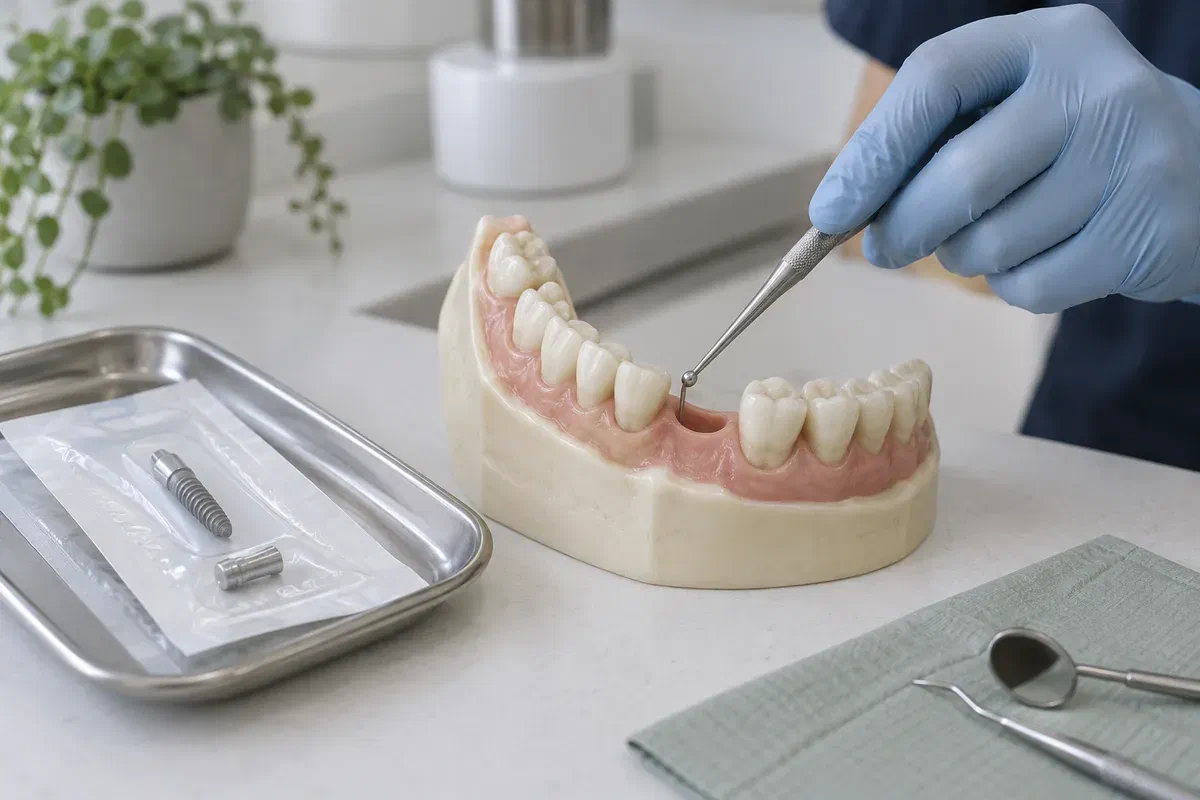
Since grafting is done the moment the tooth comes out, it is worth discussing at the consultation. Your dentist can say whether the site suits it and whether a specialist should see you, ideally on a day that saves a separate trip.
An implant depends on sound bone and gum at the site. Preserving the socket may give that future assessment a better starting point, though it is not a guarantee and further bone work is sometimes still required.
A collapsing ridge can let the gum sink and leave less room for a crown, bridge or denture tooth. Where the tooth sits and what you would replace it with decide how much that matters.
You can take out a troublesome tooth first and settle on its replacement when the season allows. Talking ahead explains what grafting may offer, where it falls short and how it fits a staged plan.
Had the tooth out a while ago? The ridge can still be examined. Rebuilding a healed site is usually a different procedure from preserving a fresh socket.
A socket graft gives new bone a lattice to grow through, with the goal of keeping more ridge than the site would hold unassisted. It does not replace the tooth, and the bone still remodels somewhat as it heals.
It also means a fee, a surgical step and some recovery time, and things can go wrong: the graft may become exposed, the site may get infected, or less bone may form than hoped. You should hear a clear reason why the expected benefit at your site is worth it.
Patient information: AAP — ridge modification
Planning the extraction and a possible replacement together means the socket is handled with your longer-term goal in mind.
Preserving useful bone and gum shape may make a future replacement fit and look better. Your anatomy and healing still set the limits.
After healing, a review visit shows whether you can move on, or whether imaging, more care or a specialist should come first.
Every site is a little different, so techniques vary. Ask who will carry out the graft, which material is planned, and how many appointments the whole sequence is likely to take.
We review why the tooth must go, look at the gums and check X-rays. We also ask about your health, any prescriptions, tobacco use and how earlier extractions or cuts have healed, which helps us judge whether a graft is sensible.
Before you say yes, we explain the graft, what it may do, other choices, the fee and the recovery. Infection, lost bone or awkward anatomy may mean a specialist or a different order.
If the site suits it, the tooth is removed with local anaesthetic and graft is placed in the empty socket. A protective membrane, covering or sutures may be used, depending on the method.
Review visits check the gum and healing. A final look at the bone comes before any implant or restoration plan is confirmed, since a settled-looking gum can be misleading.
Your written instructions apply first, as methods differ. Before you leave, ask about anything unclear, including cleaning, rinses, food and wearing a partial denture.
Heavy lifting, bending and strenuous outdoor work can raise the risk of bleeding and swelling early on. Ask how long to take it easy and line up help for demanding jobs if you can.
Keep your tongue and fingers off the graft, stick to the foods suggested and avoid pressure on the area. Brush other teeth as usual and use any rinse as prescribed.
Book follow-ups when you set the extraction date, so they fit your schedule. Call between visits about new pain, unusual discharge or anything you are unsure of.
Recovery has to work alongside chores, travel and family. These questions help you plan time, effort and appointments around the procedure.
Come in to our Bronte Street practice while the extraction is still being planned, or bring a plan you have already been given. We will assess the site, map out the visits involved and tell you whether a specialist should be part of your care.
If something seems wrong once you are home, your treating clinician should hear about it first. For urgent concerns, phone us rather than sending an online request.
