You would like an implant to chew on
A molar implant needs a solid base of bone and healthy gum. Keeping more of the ridge may help when that is assessed, although it cannot promise suitability, and some sites still need sinus or other bone work.


A cracked or broken molar at the back still leaves a space that matters for chewing. From Georgetown, find out whether ridge preservation is worth considering for a back tooth.
A molar that splits while you are eating, or one with a crack running under the gum, often cannot be saved. Because the tooth sits at the back, it is tempting to think the gap will not matter much. Yet molars take a large share of chewing force, and the bone that held their roots tends to shrink once they are gone.
Ridge preservation is a way of filling the socket with graft material when the tooth is taken out, with the aim of keeping more of that bone. Whether it helps depends on the socket walls, the gum, your health and the replacement you may want. Upper molars also sit near the sinus, which can affect later implant planning.
From Georgetown, it makes sense to ask before the extraction what the space will mean for your bite. We can talk through how the neighbouring and opposing teeth may respond, which replacements suit a back tooth, and whether grafting the socket fits what you want.
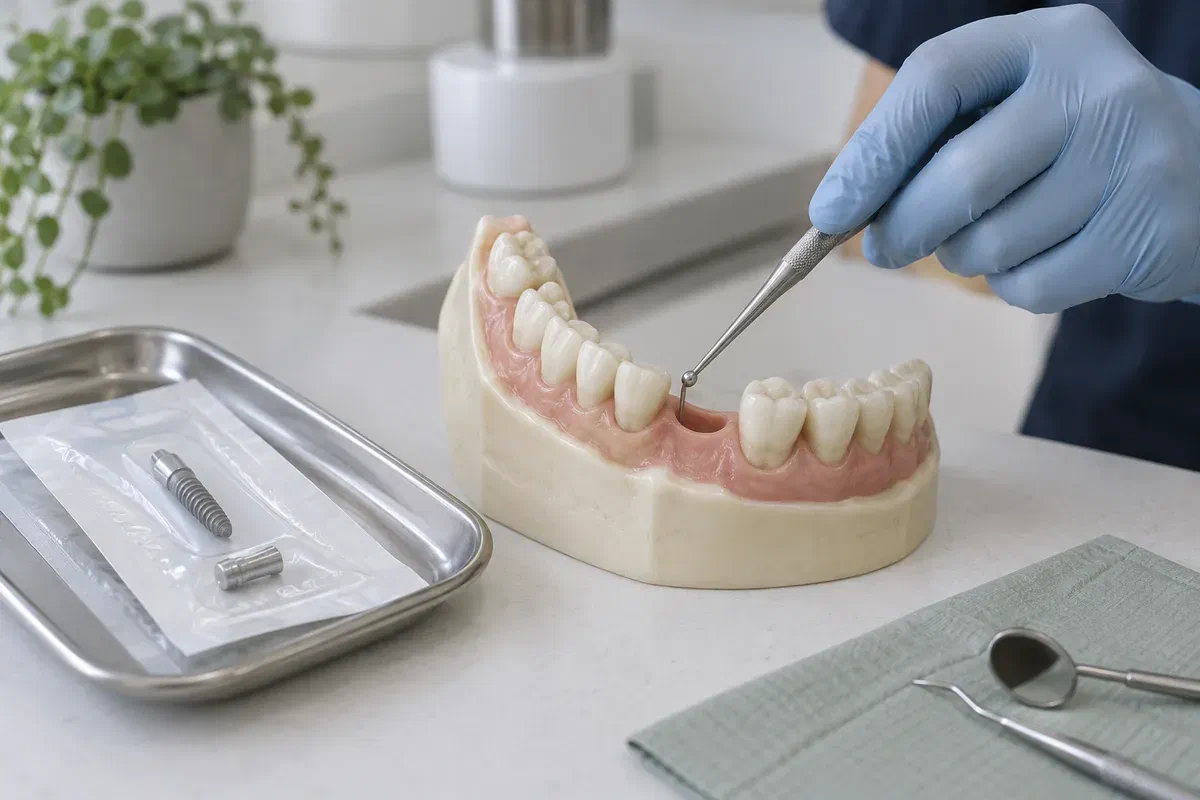
Grafting is done in the fresh socket, so the decision comes ahead of the extraction. Your dentist can tell you whether a molar site is suitable and whether a surgeon or periodontist should assess it.
A molar implant needs a solid base of bone and healthy gum. Keeping more of the ridge may help when that is assessed, although it cannot promise suitability, and some sites still need sinus or other bone work.
When a molar is lost, nearby and opposing teeth can shift over time, and a shrinking ridge reduces the room for any replacement. The tooth's position and what you plan for it decide how much this matters.
Some people take time before replacing a back tooth. A conversation first can explain what preservation offers in that case and where it falls short, so a later replacement can still be planned in stages.
Already lost the molar? The site can still be examined. Treating a healed ridge, especially near the sinus, may involve a different procedure from fresh-socket grafting.
Molar sockets are large, and the ridge around them can lose a good deal of volume as they heal. A graft aims to reduce that by giving new bone a framework to form within. It is not a tooth, and the bone will still change somewhat.
It also carries a fee, extra surgery and healing time, plus possible issues such as graft exposure, infection or less bone than hoped. A useful recommendation should explain why those are worth accepting for your particular back tooth.
Patient information: AAP — ridge modification
Considering replacement before removal means the socket is treated in light of how you want to chew in future, not as a separate event.
Maintaining bone height and width may make a later implant or bridge more straightforward. Your anatomy and healing still determine the outcome.
Once the site settles, it is checked again so you know whether more imaging, further grafting or a specialist opinion would come first.
Molar extractions vary with root shape and the bone around them. Ask who will carry out the procedure, which graft material is suggested and how a replacement would be timed.
We review why the molar cannot be kept, check the gums and look at the X-rays, including the roots and nearby structures. Medical history, medications, smoking and past healing are part of the decision.
You learn what graft is proposed, the expected gain, other routes, the cost and recovery before giving consent. Infection, missing bone or sinus anatomy may call for a specialist or another order of treatment.
If the site suits it, the molar is taken out, sometimes in sections, and the socket is grafted with the area numbed. Depending on the technique, the graft is then protected with a barrier layer, a dressing or sutures.
Review visits follow the gum and the healing site. Implant or bridge decisions wait for a further assessment, since a closed-looking gum does not prove the bone below is ready.
Your written instructions take precedence, because techniques differ. If you are unsure about food, brushing, rinsing or a temporary appliance, ask before you leave.
Choose softer foods and chew away from the graft. Keep your tongue and fingers off the site, and avoid hard or crunchy foods that could press into the socket.
Brush and floss the rest of your mouth normally and use any prescribed rinse as directed. Ask when you can clean close to the back of the site without disturbing it.
These visits let the clinician see how the socket is closing. Speak up about changes in comfort, a bad taste, unusual discharge or difficulty following the routine.
When someone from Georgetown is facing a molar extraction, the questions tend to centre on chewing, space and what happens next. Use these to plan the removal and any replacement.
Book a visit at our Bronte Street practice before the tooth is removed, or bring a recommendation you have already been given. We will examine the site, discuss replacement choices for a back tooth and let you know if a specialist should be involved.
If something concerns you after the procedure, contact the clinician who treated you. Please phone about urgent issues rather than sending an online request.
