An implant is a likely next stage
Implants depend on enough bone and healthy gum. Preserving the socket may help when the site is assessed for one, but it is no guarantee of suitability, and further grafting is sometimes still needed.


Ridge preservation is one stage in a plan that unfolds over months. For busy households in Mississauga, see how socket grafting, healing and replacement visits can fit together.
Ridge preservation rarely stands alone. It usually sits between a tooth coming out and a replacement going in, with healing in the middle. The reason it exists is simple: once a root is gone, the jawbone ridge around the socket tends to lose width and height. A graft placed in the socket aims to reduce some of that loss.
Not every extraction calls for it. The socket's condition, the gum and bone nearby, your health and the replacement you are leaning toward all decide whether the step is worthwhile and how it would be done.
When work, school runs and family commitments fill the week, it helps to see the full sequence before agreeing to the first part. Coming from Mississauga, you can map out with us what each visit involves, how long healing may take and what decisions wait at the end.
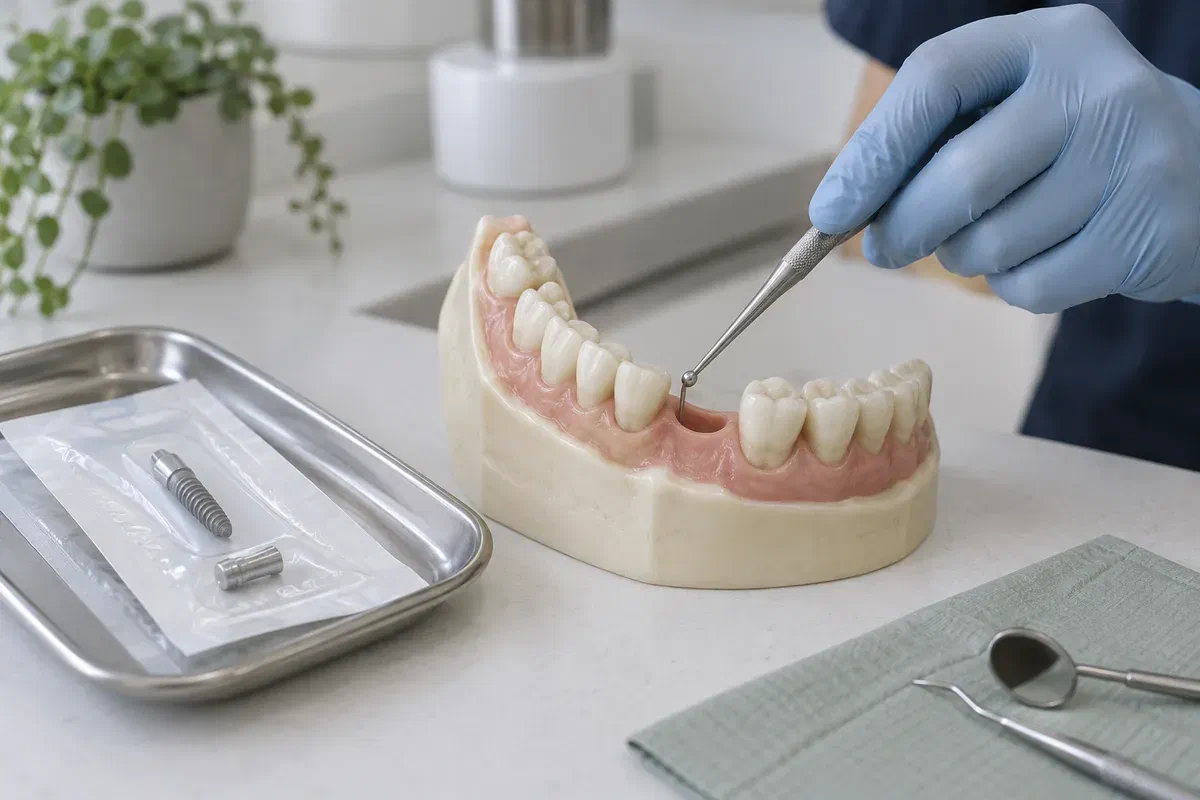
Since preservation is done in the fresh socket, the decision is made ahead of the extraction. Your dentist can say whether your site looks suitable and whether a specialist visit should be added to the plan.
Implants depend on enough bone and healthy gum. Preserving the socket may help when the site is assessed for one, but it is no guarantee of suitability, and further grafting is sometimes still needed.
A shrinking ridge can lower the gum and reduce the space a crown, bridge or denture tooth will occupy. How much this matters depends on the tooth's position and what is planned for it.
Treating a problem tooth now and deciding on its replacement later is a reasonable path. An early conversation explains what grafting offers, what it cannot do, and where it sits in a staged schedule.
If the tooth has already been removed, the ridge can still be assessed. Rebuilding a healed site usually involves a different procedure and timeline.
Preservation is intended to retain more of the ridge than a socket left to itself might keep. The graft acts as a framework that new bone can grow into. It is not a replacement tooth, and some remodelling of the surrounding bone still occurs.
It brings its own fee, surgery and recovery, and complications such as graft exposure, infection or limited bone formation can occur. A clear recommendation explains why the likely gain at your site makes those worth accepting.
Patient information: AAP — ridge modification
Discussing extraction and replacement together means each appointment has a purpose and the socket decision fits the longer schedule.
Holding useful bone and gum form may support the fit and look of a later restoration. Outcomes depend on anatomy and how you heal.
After healing, the site is examined again to see whether more imaging, treatment or a referral is needed before the replacement stage.
Each tooth and site is different, so the technique can change. Ask who will do the procedure, what material is proposed and roughly when each later appointment would fall.
We review the reason for removal, look at the gums and examine imaging. Your medical history, current medications, smoking habits and any healing problems in the past help decide whether grafting suits you.
Before you consent, we explain the material, likely benefits, alternatives, fees and recovery. Infection, tissue loss or complex anatomy may add a specialist visit or change the order of care.
When appropriate, the tooth is removed and graft material is placed in the socket under anaesthesia. Depending on the technique, a membrane, covering or stitches may be used.
Follow-up visits check the gum and progress. The site is assessed again before implant or restoration decisions are final, since a healed-looking surface does not confirm the bone is ready.
Follow the written instructions you are given, since methods vary. If brushing, rinsing, eating or a temporary denture is unclear, ask before leaving the appointment.
Do not touch the graft with your tongue, fingers or cleaning tools. Choose the suggested foods, keep pressure off the area and check whether any removable appliance needs adjusting.
Brush and clean the other teeth normally and use prescribed rinses as directed. Ask when cleaning near the graft can resume rather than assuming your routine applies there immediately.
Scheduling check-ups early makes them easier to keep. These visits let the clinician see the wound and discuss progress, so mention any change in comfort or unusual discharge.
These questions help you plan the months between extraction and replacement. Ask them early so appointments and recovery can fit around the rest of life.
Book a visit to our Bronte Street practice before a planned extraction, or bring a treatment plan you already have for review. We will assess the site, explain the stages and let you know if specialist care should be involved.
Should a problem arise once the graft is placed, your treating clinician is the first call. Urgent concerns need a phone call, not an online booking request.
