Keeping implant options alive
An implant needs supportive bone and healthy gum. A preserved socket may make that later assessment more favourable, but it cannot confirm an implant will suit you or remove the chance of further grafting.


Donor, animal-derived, synthetic or your own bone: graft materials differ, and your values count. From Rockwood, learn what goes into a preserved socket and how to choose.
It is a fair question, and one some people only think to ask afterward. Ridge preservation places a graft material into the socket left by an extracted tooth. Its job is to support healing so that the jawbone ridge, which usually shrinks once the root is gone, keeps more of its width and height.
Those materials come from different sources, and each has its own handling, healing pattern and considerations. Whether preservation suits you at all depends first on the socket, the gum around it, your health and what replacement you may want. The choice of material follows from there.
If you are coming from Rockwood and have dietary, religious, ethical or medical reasons to care about the source, tell us at the start. We can explain the options that may suit your site so you can consent with a clear understanding of what is being placed.
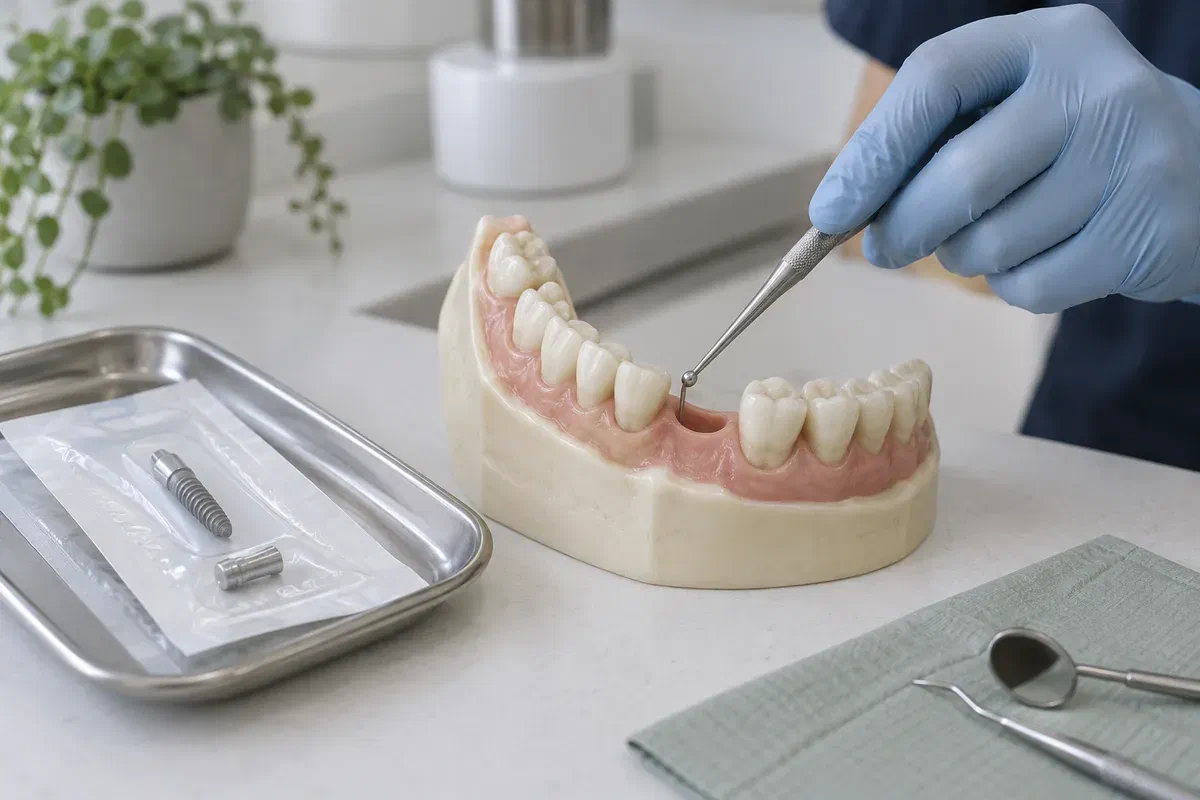
The graft goes in as the tooth comes out, so questions about suitability and materials belong in the consultation. Your dentist can also say whether a periodontist or surgeon should be involved.
An implant needs supportive bone and healthy gum. A preserved socket may make that later assessment more favourable, but it cannot confirm an implant will suit you or remove the chance of further grafting.
When the ridge narrows, the gum can drop and space for a new tooth may shrink. The tooth's position and the planned restoration determine how important that is for you.
You may need time to think about the material as well as the replacement. Discussing it early explains what preservation can offer, its limits and how it fits a staged plan without rushing you.
If the tooth is already out, the ridge can still be examined. Rebuilding a healed site usually involves a different procedure, and material choices come up there too.
Most socket grafts act as a framework that your own bone gradually grows into. The goal is to keep more of the ridge than an empty socket would. The graft is not a tooth, and the bone around it still changes somewhat over time.
As with any surgery, there are costs and risks. The fee, extra surgical step and healing time come with possible exposure of the graft, infection or less bone forming than hoped. A good recommendation explains why the benefit at your site justifies them.
Patient information: AAP — ridge modification
Understanding the material and the long-term plan means the socket decision reflects both your clinical needs and your personal preferences.
Keeping helpful bone and gum form may support how a future restoration fits and looks. Anatomy and healing still shape the outcome.
Once the site has healed, it is reviewed again so you know whether imaging, more care or a specialist visit is advisable before replacement.
Techniques vary depending on the tooth and tissues. Ask who would perform the procedure, which material is proposed and whether an alternative source is possible for your site.
We look at why the tooth needs to come out, check the gum and review imaging. Your health, medications, tobacco use and earlier healing help decide whether grafting is a good idea.
We explain the proposed graft, where it comes from, what it may achieve, alternatives, the fee and recovery. Infection, bone loss or anatomy may lead to a specialist or a different sequence.
When appropriate, the tooth is removed and the agreed material fills the socket. A membrane, dressing or sutures may be used to protect it, depending on the technique.
Reviews check how the gum and site are healing. Implant or restoration decisions wait for another assessment of the bone, since the gum's appearance does not show whether it is ready.
Your written instructions take priority, since procedures differ. Before leaving, clarify anything about toothbrushing, rinses, food or a temporary appliance.
Keep your tongue, fingers and cleaning tools away from the graft. Follow the food guidance, avoid pressure on the area and ask whether a removable appliance should be adjusted.
Look after the rest of your mouth and use any rinse exactly as prescribed. Check when you can clean near the graft rather than assuming you can brush there as usual.
Follow-ups let the clinician look at the wound and discuss healing. Report any change in comfort, unusual discharge or difficulty with the instructions without waiting.
These questions help you understand graft materials and make a choice that fits your health and beliefs. Ask them at the consultation, before any consent form is signed.
Book time at our Bronte Street practice while your extraction is still being planned, or bring a written recommendation you would like explained. We will examine the site, describe the materials that could suit it, and tell you honestly if a periodontist or oral surgeon would be the better person to treat it.
Once the graft is in, any worry about healing should go to whoever placed it. Urgent problems need a phone call, not an online request.
