Damage from an old knock
Farm work, sport and everyday falls can all injure a front tooth. Mention every blow you remember, even years past, as trauma can harm the pulp without a dramatic fracture.


Save the tooth or take it out? With a troubled front tooth, that question deserves a careful, unhurried answer. From Campbellville, compare root canal treatment with the alternatives and plan visits that fit rural routines.
Faced with a painful or damaged front tooth, some people simply want it gone. Others want to save it at almost any cost. Neither instinct is the whole story. Every incisor and canine has pulp at its centre, and when that tissue is infected or inflamed beyond repair, root canal treatment can let you keep the tooth, provided it can still be restored well.
Ask how the tooth got here, since the cause affects its prospects. Deep decay, a crack or a past injury can each damage the pulp, and the visible part may look better than the tissue inside. Testing, imaging and your symptoms help the dentist judge both the pulp and the structure left to work with.
Rural life in Campbellville, northwest of the town centre, often means grouping errands and appointments. Our Bronte Street practice can lay out the likely number of visits for each option so you can compare them fairly, along with how the tooth would look: colour, the access filling, remaining structure and what restoration it might need.
Discomfort is common but not universal. An examination is what shows if the pulp is affected, and from there whether a root canal, extraction or something else entirely makes sense.
Farm work, sport and everyday falls can all injure a front tooth. Mention every blow you remember, even years past, as trauma can harm the pulp without a dramatic fracture.
Pain that lingers after hot or cold, starts unprompted or flares when you bite gives the dentist useful information. Share the timing and triggers, because conditions can overlap.
Colour change or a small, recurring swelling near the root should be examined. No single sign settles the diagnosis, and a tooth that does not hurt is not automatically sound.
Call immediately if an adult tooth has been knocked completely out. A fresh injury needs prompt advice over the phone rather than a routine consultation request.
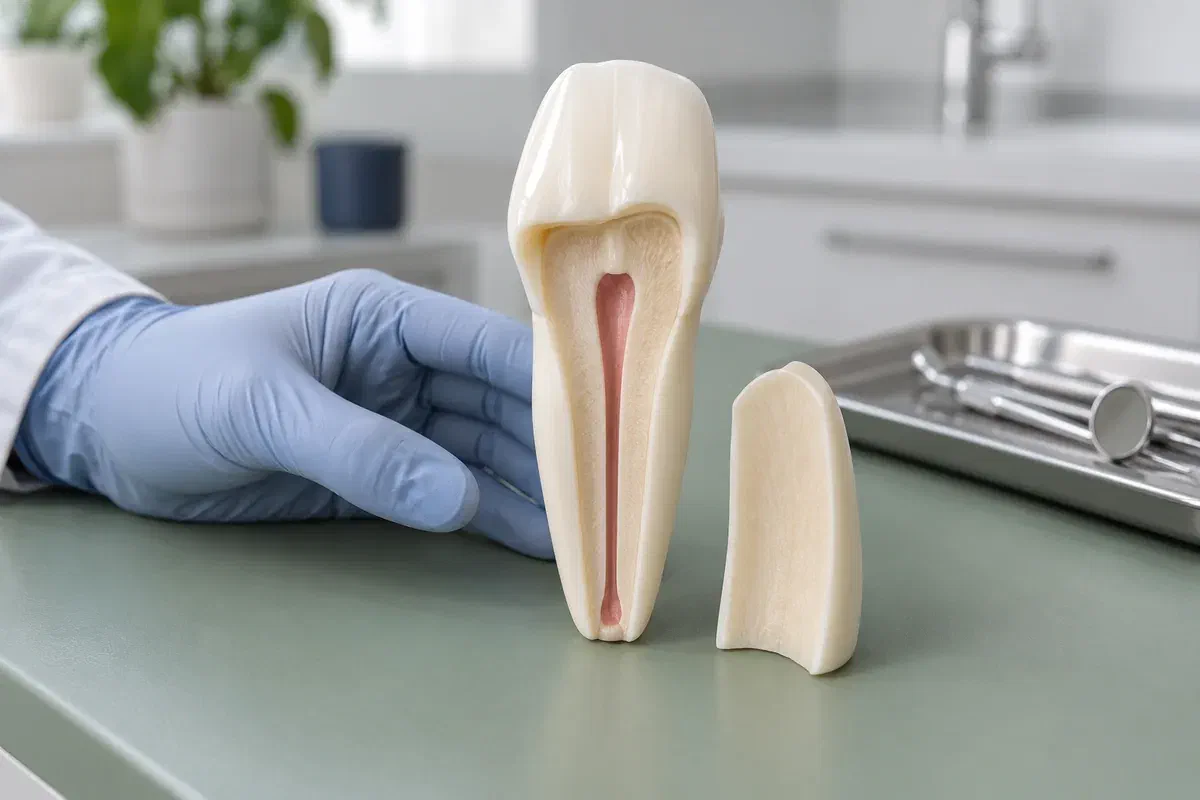
During root canal treatment the dentist removes the diseased pulp, cleans and shapes the canal and fills and seals it. For a restorable tooth, this aims to resolve the problem from within so the tooth can keep functioning once the final restoration is in place.
Whether saving it is wise depends on the diagnosis, root shape, cracks, how much tooth remains and how well a restoration can seal it. Old trauma, calcified canals or previous treatment can make a front tooth more demanding, and referral to an endodontist may be recommended for a closer assessment.
Patient information: AAE — root canal treatment
Keeping a suitable tooth avoids the need for a replacement and lets the plan focus on restoring the tooth you already have.
Shade, shape, existing damage and the access opening are part of the discussion, so the decision includes how the tooth will appear.
Tests help separate pulp disease from a crack, gum trouble or pain from elsewhere, so the choice is grounded in findings rather than a hunch.
Find out how many trips each stage needs, whether a temporary filling will be placed and who will complete the final restoration. A clear outline helps you group appointments and keeps the tooth protected along the way.
Symptoms and history are reviewed, the tooth and gums examined and suitable tests done. Imaging shows the root and bone, and the dentist gives a candid view of restorability before you decide.
Local anaesthetic is used as appropriate. A thin rubber sheet called a dental dam surrounds the tooth to keep it dry and clean, and you can ask for a pause at any point.
An opening on the back of the tooth leads to the pulp space. It is cleaned and shaped, then filled, and a temporary seal may hold until the next visit.
The opening and any damaged areas receive a suitable restoration. A review visit checks healing, and the reasons for choosing a filling, crown or other restoration are explained.
Follow the guidance from your dentist or endodontist. Some tenderness is common at first, and a temporary filling should be protected until the definitive restoration is placed.
Avoid crunching hard foods or using the tooth as a tool while it has a temporary filling. Ask what is safe to eat and when normal chewing can resume.
Keep up the routine you were shown, with a soft touch around sore gum. If the temporary breaks or falls out, call so we can advise on timing.
Root canal treatment and the final restoration are separate but connected. Book both the restoration and review, ideally together, so the tooth is sealed and monitored.
Comfort, cost of time and appearance are all reasonable things to weigh. Your history, the tooth’s structure and the test results shape the advice you receive.
Come in with that aching, injured or discoloured front tooth, and your questions about saving it. At our Bronte Street practice, the dentist reviews the findings and explains whether root canal care, extraction or a referral would serve you best.
Phone promptly about a recent injury, severe pain or swelling. Online appointment requests are for concerns that can wait a few days.
