Trauma, recent or long past
An injury can damage the pulp and, over time, narrow the canal. Mention every knock you remember, from childhood falls to recent accidents, because each affects how the tooth is assessed.


Front teeth look simple, yet some hide narrowed canals, extra anatomy or the traces of earlier treatment. If you are coming from Erin or Hillsburgh, find out how a complex anterior tooth is assessed and when a specialist helps.
It is easy to assume a front tooth must be straightforward. Many are, but not all. Every incisor and canine contains pulp, a channel of nerves and blood vessels running down the root. If it becomes infected or inflamed past healing, root canal care may let you keep a tooth that can be restored, though the anatomy inside determines how involved that care will be.
Old trauma can cause the canal to narrow or calcify over the years. Decay or a crack can reach the pulp too, and a tooth treated in the past may develop a new problem. None of this is obvious from the outside, so the dentist depends on symptoms, testing and appropriate imaging to understand what lies within.
Travelling from the rural town of Erin, north of Milton, you will want to know early whether your tooth looks routine or complex. At our Bronte Street practice the dentist can explain that, discuss a possible referral, and cover the visible side of things: shade, the access filling, remaining structure and the restoration needed later.
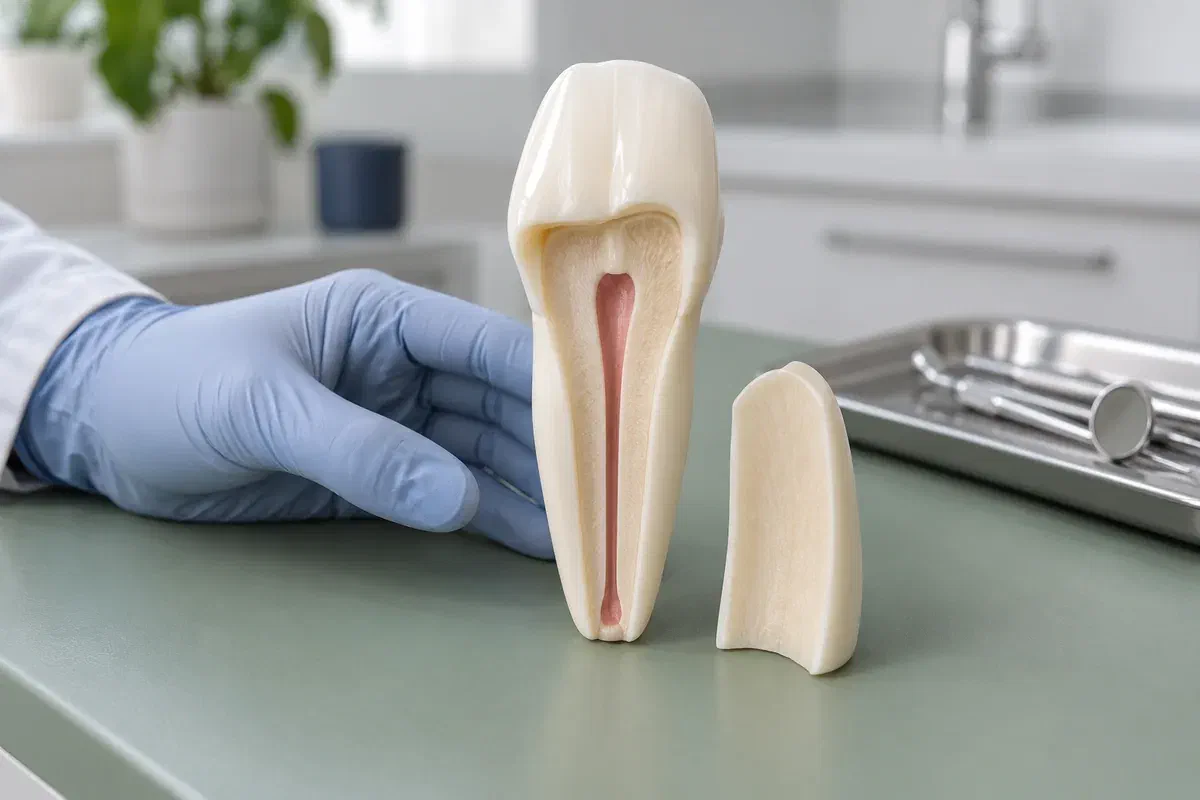
Symptoms can be strong, mild or absent. Examination helps confirm whether the pulp is involved, whether root canal care suits the tooth and whether its anatomy suggests extra expertise.
An injury can damage the pulp and, over time, narrow the canal. Mention every knock you remember, from childhood falls to recent accidents, because each affects how the tooth is assessed.
Aching after hot or cold that will not settle, discomfort that starts on its own or tenderness when biting is worth describing. Patterns help, since different conditions produce similar pain.
A tooth turning yellow or grey, or a bump near the root that returns, needs to be examined. Neither confirms a diagnosis alone, and a tooth that feels fine may still need attention.
Call right away if an adult tooth has been knocked out. For a fresh injury, a prompt phone call is the right first step, not an online booking.
Root canal treatment removes diseased pulp, cleans and shapes the canal and seals it. In a restorable tooth, that aims to resolve the problem from inside, so the tooth can continue functioning once it has a suitable final restoration.
Success depends on diagnosis, root anatomy, cracks, remaining structure and the seal of the final restoration. Calcified canals, unusual shapes and earlier root work can make treatment more demanding, and the dentist may recommend an endodontist when specialist equipment or experience would improve the outcome.
Patient information: AAE — root canal treatment
Preserving a suitable natural tooth avoids a new gap, and care can concentrate on restoring the tooth already in your smile.
The access opening, previous restorations, colour and shape are discussed together, so the treatment inside fits the final appearance.
Testing and imaging help identify the cause and the complexity, so you can understand whether general or specialist care makes most sense.
Ask how many visits may be involved, whether a temporary filling will be placed, whether a specialist could be involved and who completes the final restoration. Clarity on all four keeps the tooth protected and your trips organised.
The dentist asks about symptoms and past treatment, examines the tooth and gums and performs suitable tests. Imaging helps reveal the canal’s shape and any calcification, and restorability is judged before going ahead.
Local anaesthetic is used as appropriate, and a dental dam shields the tooth so the canal stays clean. Pauses are always possible.
Access is commonly from the back of the tooth. The canal is located, cleaned, shaped and sealed, which can take longer when it has narrowed. A temporary filling may be used between visits.
The access and any damaged structure are restored. Follow-up reviews comfort and healing, and the dentist explains which restoration suits the remaining tooth, or arranges a referral if one is needed.
Follow the instructions given by your dentist or endodontist. The tooth may feel slightly different for some time, and a temporary restoration should be handled with care until the final one is placed.
Do not crunch hard foods or open packaging with a temporarily filled front tooth. Ask what you can eat and when normal use is appropriate.
Continue the recommended routine, softly near any tender gum. Contact the team if the temporary breaks, loosens or comes out.
Sealing the canal and rebuilding the tooth are distinct stages. Schedule the restoration and reviews so the access is sealed and the tooth is monitored, particularly after complex treatment.
Questions about specialists, comfort and appearance are all welcome. The canal’s anatomy, the tooth’s history and the remaining structure all shape what is advised.
Bring a front tooth that is painful, previously treated, injured or darkening to our Bronte Street practice. The dentist will explain the findings, whether root canal care suits it, and whether a restoration, retreatment or specialist referral comes next.
Phone the clinic for any recent injury, severe pain or spreading swelling. Online requests suit appointments that are not urgent.
