Past dental trauma
A fall, a sports hit or an accident years ago can harm the pulp without breaking much tooth. List every injury you can recall, even ones you assumed were irrelevant now.


A front-tooth root canal can involve testing, treatment and a final restoration, sometimes spread over several visits. If you are travelling from Etobicoke, a well-organised plan makes each trip count and keeps the tooth protected.
Travelling a longer way for dental care works best when you know what is coming. A root canal on an incisor or canine treats the pulp, the core of nerves and blood vessels inside the tooth, once it has become infected or inflamed beyond recovery. The point is to keep a tooth that can still be properly restored.
Decay that ran deep, a crack, or trauma from last week or many years back can all bring a tooth to this point. Its outer surface may look ordinary even so. Your symptoms, careful testing and suitable imaging are what reveal the real condition of the pulp.
For anyone making the longer trip from Etobicoke to our Bronte Street practice, we try to map out the stages early: how many appointments are likely, which can be combined and what happens between them. Appearance gets the same attention, including colour, the access filling, remaining structure and the restoration needed afterward.
Sometimes the tooth hurts; sometimes it hardly bothers you at all. An exam is what shows whether the pulp is involved and whether root canal treatment is the right fit.
A fall, a sports hit or an accident years ago can harm the pulp without breaking much tooth. List every injury you can recall, even ones you assumed were irrelevant now.
Notice whether cold or heat leaves pain behind, whether aching starts on its own and whether biting is sore. Those patterns help, because conditions can produce similar feelings.
Gradual greying, or a small swelling near the root that keeps coming back, is worth an exam. Either sign alone is inconclusive, and painlessness does not confirm health.
A knocked-out adult tooth is time-sensitive, so seek advice immediately, including from emergency services closer to home if that is quicker. Do not wait for a routine appointment after a fresh injury.
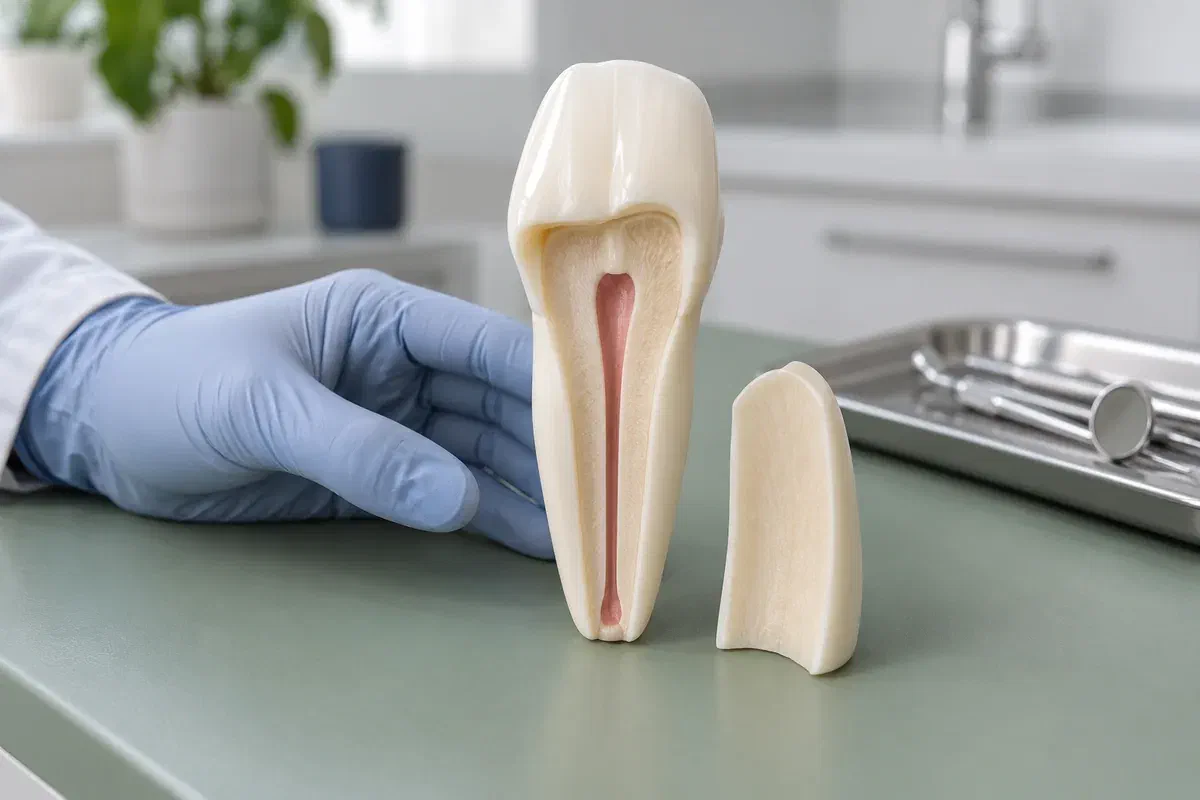
In treatment, the dentist removes the damaged pulp, disinfects and shapes the root canal and seals it. That approach aims to resolve the problem inside a restorable tooth, so it can keep working once a suitable final restoration is complete.
The outcome depends on the diagnosis, root anatomy, cracks, how much tooth remains and a reliable final seal. Front teeth with past injuries, calcified canals or earlier root work can be complicated, and a specialist endodontist may be recommended where that would help planning.
Patient information: AAE — root canal treatment
Keeping a suitable tooth means there is no space to replace, and treatment can centre on restoring the tooth already in your smile.
Shade, shape, existing damage and the access opening are discussed together, so the root work and the visible result are part of one plan.
Tests help separate pulp disease from a crack, a gum issue or pain from elsewhere, so the plan answers to findings, not to sensitivity alone.
Ask at the start how many visits to expect, whether a temporary filling will bridge the gap and who will finish the final restoration. With the whole sequence in hand, you can book efficiently and keep the tooth covered.
Symptoms and injury history are reviewed, the tooth and gums examined and appropriate tests completed. Imaging shows the root and nearby bone, and the dentist judges restorability before recommending treatment.
Local anaesthetic is used as appropriate and a dental dam keeps the tooth isolated and clean. You can ask for a pause at any time.
Entry is generally through the back of the tooth. The pulp space is cleaned and shaped, then filled; when work is split across visits, a temporary seal protects it.
The opening and any weakened areas are restored, and a review checks healing. You will hear which restoration, whether a filling or a crown, is advised and why.
Follow your dentist’s or endodontist’s directions closely. The tooth may feel different for a while, and since the next visit may be some days away, a temporary filling deserves extra care.
Do not crunch hard foods or tear packaging with a front tooth that has a temporary filling. Ask what you can eat until the permanent restoration is in.
Keep to the routine you were given, taking care around sore gums. If the temporary cracks or falls out, call us to discuss how soon you need to be seen.
Treating the canal and restoring the tooth are two different jobs. Booking the restoration and review together makes it easier to finish the plan and keep the tooth monitored.
Questions about comfort, appearance and scheduling are all welcome. The root, the visible tooth and any history of injury guide the plan.
Bring your questions about a painful, injured or darkening front tooth to our Bronte Street practice. We will explain what the tests reveal, whether root canal care is advisable, and how the restoration or a referral fits into a schedule that works for you.
Recent injuries, severe pain or swelling need a phone call, not an online request. Online booking is for non-urgent visits only.
