Injury in the past
A blow to a front tooth can affect its pulp long before anything shows. Mention old falls, sports bumps and dental accidents, even ones from childhood.


A little pimple on the gum above a front tooth that drains, fades and returns is easy to ignore. It can be a sign of infection at the root. For households across Halton Hills, here is how it is assessed and when root canal care fits.
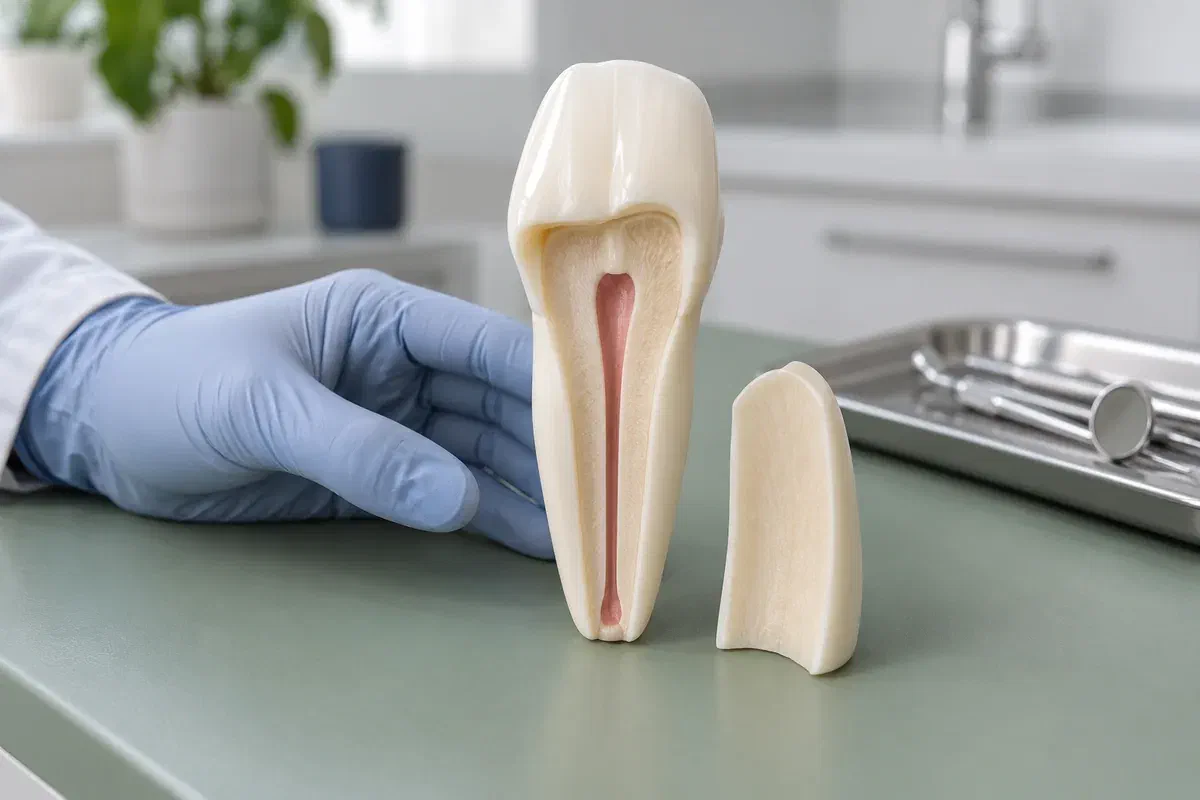
Some people only notice trouble because of a small swelling near the root of an incisor or canine, often with a bad taste when it drains. These teeth, like all teeth, contain pulp: nerves and blood vessels at the centre. An infected or irreversibly inflamed pulp can lead to changes around the root, and root canal treatment may let you keep a tooth that remains restorable.
Underlying causes vary. Deep decay, a crack or an old injury can each let the pulp break down, sometimes without much pain. The tooth may look ordinary, so diagnosis depends on testing, imaging and what you have noticed rather than on appearance.
From Georgetown, Acton, Glen Williams or the smaller hamlets of Halton Hills, it is worth calling ahead so the appointment can be planned around what the tooth needs. At our Bronte Street practice we also cover the visible side: how the tooth may look, the access filling, how much structure remains and what restoration may be required.
Not every pulp problem hurts. A careful examination confirms whether the pulp is the source and whether root canal care, or some other step, is appropriate.
A blow to a front tooth can affect its pulp long before anything shows. Mention old falls, sports bumps and dental accidents, even ones from childhood.
Cold or heat that leaves a lingering ache, spontaneous throbbing or tenderness when biting all deserve attention. Tell us when it happens, because several conditions feel alike.
A gum bump that drains and reappears, or a front tooth slowly turning grey, should be looked at. Neither alone confirms the cause, and a lack of pain does not mean the area is healthy.
For a permanent tooth knocked out of its socket, phone for advice immediately. Any fresh injury warrants a prompt call rather than a routine booking.
Root canal treatment removes infected or inflamed pulp, cleans and disinfects the canal and seals it. By dealing with the problem inside a restorable tooth, it gives the surrounding tissues a chance to heal and lets the tooth keep working once it is properly restored.
Healing and long-term success depend on an accurate diagnosis, the shape of the root, cracks, the amount of tooth left and how well the final restoration seals. Previous trauma, calcified canals or earlier treatment can complicate a front tooth, and referral to an endodontist may be advised where that helps.
Patient information: AAE — root canal treatment
Saving a suitable natural tooth avoids a gap and lets the plan focus on rebuilding the tooth that is already part of your smile.
Colour, shape, any damage and the access opening are planned together, so the inside treatment and the outside finish line up.
Testing and imaging help tell a root infection from a gum problem, a crack or pain from another tooth, so treatment follows the actual source.
Before starting, ask how many visits to set aside, whether a temporary filling will be placed and who completes the final restoration. Knowing each stage helps you book efficiently and keep the tooth protected.
We review symptoms and history, examine the tooth and gum and carry out suitable tests. Imaging checks the root and bone, and whether the tooth can be restored is decided before treatment.
Local anaesthetic is given as needed and a dental dam keeps the tooth separated and clean. Signal any time you want to stop briefly.
An opening, usually behind the tooth, reaches the pulp space. The canal is cleaned and shaped, medicated or filled, and temporarily sealed between visits when needed.
The access and any damaged areas are restored. Follow-up confirms the gum is settling, and you will learn whether a filling, crown or another restoration best protects the remaining tooth.
Use the instructions your treating dentist or endodontist provides. The tooth may feel tender or unusual for a while, and a temporary filling needs gentle treatment until the final restoration is in.
Keep hard foods and packaging away from the temporarily filled tooth. Ask what you can eat comfortably and when normal chewing can resume.
Continue brushing and cleaning as advised, gently around the area where the bump was. Call if the temporary filling breaks, loosens or comes out.
The root treatment and the final restoration are related but separate. Book both, plus the review, so the tooth is sealed and its healing can be checked.
Ask about comfort, appearance or what the swelling means. The root, the visible tooth and any earlier injury all shape our advice.
Come to our Bronte Street practice with that gum swelling, ache or colour change. After examining the tooth, we will talk through whether root canal care is suitable, and what restoration or referral would finish treatment.
Swelling that is spreading, intense pain or a new dental injury need a phone call. Please keep online requests for appointments that are not urgent.
