Any previous trauma
An earlier knock can leave the pulp more vulnerable. Mention falls, sports injuries or accidents involving the tooth, even ones from years ago that seemed minor.


A sip of cold water and a front tooth aches for a full minute afterward. That lingering pain is worth a test. If you are coming from Puslinch, learn how pulp testing works and when it leads to root canal treatment.
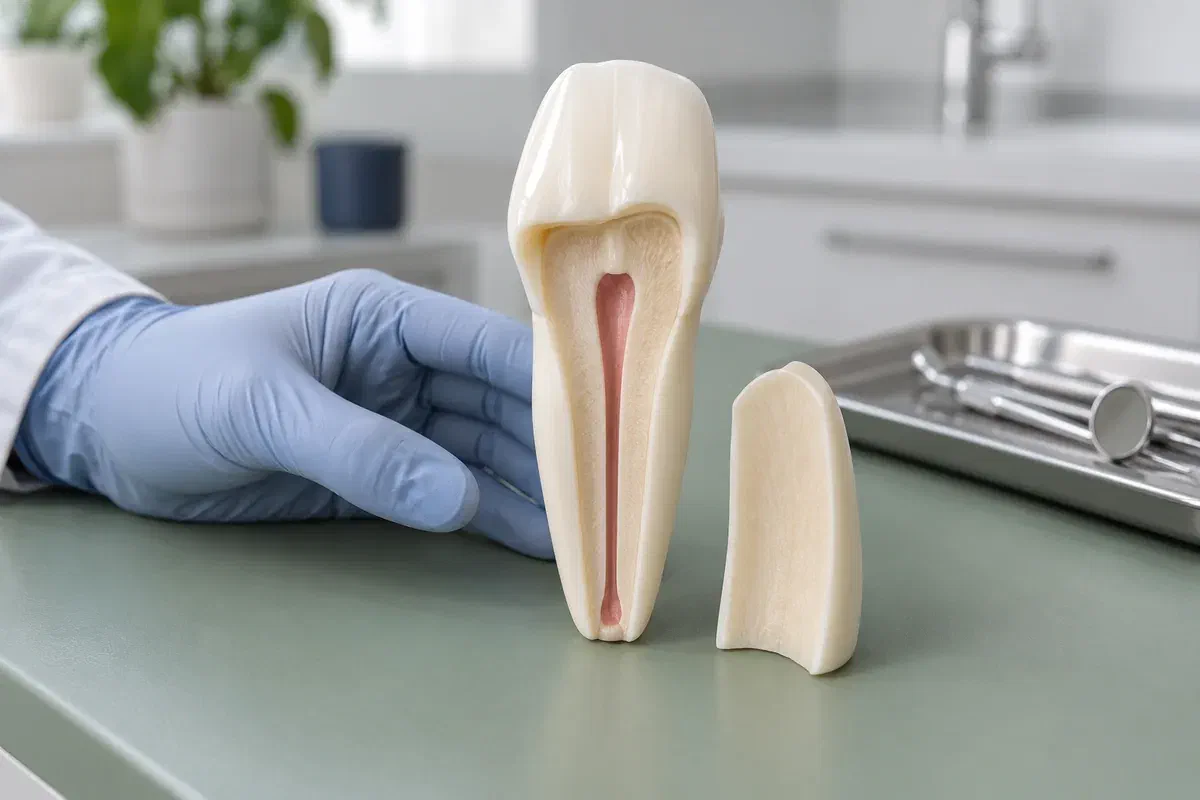
Brief sensitivity that fades in a second or two is common. Pain that keeps going after the cold is gone is a different signal. Your incisors and canines each contain pulp, a bundle of nerves and blood vessels, and when it becomes irreversibly inflamed or infected, root canal treatment may preserve a tooth that can still be restored.
Lingering pain can come from deep decay, a crack, or trauma from recently or long ago, though gum recession, worn enamel and other problems can produce sensitivity too. A tooth may look perfectly fine, so the dentist pieces together your description, a series of tests and suitable imaging.
For people travelling from the rural township of Puslinch, west of Milton, it can help to describe the pattern of pain clearly when you call so the visit can be planned well. At our Bronte Street practice we also talk through the visible side: how colour might change, the access filling, remaining structure and the restoration likely to follow.
The details of discomfort are clues, though some affected teeth have little or none. Examination and testing show whether the pulp is behind the problem, and whether root canal care is the right fit.
An earlier knock can leave the pulp more vulnerable. Mention falls, sports injuries or accidents involving the tooth, even ones from years ago that seemed minor.
Note how long pain lasts after something cold or hot, whether it wakes you or starts on its own, and whether biting is tender. Different conditions overlap, so specifics help.
A tooth getting darker or a recurring bump near its root should be examined. Neither one proves the diagnosis, and comfort alone does not confirm the pulp is healthy.
Seek advice immediately if an adult tooth has been knocked out. A new injury calls for a prompt phone call rather than a standard booking.
Once the pulp is past recovery, root canal treatment removes it, cleans and shapes the canal and seals the space. In a restorable tooth, this aims to settle the problem from the inside so the tooth can keep functioning after a suitable final restoration.
Results depend on the accuracy of the diagnosis, the root’s anatomy, cracks, how much tooth remains and a good final seal. Teeth with old injuries, narrowed canals or earlier treatment can be more involved, and the dentist may suggest an endodontist when specialist assessment would help.
Patient information: AAE — root canal treatment
Keeping a suitable tooth means no gap and allows care to focus on restoring the tooth already in your smile.
Shade, shape, the access opening and any existing damage are planned together with the root treatment, so you know roughly how the finished tooth should look before work begins.
Testing separates a pulp problem from worn enamel, a crack, gum recession or pain from elsewhere, so treatment follows findings rather than sensitivity alone.
Ask how many visits are likely, whether you will have a temporary filling and who will complete the final restoration. Knowing the whole plan helps you schedule from a distance and keeps the treated tooth covered.
The dentist asks about your symptoms, examines the tooth and gums and uses tests such as cold, tapping and bite pressure. Imaging shows the root, and restorability is assessed before recommending treatment.
The area is numbed as appropriate, then a dental dam isolates the tooth from saliva. Raise a hand if you notice discomfort or want to rest.
Access is usually from the back surface, which keeps the visible face of the tooth intact. Inside, the dentist removes the inflamed tissue, then cleans, shapes and fills the canal. If another appointment is needed to finish, a temporary seal protects the tooth in the meantime.
The opening and any damaged structure are restored. A review checks comfort and healing, and the dentist outlines whether a filling, crown or other option suits the tooth.
Follow your dentist’s or endodontist’s instructions. Some tenderness can be expected for a short while, and a temporary filling needs protecting until the final restoration is placed.
Avoid hard or crunchy foods and never open packaging with the tooth while it has a temporary filling. Ask when normal chewing is appropriate.
Stay with your recommended cleaning routine, softly around tender gum. Tell us if the temporary filling cracks, shifts or comes out.
Treating the root and restoring the tooth are two related steps. Keep the restoration and review appointments so the opening stays sealed and the tooth is monitored.
Bring questions about the tests, comfort or appearance. Your symptoms, the tooth’s history and what the examination shows all shape our recommendation.
Bring a front tooth that is sensitive, sore, injured or changing colour, and we will test it carefully at our Bronte Street practice. You will hear whether root canal care is appropriate and what restoration or referral would complete the plan.
For a fresh injury, pain that keeps you awake or any swelling, please call us. Online requests are best for non-urgent visits.
