Wear that affects every stage
Worn teeth may leave little room for restorations, and building one up can change the space for others. The dentist looks for causes such as grinding or acid before choosing where to start.


You know several teeth need work, but doing everything at once is not realistic. For people coming from Brampton, we build bite reconstruction plans that start with what matters most and set out each later stage clearly.
Hearing that many teeth need attention often leads straight to a practical question: what has to happen now, and what can wait? Work, family schedules and cost all shape the answer. A phased plan does not have to mean a compromise on care, as long as the order is chosen for clinical reasons and you understand the risks of each delay.
Bite reconstruction is the coordinated planning behind that order. It is used when worn teeth, several failing repairs, missing teeth or a combination make one-off fixes difficult to plan well. It is not a single procedure, and it does not require a crown on every tooth. The dentist looks at each tooth, how the jaws meet, the gums and supporting bone, and why problems began.
Tell us early about the limits you are working with, whether that is budget, time off or a household calendar in Brampton that is already full. Share what bothers you day to day as well. That information helps us suggest a sequence that is safe and practical for you.
Ordering treatment matters most when one tooth’s condition affects options for others. Understanding those links first keeps an early stage from making a later one harder.
Worn teeth may leave little room for restorations, and building one up can change the space for others. The dentist looks for causes such as grinding or acid before choosing where to start.
When several crowns or fillings are failing, some may need prompt attention while others can be monitored. Remaining tooth structure, bite forces, materials and home care all influence the order.
Missing teeth can shift neighbours over time, which may affect when a replacement is best placed. Tell us where you chew and what you avoid so priorities reflect daily function.
If jaw pain is part of your picture, it needs its own diagnosis. Changing the bite should not be described as a sure fix for jaw-joint symptoms, and gentler alternatives deserve discussion.
A coordinated plan lets the dentist decide tooth shape, space, replacements and timing as a set. Even if stages are months apart, early work is designed to suit what comes later rather than being redone.
Phasing has its own trade-offs. Temporary restorations need care, a delayed tooth may worsen, and total time in treatment grows. A clear plan explains these, along with fees, maintenance and tooth reduction, and notes where monitoring may be enough.
Decay, infection and cracked teeth are flagged for early care, while goals for chewing and appearance are placed later, with reasons you can follow.
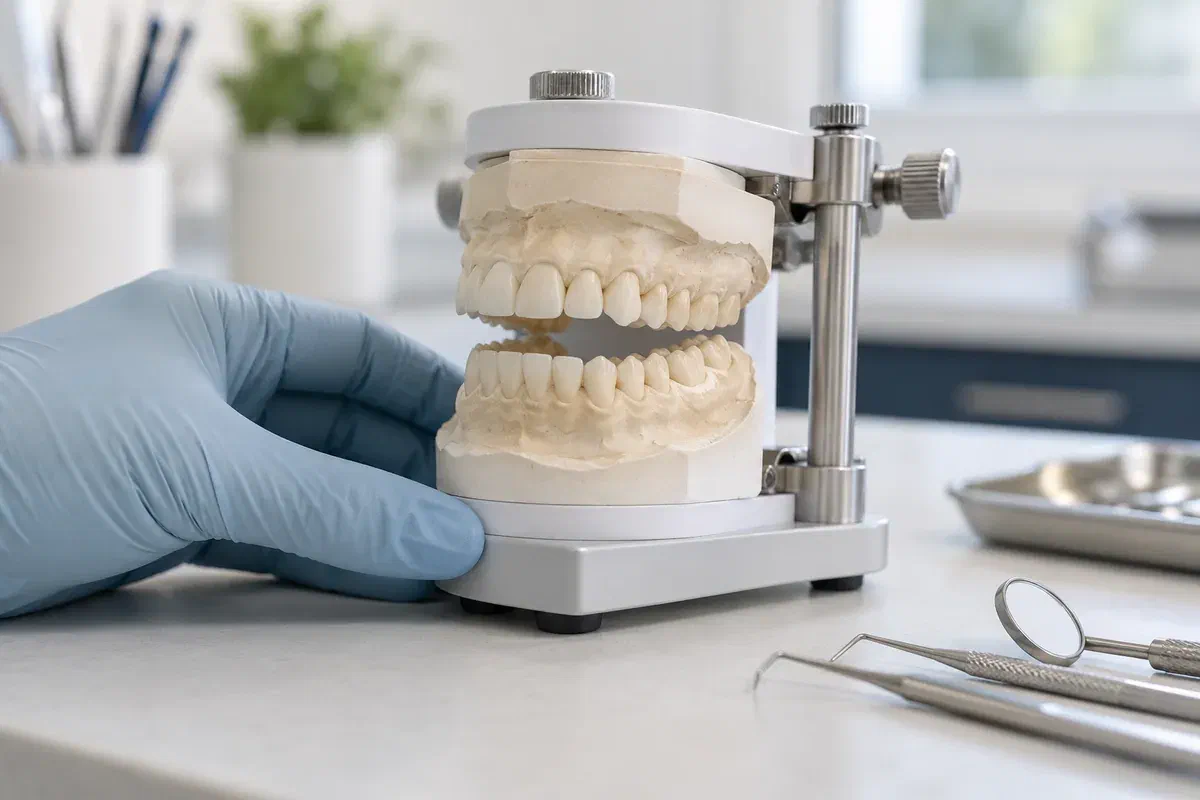
Models, photographs and sometimes provisional restorations let parts of the plan be tried and reviewed before the final restorations are made.
The plan should cover cleaning around interim and final work, regular reviews, and whether a guard is needed to protect teeth from grinding.
A phased reconstruction needs more planning than a single filling. Ask how the diagnosis is made, which stages are flexible, and what happens if a tooth’s condition changes while you wait.
We review your concerns, history, teeth, gums, restorations and relevant medical issues. Imaging, photographs, scans or models may be used to record the starting point.
We discuss your goals, fees and timing, then sort the work into urgent, important and optional. Active disease usually comes first, and a specialist may be involved for some parts.
Early visits often stabilize weak teeth. Provisional restorations may follow before final work. Any change to bite height or contacts is explained and reviewed with you.
Check-ins look at comfort, cleaning and how interim and final restorations are holding up. Report ongoing soreness promptly so it can be assessed before the next phase.
Your instructions will change as the plan progresses. Ask what each stage needs, especially for temporary restorations, and which changes should bring you back sooner.
Provisional crowns and bridges are not as strong as final ones. Clean them carefully, avoid very hard or sticky foods on them, and call if one loosens or cracks.
Bridges, implant crowns and single crowns each need their own technique. Ask the team to show you the tools that reach the spots where plaque builds up.
When a guard is recommended for grinding or clenching, wear and care for it as instructed. Bring it to reviews so the fit can be checked alongside your teeth.
Spreading treatment out should never make it harder to understand. Ask what the starting problem is, what each stage changes, what the alternatives are and who handles follow-up.
Reserve a planning appointment on Bronte Street and tell us about your worn, damaged or missing teeth and the limits you are working within. Bring any existing plans and your priorities so we can focus on a safe, realistic sequence.
Call the team if a tooth has just broken or you have significant pain or swelling. They can help decide how urgently you should be seen.
