Worn teeth with limited space
When wear has shortened teeth, there may be little room to rebuild them. The dentist considers causes like grinding or acid and whether orthodontic or other steps could help create space.


Gum care, an implant, orthodontics and new crowns can each be part of one bite plan. For people from Bolton and across Caledon, we coordinate the restorative side and keep clear who handles each step and when.
Complicated mouths sometimes need more than one kind of dental care. A gum problem might have to settle before crowns are made, a tilted tooth might need moving before a gap can be filled, or an implant might need surgery and healing first. Without a clear plan, it is easy to lose track of the order and of who is looking after which part.
Bite reconstruction is the coordinated restorative planning that ties those pieces together. It is used when wear, several failing restorations, missing teeth or a mix make isolated repairs hard to plan. It is not a standard package, and plenty of teeth may need little or nothing. The dentist assesses every tooth, the way the jaws meet, the supporting tissues and the causes of damage before mapping the sequence.
If you are travelling from Caledon, let us know which specialists you already see, if any, and how far you are willing to go for different appointments. Tell us what matters most to you as well, whether that is chewing comfort, a tooth that keeps breaking or confusion over past advice.
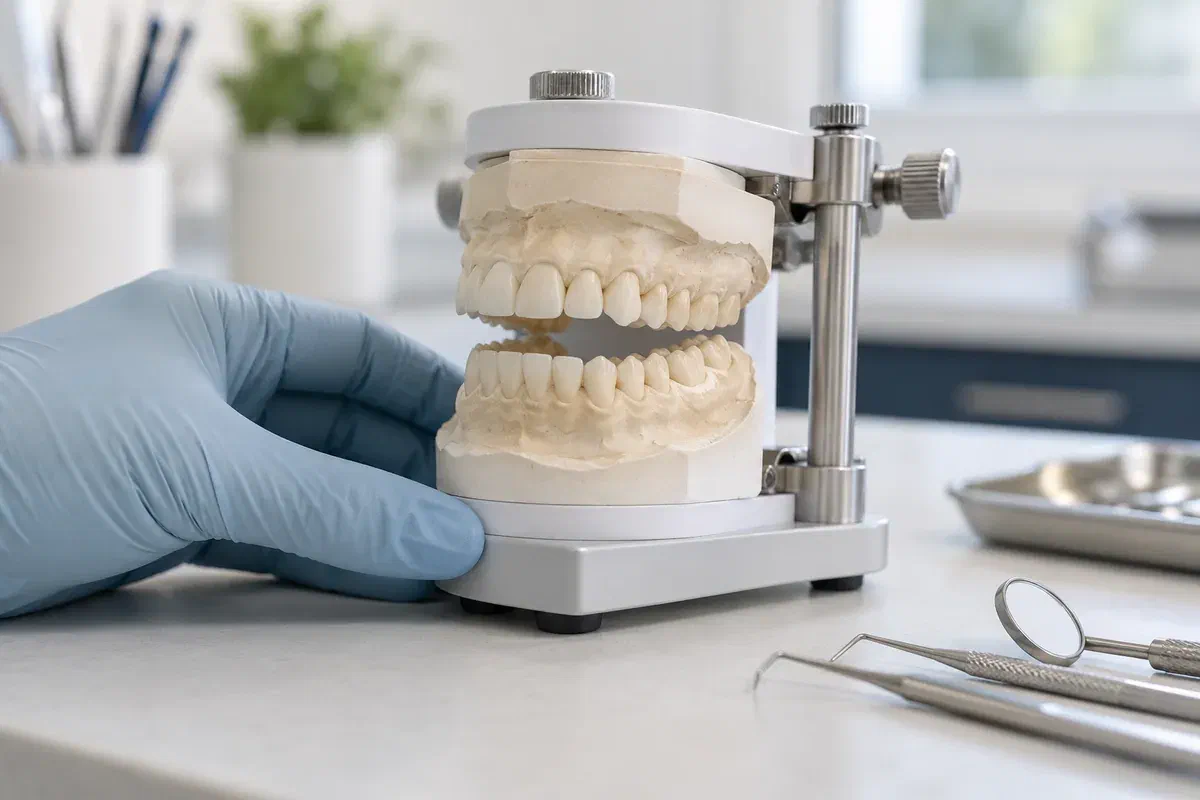
A whole-bite assessment is valuable when one tooth’s condition affects plans for others, and when gum, bone or tooth position needs addressing before restoration can work well.
When wear has shortened teeth, there may be little room to rebuild them. The dentist considers causes like grinding or acid and whether orthodontic or other steps could help create space.
Crowns and fillings that keep breaking may sit on teeth with limited structure, root canal history or gum support issues. Each of these can shape whether a specialist should be involved.
Gaps can bring tipped neighbours and shrinking bone, which affect replacement options. Explain how you chew and what you avoid so every clinician involved works from the same picture.
Jaw-joint or muscle pain has many possible causes and may need assessment by another professional. Bite reconstruction should not be offered as a promised cure for it without a separate diagnosis.
When the bite is planned as a whole, decisions about tooth shape, space, replacements and timing can be shared with each clinician involved. An implant can be placed where the future crown needs it, and orthodontic movement can aim for the spacing the restorations require.
Multidisciplinary care adds trade-offs: more appointments, more offices, more fees, longer timelines and more people to communicate with. Tooth reduction, maintenance and uncertain longevity still apply. A good plan explains these and notes when fewer steps would be reasonable.
Disease such as decay, infection or gum inflammation is addressed first, with restorative and appearance goals placed later and the reasons explained.
Study models, photographs and sometimes provisional restorations help everyone involved, including you, judge the planned result before final work.
The plan should say who reviews what afterwards, how cleaning will be handled and whether a guard is needed for grinding.
A multi-clinician reconstruction needs more planning than a single repair. Ask how the diagnosis was reached, which steps are optional, and how changes will be communicated between offices.
We look at your symptoms, history, teeth, gums, restorations and medical factors. Imaging, photographs, scans or models document the bite and can be shared with specialists with your consent.
We discuss your goals, fees and the proposed order, including any referrals. Gum disease or active decay is generally treated first, and each specialist’s role is outlined.
Specialist treatment, stabilization, provisional restorations and final work follow in turn. Changes to bite height or contacts are explained and reviewed with you before being finalised.
Follow-ups check comfort, function, cleaning and restoration condition. Report persistent symptoms early so the right clinician can investigate and decide on adjustment.
Your routine will reflect the mix of restorations, implants and natural teeth you end up with. Ask for instructions covering each area and for clarity on which office to contact.
Implant crowns, bridges and single crowns each need suitable tools. Ask the hygienist to demonstrate where plaque collects in your mouth and how to reach it.
A high contact, a sore tooth or repeated chips should be assessed. If you are unsure which clinician to contact, call us first, and avoid adjusting anything yourself.
If an appliance is recommended for clenching or grinding, follow the wear and cleaning instructions, and bring it along so its fit is reviewed with your teeth.
More clinicians should not mean more confusion. You are entitled to know what started the problem, what each person will do, what else could be tried and which office keeps track afterwards.
Book a planning appointment at our Bronte Street practice to talk about worn, damaged or missing teeth. Specialist reports, earlier proposals and a short list of what matters to you will help us map a coordinated sequence.
If a tooth has just cracked, or you have severe pain or swelling, phone us first so the team can help you decide on next steps.
