Teeth that look shorter or flatter
As enamel wears, teeth lose height and the room left for a restoration shrinks. Before rebuilding anything, the dentist looks for why the wear happened, such as grinding, clenching or acid from diet or reflux.


Another checkup, another tooth on the repair list. When worn, broken or missing teeth keep adding up, our Milton team steps back to look at how your whole bite works and plans the care in a sensible order.
Many people arrive after a run of separate fixes: a filling replaced in spring, a cracked cusp in the fall, a crown that chipped soon after. Each repair was reasonable on its own, yet the problems keep moving around the mouth. That pattern is often the signal that the teeth need to be planned as a group.
Bite reconstruction is a name for that group plan, not a single treatment. It can cover heavy wear, several tired restorations, gaps from missing teeth, or a mix of all three. Some teeth may need major work, others a small repair, and some nothing at all. The dentist decides by examining each tooth, how upper and lower teeth meet, the gums and bone that hold them, and what caused the damage.
Living in Milton means you can come in for a longer planning conversation without rearranging your whole week. Use that time to tell us what bothers you most: food you now avoid, a side you no longer chew on, a crown that keeps failing, or advice from past visits that never quite fit together.
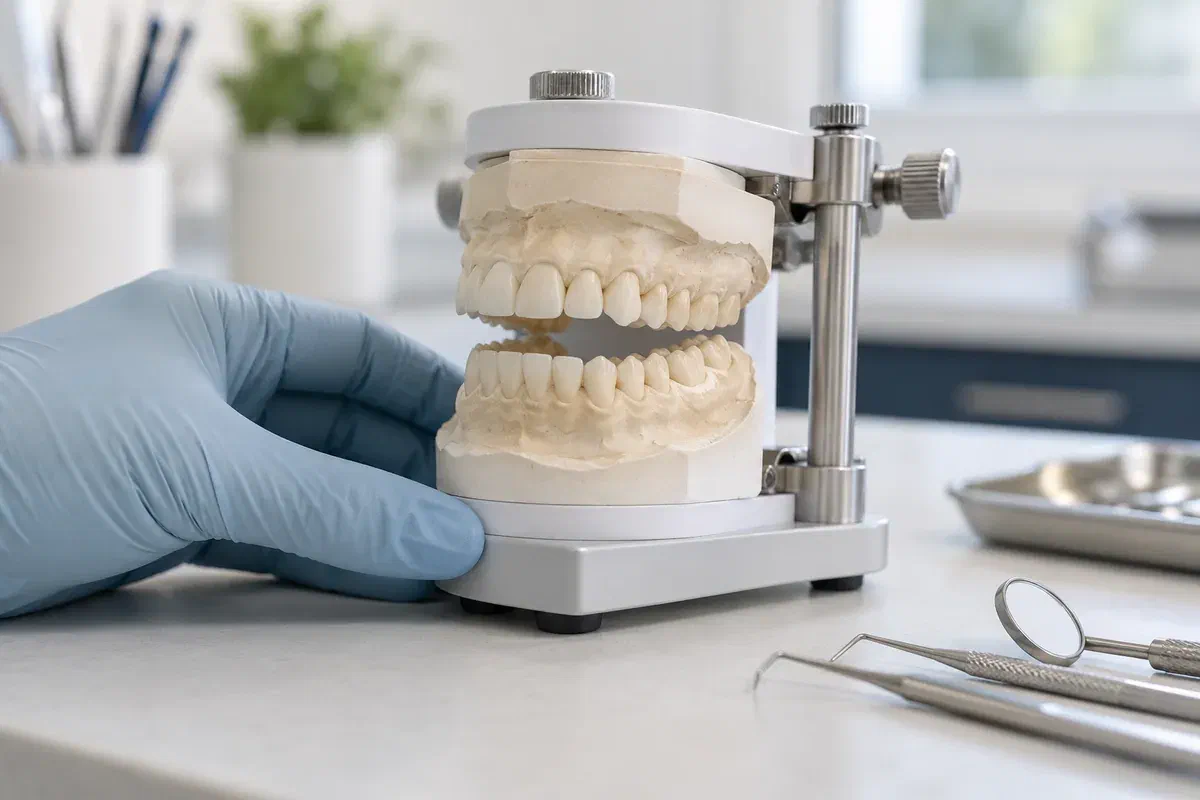
A broader assessment earns its place when fixing one tooth changes the options for its neighbours or the teeth it bites against. Mapping those links first can prevent a string of repairs that work against each other.
As enamel wears, teeth lose height and the room left for a restoration shrinks. Before rebuilding anything, the dentist looks for why the wear happened, such as grinding, clenching or acid from diet or reflux.
When fillings crack and crowns chip again and again, the newest break may not be the real issue. The amount of natural tooth left, the forces on it, the materials used and home care each play a part.
Missing teeth shift how the rest of the mouth works, and that affects how any replacement is designed. Tell us which side you favour and which foods you have quietly given up so the plan matches real life.
Pain in the jaw joint or chewing muscles can come from many sources. A bite reconstruction is not a guaranteed fix for those symptoms, and they deserve their own diagnosis and a fair look at other options.
A coordinated plan lets the dentist weigh tooth shape, available space, replacement options and timing side by side. Instead of finishing a crown and then discovering it limits the bridge beside it, each step is chosen with the later steps already in view.
Bigger plans carry real trade-offs, including cost, time in the chair, upkeep, the tooth structure that has to be removed, and no certainty about how long any restoration will last. A good plan spells those out and shows where watching or a smaller repair may be the wiser choice.
Urgent decay, infection or a cracked tooth is separated from later goals around chewing and appearance, so you can see what comes first and the reasoning behind it.
Study models, photographs and, in some cases, temporary restorations help you and the dentist test parts of the plan before anything permanent is placed.
The plan should already cover how you will clean each restoration, how often it will be reviewed, and whether a night guard or other protection makes sense.
A reconstruction takes more preparation than a single repair. It is fair to ask how the diagnosis is reached, which stages are optional, and how the plan adapts if a tooth turns out to be worse than expected.
We review your symptoms, past dental work, teeth, gums and relevant health history. X-rays, photos, digital scans or study models may be used to capture a detailed starting point.
You discuss what matters for comfort, chewing and appearance, along with fees and likely timing. Active decay or gum disease usually comes first, and some parts may involve a specialist.
Work may move from stabilizing weak teeth to temporary restorations and then final ones. Any change to how your teeth meet or to their length is explained and checked with you first.
Follow-up visits check comfort, chewing, cleaning and the condition of each restoration. Mention lingering soreness early so it can be assessed and adjusted if needed.
Care instructions vary with the mix of restorations and natural teeth in your mouth. Ask for advice specific to each area and a short list of changes that should bring you back in.
A bridge, an implant crown and a single crown are cleaned in different ways. Ask the hygienist to show you the right floss, brush or threader and where plaque builds up around your restorations.
A tooth that hits first, ongoing tenderness or small repeated chips should be looked at. Avoid probing a sore spot with hard food, and never try to file or adjust a restoration at home.
If a night guard is recommended for grinding or clenching, follow the instructions for wear and care. Bring it to each review so the fit and condition can be checked along with your teeth.
A treatment plan should make sense without a dental background. Ask about the starting problem, what will change, the alternatives and who looks after follow-up.
Book a consultation at our Bronte Street practice to talk about teeth that are worn, broken or missing. Bring any earlier treatment plans and a note of what bothers you most so we can focus on a sensible assessment and order of care.
If a tooth has just broken, or you have strong pain or swelling, please call so the team can advise on how soon you should be seen.
