Edges and surfaces worn away
Shortened or flattened teeth change your smile and leave limited space for restorations. The dentist investigates likely contributors, from grinding and clenching to acid exposure, before planning any rebuild.


Front teeth that look shorter than they did in old photos, edges that feel thin or chipped: wear creeps up slowly. If you are coming from Mississauga, we can assess why it happened and whether rebuilding the bite makes sense.
Wear rarely announces itself. A photo from ten years ago shows longer front teeth, a molar starts to look flat and shiny, or a chip appears on an edge that has gone thin. Because the change is gradual, many people only notice it once several teeth are involved and simple bonding no longer seems enough.
When wear affects much of the mouth, rebuilding a single tooth can be awkward, because its partner on the opposite jaw has worn too and there may be little room to add material. Bite reconstruction is the coordinated planning used in that situation. It is not one procedure and it does not mean every tooth gets covered. The dentist studies each tooth, how the jaws come together, the gums and bone, and the causes of wear before suggesting anything.
Bring old photos if you have them when you come in from Mississauga. They can help show how quickly things have changed. Tell us, too, what concerns you most: appearance, sensitivity, chipping, or worry about what the next few years will bring.
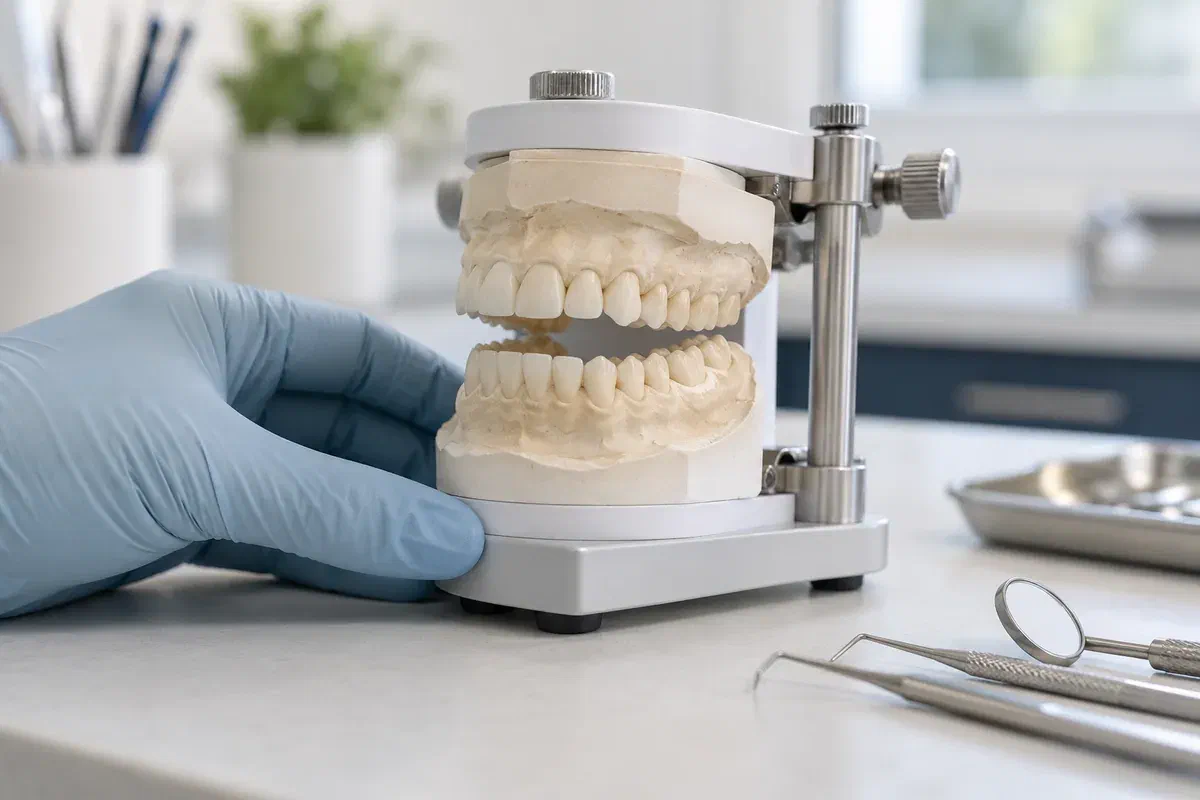
A broader assessment makes sense when one worn or damaged tooth affects the choices for its neighbours and opposite teeth. Understanding the pattern first helps avoid repairs that crowd or overload each other.
Shortened or flattened teeth change your smile and leave limited space for restorations. The dentist investigates likely contributors, from grinding and clenching to acid exposure, before planning any rebuild.
Thin enamel and older restorations can fail repeatedly under the same forces. Material choice, how much natural tooth remains, your bite and daily care are all considered together.
Missing teeth leave the remaining ones doing more work, which can speed up wear. Mention which areas you chew with and which you avoid so the plan reflects your real habits.
Jaw pain and headaches can have many causes. Rebuilding worn teeth is not a guaranteed remedy for jaw-joint symptoms, which call for their own diagnosis and a discussion of other options.
With widespread wear, the questions are linked: how much height to restore, where space can be created, which teeth to treat first and what happens to the opposing ones. A coordinated plan answers them together instead of discovering conflicts halfway through.
It also brings the downsides into the open. Fees, appointments, maintenance, preparation of natural tooth and uncertainty about lifespan are all part of the decision. In some cases slowing the wear and monitoring is the more sensible course, and that should be discussed.
Urgent problems such as decay, infection or a fractured tooth are separated from later goals around chewing and appearance, so you know what needs attention first.
Models, photographs and sometimes provisional restorations let you and the dentist judge the proposed length and shape of teeth before definitive work.
Because the original causes may persist, the plan should include cleaning advice, review visits and, where appropriate, a guard for grinding or clenching.
Rebuilding worn teeth involves careful preparation. Ask how the cause of wear will be judged, which stages are optional, and what happens if a tooth’s condition changes along the way.
We review symptoms, diet, habits, history, teeth, gums and existing work. Photos, imaging, scans or study models may be used to record wear and the current bite.
We talk through goals for comfort, chewing and appearance, plus fees and sequence. Active disease is generally addressed first, and some aspects may involve a specialist.
Treatment may include stabilizing weak areas, testing a new shape with provisional restorations and then placing final ones. Changes to bite height are explained and reviewed with you.
Reviews look at comfort, function, cleaning and how restorations are holding up. Report persistent soreness so the dentist can examine it and adjust if needed.
Your aftercare depends on which restorations and natural teeth are involved. Ask for clear guidance on each area and on the changes that should prompt a review.
Bridges, implant crowns and single crowns each need suitable tools. Ask the hygienist to show you where plaque collects and how to reach those spots.
Small chips, a tooth that contacts first or tenderness that lingers should be looked at. Avoid testing a sore area with hard foods or trying to fix a restoration yourself.
If you grind or clench and an appliance is recommended, follow the instructions for wear and cleaning. Bring it to reviews so its fit and condition can be checked.
A treatment plan should be clear to you without dental training. Ask about the cause, what will change, the alternatives and how follow-up will work.
Book a visit at our Bronte Street practice to discuss teeth that are worn, chipped or missing. Bring older photos, previous plans and your priorities so we can focus on the cause of wear and a sensible order of care.
A sudden break, strong pain or facial swelling is better handled by phone first, so the team can judge how soon you need an appointment.
