Teeth worn down over the years
Long-term wear can shorten teeth and leave little room for a new restoration. The dentist looks at what drove it, such as grinding, clenching or acid exposure, before deciding how much to rebuild and where.


Fillings from decades ago, a bridge from the nineties, crowns from three different offices: older dental work tends to age at once. Close to Old Milton, we help you sort out what needs attention first across the whole bite.
A mouth that has been cared for over a long life usually carries a record of it. Silver fillings, root canal teeth, an older bridge and a few crowns can each have done their job well, yet reach the end of their service within a few years of one another. Replacing them one by one, without a shared plan, can leave the bite less stable than before.
Bite reconstruction simply means planning those teeth together. It is not one fixed procedure, and it does not mean crowning everything. The dentist checks each tooth and restoration, how the upper and lower teeth meet, the health of the gums and bone, and why wear or breakage happened. The plan that follows may mix small repairs, larger restorations and teeth left alone.
If home is in Old Milton, the town’s historic downtown, our Bronte Street practice is close at hand for a proper planning visit. Bring what you know about your dental history, even roughly, and tell us what bothers you most: a tooth you chew around, a bridge that feels loose, or a nagging sense that past advice never added up.
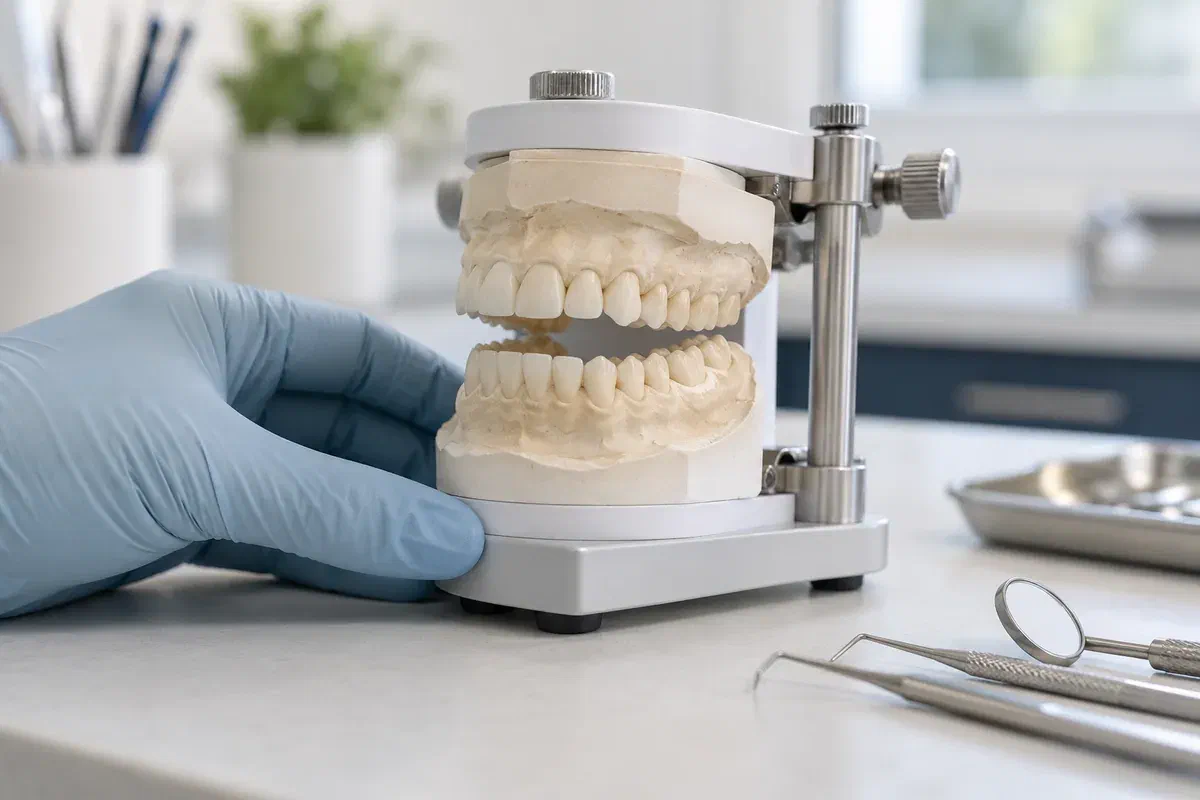
A wider review helps when one tooth’s condition shapes decisions about the teeth around it. Understanding those links first can stop a cycle of separate repairs that each solve one problem and create another.
Long-term wear can shorten teeth and leave little room for a new restoration. The dentist looks at what drove it, such as grinding, clenching or acid exposure, before deciding how much to rebuild and where.
Edges that leak, fillings that crack and crowns that chip often appear in clusters. The remaining tooth structure, the materials, the forces from your bite and your cleaning routine all shape what replaces them.
When a tooth has been missing for years, neighbours may tip and opposing teeth may drift, changing how a replacement can be designed. Tell us where you chew comfortably and where you have stopped trying.
Jaw aches and clicking have many possible causes. Reshaping the bite should not be offered as a sure cure for jaw-joint symptoms unless there is a separate diagnosis and an honest talk about other approaches.
Looking at the whole bite lets the dentist consider tooth height, available space, replacement choices and timing together. That way a new crown is not placed before anyone knows how it will sit beside a future bridge or implant.
There are honest trade-offs with any larger plan: fees, time, ongoing upkeep, loss of some natural tooth during preparation, and no promise about how long each restoration will last. A careful plan names these and points out where watching a tooth, or a smaller repair, may serve you better.
Problems needing prompt care, like decay, infection or a cracked tooth, are separated from later goals for comfort and appearance, so the order of treatment is easy to follow.
Models, photographs and sometimes temporary restorations let you see and feel parts of the plan before final work is made, where that step is appropriate.
The plan should include how you will clean around each restoration, how often it will be checked, and whether a protective guard is worth adding.
A reconstruction calls for more planning than one repair. Ask how the diagnosis will be made, which stages could be optional, and what changes if a tooth proves weaker than it looked.
We go over your symptoms, previous treatment, teeth, gums, existing restorations and relevant medical history. Imaging, photos, scans or study models may be used to record the current state of the bite.
Together we discuss goals for comfort, chewing and appearance, along with costs and timing. Active disease is normally treated first, and some steps may need a specialist’s involvement.
Treatment may begin with stabilizing weak teeth, then move to temporary restorations and final work. Any change to bite height or how teeth meet is explained and reviewed with you, never slipped in.
Review visits look at comfort, function, cleaning and the state of each restoration. Mention soreness that does not settle so it can be examined and, where needed, adjusted.
Your instructions will depend on which restorations and natural teeth are involved. Ask for a clear explanation of how to clean each area and which changes mean you should call.
Bridges, implant crowns and single crowns each need their own approach. Ask the team to show you suitable floss, brushes or threaders and where plaque gathers around your restorations.
A tooth that suddenly hits first, a tender spot that lingers, or chips that keep appearing should be checked. Avoid biting hard on a sore area, and do not try to alter a restoration yourself.
When a guard is advised for grinding or clenching, wear and clean it as instructed. Bring it to reviews so the team can check its fit and condition alongside your teeth.
You should be able to follow a treatment plan without any dental training. Ask about the original problem, what will change, the alternatives and who oversees follow-up.
Arrange a consultation at our Bronte Street practice to talk over teeth that are worn, broken or missing. Bring any past treatment plans, records you can find and your own priorities so the visit can focus on a realistic order of care.
If a tooth has broken suddenly, or you are dealing with real pain or swelling, please phone so the team can judge how soon you should come in.
