Short, worn-down teeth
Wear reduces tooth height and the space for restorations, and it can affect appearance. The dentist looks for contributing factors, including clenching, grinding and acid, before planning a rebuild.


Sore jaw, worn teeth, a feeling that your bite is off. It is natural to hope one fix will solve all three. From Puslinch, you can get an honest assessment of what rebuilding the bite can help with, and what needs a different diagnosis.
Some people come in with a mix of complaints: teeth that have worn short, a crown that keeps chipping, and an ache near the ear that is worse in the morning. It is tempting to assume one cause and one cure. In reality these can be linked, partly linked or entirely separate, and sorting that out comes before any decision about rebuilding teeth.
Bite reconstruction is a coordinated restorative plan for teeth that no longer function well together, often because of wear, failing restorations, missing teeth or a combination. No two plans are alike, and crowning every tooth is not the default. The dentist assesses individual teeth, how the jaws close, gums and bone, and why the damage happened, then suggests treatments in a chosen sequence.
Travelling in from Puslinch, it helps to arrive with notes on your symptoms: when the ache appears, which teeth feel sensitive, what you avoid eating and any past advice. Tell us your priorities too, so the conversation focuses on what will make the biggest difference to you.
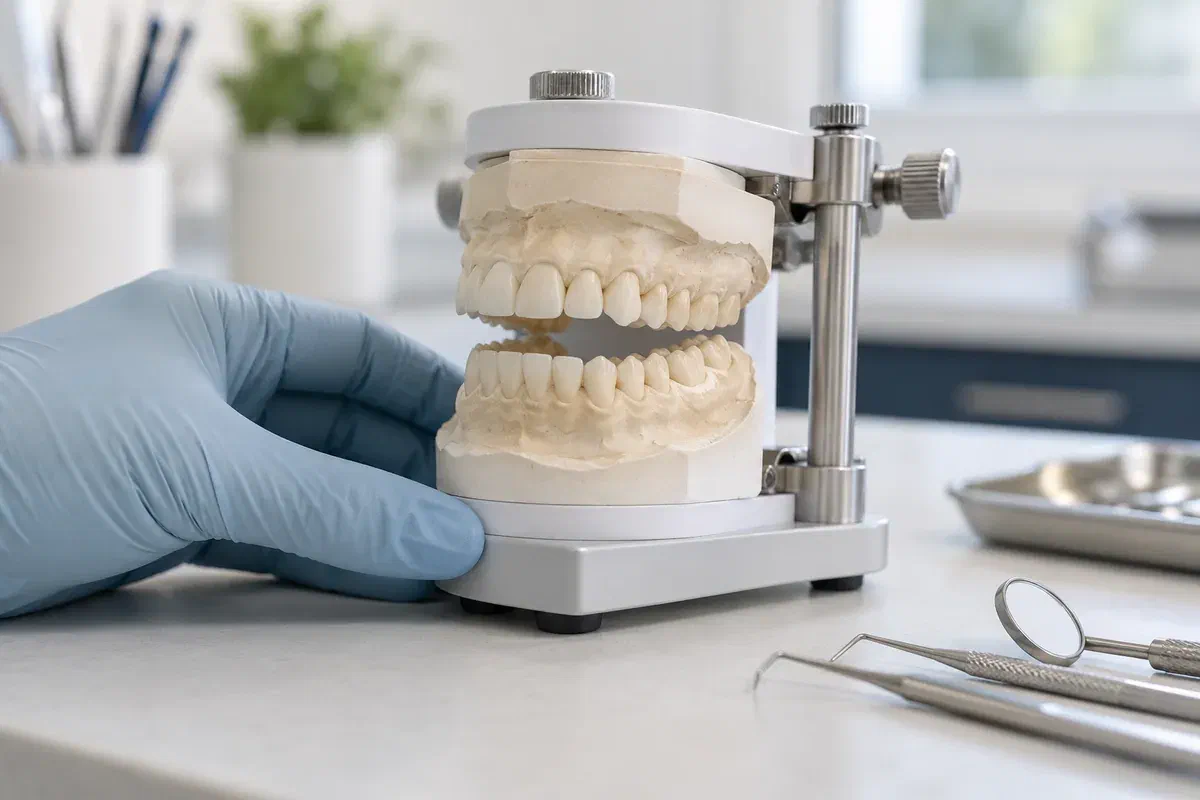
A full-bite assessment is useful when the state of one tooth affects options for others. It is also the moment to separate tooth problems from symptoms that may need another kind of care.
Wear reduces tooth height and the space for restorations, and it can affect appearance. The dentist looks for contributing factors, including clenching, grinding and acid, before planning a rebuild.
Fractured fillings and chipped crowns in several places may reflect bite forces, thin remaining tooth or materials. The plan has to address why they fail, not just the latest break.
Gaps shift the chewing load onto fewer teeth, which can affect how replacements are designed. Describe the side you use and the foods you skip so the assessment reflects real function.
Pain in the jaw joint or chewing muscles has many possible sources. Bite reconstruction should not be presented as a certain cure for it without a separate diagnosis and a discussion of reversible alternatives.
When the teeth are planned together, decisions about tooth height, space, replacements and sequencing can be made with the full picture in view. That helps avoid one restoration limiting the next, and it keeps the focus on problems restoration can actually solve.
Any large plan comes with trade-offs, including fees, appointments, maintenance, tooth removed during preparation and uncertainty about how long work lasts. Where jaw symptoms are involved, there is added uncertainty about cause. A careful plan says so and points out when monitoring or reversible care makes more sense.
Decay, infection and fractures are dealt with before longer-term goals for comfort, function and appearance, so you understand why each step is placed where it is.
Study models, photographs and sometimes temporary restorations allow a new shape or bite to be trialled, so you can judge it before final work is made.
Cleaning access, review appointments and any guard for clenching or grinding are part of the plan, because restorations need looking after for as long as they last.
Reconstruction calls for more planning than a single filling. Ask how each part of the diagnosis is reached, which treatments are optional, and how the plan changes if new findings emerge.
We review symptoms, history, teeth, gums, restorations, jaw movement and relevant health factors. X-rays, photos, a digital scan or a set of models can then capture how your teeth come together.
We discuss which problems are dental, which may need other assessment, and what your goals are. Active disease is usually treated first, and some issues may need a specialist or your physician.
Where restoration is the right answer, it may move from stabilizing teeth to provisional work and then final restorations. Bite changes are explained and reviewed before they become permanent.
Reviews check comfort, chewing, cleaning and restoration condition. Tell us early about symptoms that persist or change so they can be investigated further.
No single routine suits every rebuilt mouth. Ask for guidance on each restored area, on the natural teeth around it, and on the symptoms that should prompt a call.
Single crowns, bridges and implant restorations collect plaque in different places. Ask for a demonstration so you know which floss, brushes or threaders to use.
A high spot, a tooth that stays tender or a jaw ache that returns should be reported. Do not keep testing the area with hard foods or try to adjust a restoration yourself.
If a guard is advised for grinding or clenching, follow the instructions for wear and care. Bring it along to every review, since a guard that has warped or worn through protects less.
Your treatment plan should be understandable without a dental background. Ask what the starting problem is, which symptoms the plan addresses, the alternatives and who follows up.
Book a consultation on Bronte Street and tell us about worn, damaged or missing teeth, along with any jaw or muscle symptoms. Bring past plans and notes so we can separate the issues and suggest a sensible sequence.
Call the team if you have a newly broken tooth, strong pain or swelling. They will help you decide how soon you should be seen.
