A chipped or rough surface
A piece of porcelain may break while the underlying framework remains intact. The size, location, exposed material, and pressure on that area help determine whether smoothing or a bonded repair is reasonable.


A chipped or broken bridge can interrupt eating and confidence. Arrange a Milton assessment to understand what has failed, protect the supporting teeth, and discuss whether repair or replacement makes sense.
A dental bridge replaces a missing tooth or several teeth by connecting replacement teeth to supporting teeth or implants. When part of that restoration breaks, the visible chip is only one part of the assessment. The dentist also needs to understand whether the bridge is stable and its supports are healthy.
A small porcelain chip, a fractured connector, and a bridge that has come loose can require very different responses. Some localized defects may be repairable; others affect the strength or fit of the whole restoration. A repair should not conceal an underlying problem with a supporting tooth.
At our Milton clinic, describe when the damage happened and whether the bridge moves, hurts, or catches your tongue. Bring any detached pieces in a container. If you have records identifying the bridge or implant system, those details may help the team assess the next step.
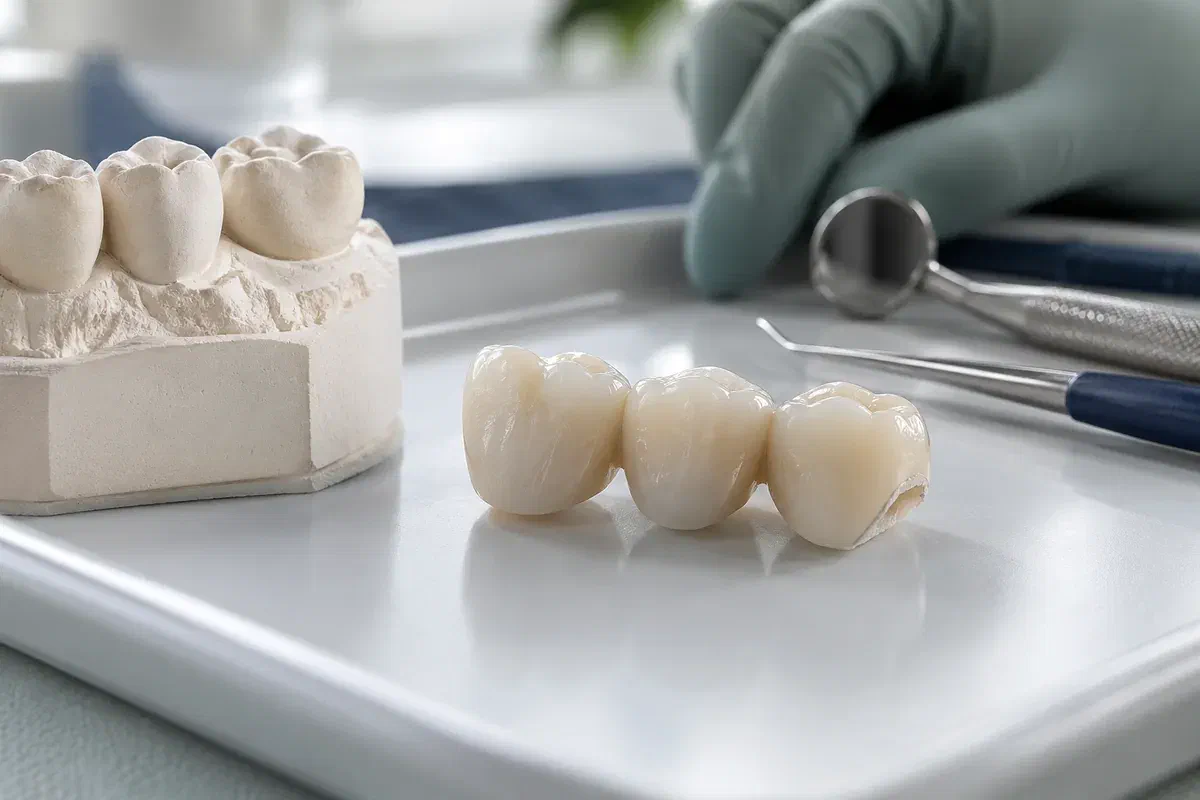
A bridge does not need to fall out completely before it deserves attention. Call about new damage or movement so the team can discuss the timing of assessment and how to protect the area.
A piece of porcelain may break while the underlying framework remains intact. The size, location, exposed material, and pressure on that area help determine whether smoothing or a bonded repair is reasonable.
A bridge that rocks or feels loose may have a problem with its attachment or one of its supports. Avoid repeatedly testing the movement, and do not try to secure the restoration with household adhesive.
Sensitivity, tenderness, or swelling near a bridge can reflect more than a surface fracture. The dentist assesses the supporting teeth, gums, and bite rather than assuming the visible break is the only concern.
If a loose component becomes a choking risk or you have difficulty breathing, seek emergency help. Let the clinic know about a detached bridge or piece when arranging your assessment.
Repair may be a conservative option when the damage is limited and the bridge otherwise fits and functions adequately. Its purpose is to restore a manageable defect without replacing sound work unnecessarily, provided that the material and location make a repair suitable.
A repaired surface does not make an ageing or weakened bridge new again. Bond strength, appearance, wear, and the original cause of fracture all affect the result. The discussion should distinguish a temporary measure from a repair intended for longer service.
Patient information: Cleveland Clinic — dental bridges
The examination helps separate a localized material defect from a structural problem that compromises the bridge or its supporting teeth and needs a different solution.
Sharpness, cleaning access, and tooth contacts can be assessed alongside appearance. A useful repair should make sense in the way the bridge is actually used.
If repair is unlikely to be dependable, you can discuss why and compare replacement options. That conversation can include the condition of the supports and any interim needs.
The appointment may begin with diagnosis and stabilization rather than a definitive repair. Ask what can be accomplished at the visit and whether laboratory work or a further appointment may be needed.
The dentist examines the restoration, checks its stability, and reviews how the break occurred. Existing records can help identify the material or implant components when those details influence possible repair methods.
The gums and supporting teeth or implants are evaluated. Imaging may be recommended to investigate decay, root problems, or other findings that cannot be understood from the visible surface alone.
Depending on the findings, care may involve smoothing, a localized repair, reattachment, or planning a replacement. Any temporary measure and its limitations should be explained before you rely on it.
Fit, bite, comfort, and cleaning are checked after treatment. Ask what signs of further trouble to watch for and whether a later review is needed to reassess the repair and its supports.
Follow the instructions given for the particular material and procedure. If the bridge is temporarily secured or awaiting replacement, your eating and cleaning advice may differ from routine bridge maintenance.
Avoid using the repaired area to crack hard foods or open packaging. Ask whether any foods should be avoided while a temporary measure is in place and when normal use is appropriate.
A bridge requires access around its supports and beneath the replacement tooth. Have the team demonstrate suitable floss or interdental tools for your design rather than forcing a tool into a tight space.
A renewed change in fit, sharpness, or bite deserves a review. Save any detached piece and contact the clinic; repeatedly pushing a loose bridge back into position can complicate assessment.
A bridge can fail in several different ways. Bring the pieces, describe any movement or discomfort, and ask how the supporting teeth influence the recommendation.
Arrange an assessment at our Bronte Street practice to review a chipped, broken, or unstable bridge. We can examine the restoration and its supports, discuss realistic repair options, and explain what further care may be required.
Please call if the bridge is loose, painful, or associated with swelling. Online requests are for non-urgent appointments.
