A chip that leaves a sharp spot
The outer porcelain can break while the core holds firm. Size, location, exposed material, and the bite on that area help decide whether polishing or a bonded repair could work.


Is a broken bridge an emergency, or can it wait for a regular visit? For Brampton households, we help you judge the urgency, examine what failed and the teeth holding it, and explain whether repair or replacement fits.
With work and family calendars already full, it is tempting to put off a bridge that has chipped but still feels mostly fine. Sometimes that is reasonable. Other times, a small break is the first sign of a loose seal or a weakened anchor tooth, and waiting makes the eventual repair larger.
A bridge replaces missing teeth by fusing one or more artificial teeth to anchors on either side, either natural teeth or implants. So when it is damaged, the dentist considers the false tooth, the joints between units, and the health of the anchors, not only the piece that broke.
Coming from Brampton, a call is the best first step. Describe when the damage happened, whether the bridge moves or hurts, and whether eating or speaking is affected. We can then suggest timing. Keep any fragments in a small container, and bring any records about the bridge or implant system.
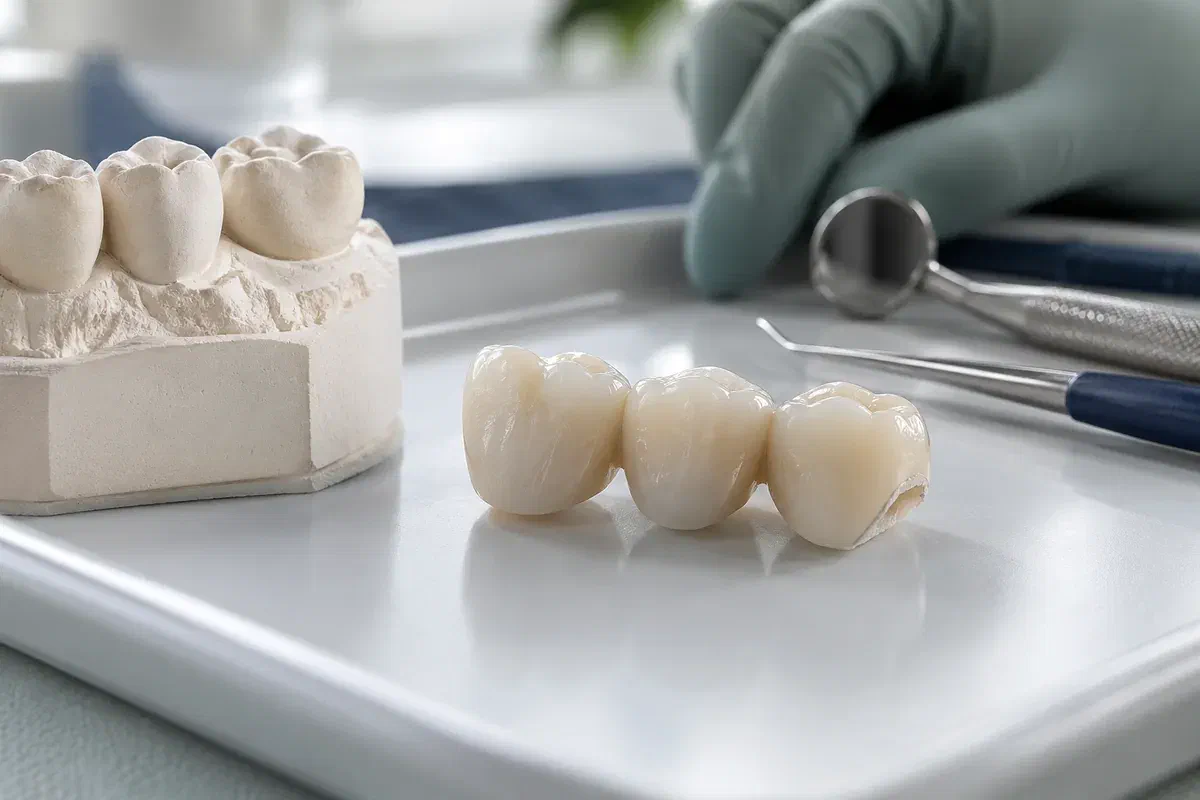
A bridge does not have to come out before it deserves a call. Report new damage or movement and the team can advise how soon to come in and how to protect the area until then.
The outer porcelain can break while the core holds firm. Size, location, exposed material, and the bite on that area help decide whether polishing or a bonded repair could work.
Movement usually bumps a visit forward, since a failed seal or anchor tends to get worse. Avoid wiggling it, and never try to secure it with glue from home.
Ache, sensitivity, or gum swelling near the bridge can mean an anchor tooth or the gum underneath is involved. The dentist checks supports, gums, and bite rather than assuming only the porcelain is at fault.
If a loose part becomes a choking risk or you have trouble breathing, get emergency help immediately. Mention any detached bridge or piece when you call to book.
When damage is limited and the bridge still fits and functions, a repair can be a conservative option that keeps sound work in place. Whether it is practical depends on the material and where the defect sits.
Even a well-done repair has limits on an older bridge. The bond, the colour, how it wears, and the reason for the break all influence the result. You should understand whether a given fix is meant to tide you over or to last for longer service.
Patient information: Cleveland Clinic — dental bridges
The assessment shows whether you are dealing with a contained chip or a structural or anchor problem that needs prompt attention and a different solution.
Sharp edges, cleaning access, and bite are reviewed together with appearance, so any repair suits how you eat and look after the bridge.
If repair is unlikely to be dependable, the dentist explains why and compares options, including anchor health and what to do in the interim.
Often the opening visit is about understanding the failure and making you comfortable, with the finished repair booked separately. Feel free to ask what is achievable that day and whether a lab will be involved.
The dentist looks over the bridge, feels for movement, and hears your account of what happened. Notes from previous treatment can reveal the material or implant parts, which narrows the repair choices.
Attention turns to the teeth or implants carrying the bridge and the gum around them. An x-ray can show decay, root damage, and other trouble that no visual exam would catch.
The findings decide the care: smoothing, a small repair, re-cementing, or a plan for a new bridge. Should a provisional fix be placed, you will hear what it can and cannot handle.
Before you leave, the fit, the way your teeth meet, comfort, and cleaning access are rechecked. Ask what warning signs to watch for and whether a return visit is sensible.
What you are told to do afterward will reflect the exact repair and material. Expect stricter rules about food and cleaning if the bridge is only held provisionally or a replacement is still being made.
Let the other side handle crunchy, hard foods for now, and keep the bridge away from bottle caps and wrappers. Check how long the temporary rules apply before you chew normally.
Daily, reach the hollow under the false tooth and the edges where it meets each anchor. A hygienist can demonstrate threaders or slim brushes sized for your particular bridge.
Fresh looseness, a new sharp spot, or teeth meeting differently all deserve another look. Save anything that breaks away and phone us instead of pressing the bridge back down yourself.
No two bridge failures are quite alike. Bring whatever came off, mention any wobble or soreness, and ask why the state of your anchor teeth shapes the advice.
A short conversation by phone usually settles whether you need to come in soon or can plan ahead. When you visit our Bronte Street practice, the dentist reviews the bridge and its anchor teeth, sets out the realistic choices, and tells you plainly what else may be worth doing.
Movement, pain, or a swollen gum around the bridge calls for a phone call, not an online form. The booking form suits routine, non-urgent requests.
