A broken surface
Chipped porcelain can leave the framework intact. The size and site of the chip, the exposed material, and the pressure on it guide whether smoothing or a bonded repair is sensible, not a home filing job.


When a bridge breaks far from the dentist, a quick fix from the pharmacy shelf can look tempting. If you’re coming from Erin, call us first, then let us examine the bridge and its anchors and explain a repair that will actually hold.
In a rural household, the idea of fixing a loose bridge yourself can feel practical. There is glue in the drawer and a temporary dental kit at the pharmacy. But pressing a bridge back onto an anchor tooth that may be decayed or cracked can trap bacteria, damage the bridge, and make a proper repair harder.
A bridge is a connected restoration: replacement teeth fused to anchor teeth or implants on either side of a gap. When it breaks or loosens, the cause might be worn cement, a fractured connector, chipped porcelain, or an anchor problem. Only an examination can tell which, and each has a different solution.
From Erin village, Hillsburgh, or the surrounding countryside, start with a call. Describe when it happened, whether the bridge moves or hurts, and whether you can eat. Store the bridge or any fragments in a clean, closed container, and bring any notes naming the material or implant system.
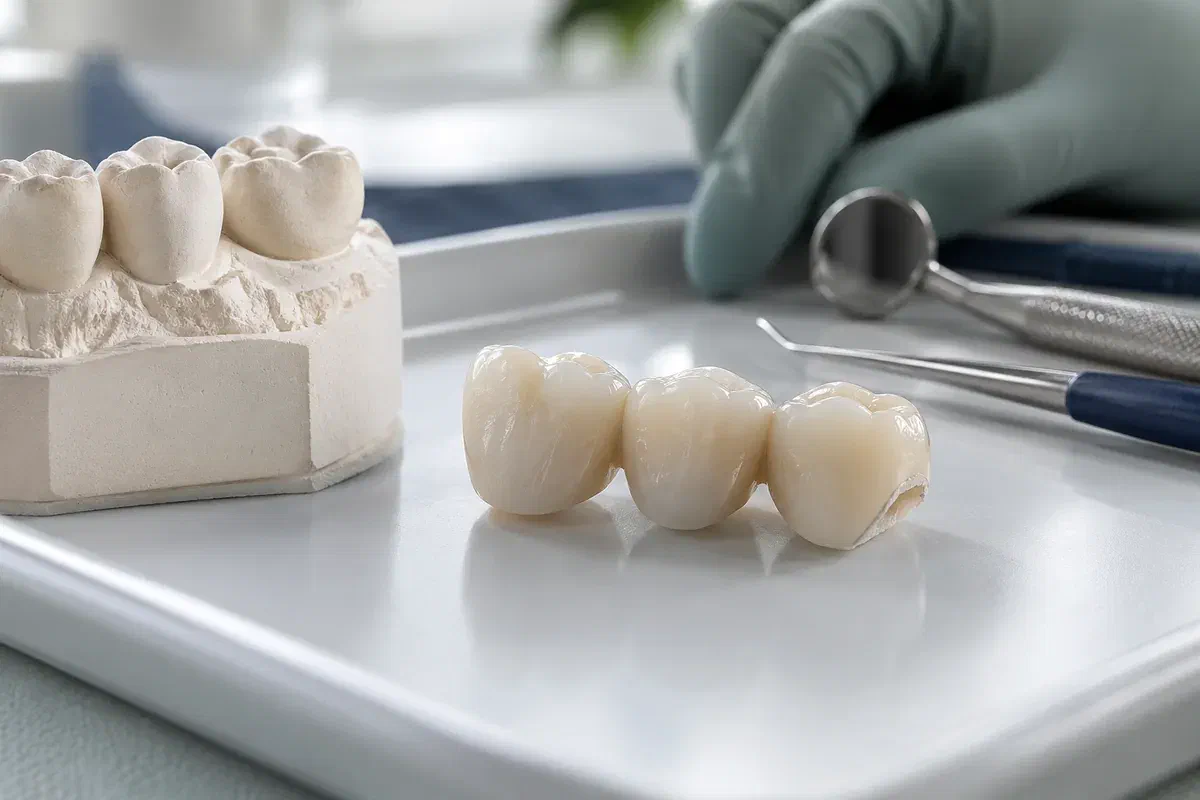
You do not need to wait for the whole bridge to come out. A call about new damage or movement lets the team advise on timing and what is safe to do in the meantime.
Chipped porcelain can leave the framework intact. The size and site of the chip, the exposed material, and the pressure on it guide whether smoothing or a bonded repair is sensible, not a home filing job.
Looseness may mean failed cement or a weakened anchor. Gluing it back can seal in decay and damage the fit. Avoid testing it repeatedly and keep household adhesives away.
Pain, sensitivity, or swelling suggest that the anchor tooth or gum may be involved. The dentist evaluates supports, gums, and bite rather than assuming the visible damage is the only concern.
If a loose piece becomes a choking risk or breathing is difficult, get emergency help immediately. Otherwise, tell us about any detached bridge or fragment when you book.
If the damage is limited and the bridge still fits and functions, a professional repair can be a conservative option. It restores the defect without replacing sound work, when the material and location make a bond practical.
There are limits. A repair on an older bridge varies in bond strength, colour match, and wear, and it will not remove the cause of the original break. You should understand whether a fix is temporary or intended for longer service before relying on it.
Patient information: Cleveland Clinic — dental bridges
An examination separates a minor surface chip from a structural or anchor problem that a home fix would only hide.
Edges, cleaning access, and bite are reviewed with appearance, so the repair is comfortable and practical for daily use.
If a repair would not be reliable, you learn why and can compare replacement options, including the condition of the anchors and interim arrangements.
Your first appointment may focus on diagnosis and stabilization. Ask what can be completed in that visit and whether laboratory work or a return trip is likely, so you can plan the drive.
The dentist examines the bridge in and out of the mouth if it has come out, checks the inside for decay or residue, and asks what happened. Records can identify materials or implant parts.
Anchor teeth or implants and the gums are evaluated. X-rays may be recommended to look for decay, root problems, or other issues that cannot be seen from the surface.
Care may involve smoothing, a localized repair, professional re-cementing, or planning a replacement. If a temporary step is used, its limits are explained.
Fit, bite, and comfort are checked afterward. Ask what warning signs to watch for and whether a follow-up visit can be combined with another appointment.
Aftercare depends on the procedure and material. A bridge that is held temporarily or awaiting replacement may need more cautious eating and cleaning.
Avoid biting hard foods or opening packaging with the bridge. Ask which foods to skip while a temporary measure is in place, and when normal chewing can resume.
Plaque under the false tooth and around the anchors can lead to decay that loosens a bridge. Ask the team which threader or interdental brush suits your restoration.
If the bridge loosens again, keep it safe and call. Pushing it back or gluing it at home can complicate the next assessment and may damage the anchor teeth.
Bridges break in different ways. Bring the pieces, mention anything you tried at home, and ask how the anchor teeth affect the recommendation.
Whether it is chipped, cracked, loose, or already stuck back in with something from the drawer, bring it to our Bronte Street practice. The dentist checks it and the anchor teeth, then walks you through repairs that are likely to hold.
Ring us for a bridge that moves, hurts, or has a puffy gum beside it. Online booking covers non-urgent visits.
