A chipped facing
When the outer layer breaks off, the frame underneath may still be intact. The dentist weighs the chip’s depth and location, the material left exposed, and how much force lands there before suggesting a polish or bonded patch.


Travelling from Etobicoke for a cracked or loosened bridge makes sense when each visit counts. We plan appointments carefully, examine the restoration and its anchor teeth, and tell you honestly whether repair is worth it.
From Toronto’s west end, a dental visit takes a real slice of your day, so it helps to arrive with as much information as possible. A phone call beforehand lets us understand whether you have a chipped surface, a cracked unit, or a bridge that has lifted, and plan the appointment around that.
Each of those failures means something different. Bridges carry chewing forces across a gap, held up by anchor teeth or implants at each end. Porcelain can flake from a sound frame, while a crack at a joint or a loose seal often signals trouble that reaches the anchors, and a quick cosmetic fix would just cover it.
Bring the bridge or any broken pieces in a closed case, along with any records naming the material or implant brand. Tell us how the bridge feels now: steady or moving, sore or comfortable. That detail helps us decide what can sensibly be done in one sitting and what may need a lab and a return trip.
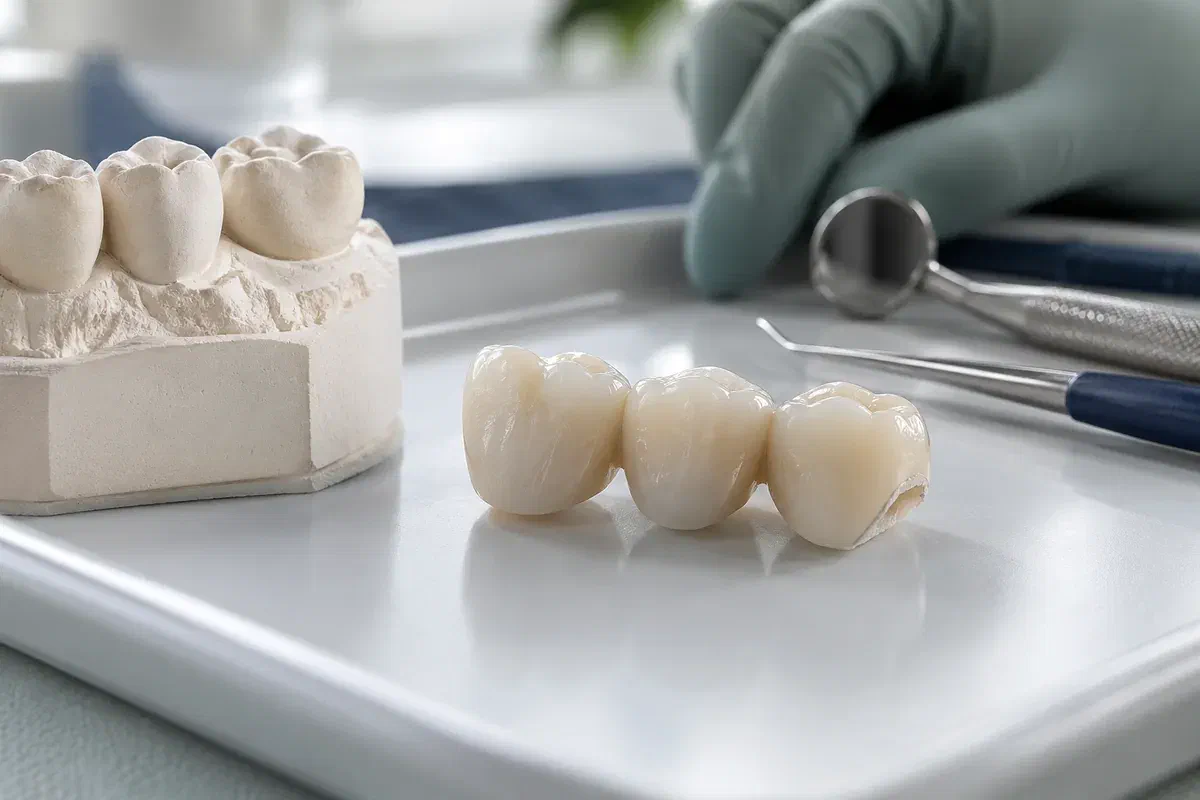
Most bridge damage can be planned for, but a few signs call for faster help. Phone us first, and if symptoms are severe, consider urgent care closer to home rather than delaying.
When the outer layer breaks off, the frame underneath may still be intact. The dentist weighs the chip’s depth and location, the material left exposed, and how much force lands there before suggesting a polish or bonded patch.
Movement suggests a broken cement bond or a problem with an anchor. Try to leave it alone instead of checking it constantly, and skip any temptation to hold it with superglue or similar products.
Facial swelling, fever, or pain that is escalating may need prompt attention nearby. Milder tenderness around an anchor still deserves a call, since decay or gum disease beneath the bridge can be the real cause.
Call 911 or go to the nearest emergency department if a loose piece threatens your airway or breathing is difficult. For other urgent issues, closer care may be quicker; let us know about any detached bridge when you book.
If the bridge is only lightly damaged and still seats and chews properly, repairing it can avoid an early replacement. That only works when the material and the location of the defect allow a bond that will hold up to normal use.
Being realistic matters, especially when visits involve travel. A repair on an older bridge carries limits around bond strength, shade match, and wear, and it does not remove the original cause. You should know whether a fix is designed as a holding measure or a longer-term solution.
Patient information: Cleveland Clinic — dental bridges
The exam establishes whether the issue is a small surface flaw or a structural or anchor problem, so you are not travelling for repeated patches that cannot last.
Edges, bite contact, and how easily you can clean beneath the bridge are checked as carefully as appearance, so a repair is comfortable for the ride back and beyond.
Should repair be a poor bet, you hear the reasons and compare alternatives, including what your anchors can bear and how to manage in between visits.
We try to combine steps where that is safe. Still, the first appointment may centre on finding the cause and stabilizing the bridge. Ask whether lab fabrication or a second trip is likely so you can plan your calendar.
The dentist checks the bridge’s condition, whether it moves, and how it was damaged. Any records you bring can reveal the material or implant hardware and shorten the planning.
Anchor teeth or implants and the gum tissue are reviewed. If imaging is needed to look for hidden decay or root changes, it can usually be done during the same visit.
Depending on what is found, the dentist may polish, bond a small repair, reattach the bridge, or plan a new one. If a temporary solution is placed, you will be told how far to trust it.
Fit, bite, and comfort are checked, and you are shown how to clean around the work. Ask which symptoms would justify a call, and whether a review could be paired with another appointment.
Guidance will reflect the material and what was done. A bridge seated provisionally, or one awaiting a replacement, often comes with tighter rules about chewing and cleaning.
Skip hard nuts, ice, and bones on that side, and do not use your teeth as scissors for packaging. Ask what to avoid while any temporary measure is holding.
Plaque builds beneath the pontic and around the anchor teeth. A threader, water flosser, or tiny interdental brush can reach it; ask to be shown the right one for your bridge.
If roughness, looseness, or a bite change returns, call first so we can judge urgency and plan. Keep any piece that comes off, and avoid repeatedly pushing a loose bridge back.
Every damaged bridge is different. Bring what came off, describe the symptoms, and ask how your anchor teeth affect the recommendation.
Arrange a visit to our Bronte Street practice for a bridge that is chipped, cracked, or unsteady. The dentist examines the bridge and the teeth that hold it, explains which repairs are practical, and maps out any next steps so later trips are kept to a minimum.
Phone first for a bridge that is moving, painful, or causing swelling. Use the online form only for routine bookings.
