

Illustrative dental consultation about a damaged bridge
Restorative Dentistry

Broken Dental Bridge Repair in Halton Hills

Bridges rarely break for no reason. For people across Halton Hills, our team looks for what caused the chip, crack or loosening, checks the anchor teeth, and helps you choose a repair that addresses the cause as well as the damage.

Halton Hills bridge assessments

Why did it break in the first place?

An olive pit, years of night-time clenching, a bite that has gradually shifted, or decay creeping under an anchor: bridges fail for many reasons. Fixing the damage without understanding the cause can mean the same break returns, sometimes sooner than expected.

Think of a bridge as a small span. Artificial teeth sit in the middle, supported by crowned natural teeth or implants at either end. Stress can show up as chipped porcelain, a crack where units join, or a seal that lets go. The dentist reads the type of damage as a clue to what has been loading it.

From Georgetown, Acton, Glen Williams, or the hamlets in between, start with a call. Explain what you felt and when, and whether the bridge now moves, aches, or snags your tongue. Bring broken pieces in a small container and any notes about who made the bridge or which implant system was used.

Request a bridge assessment
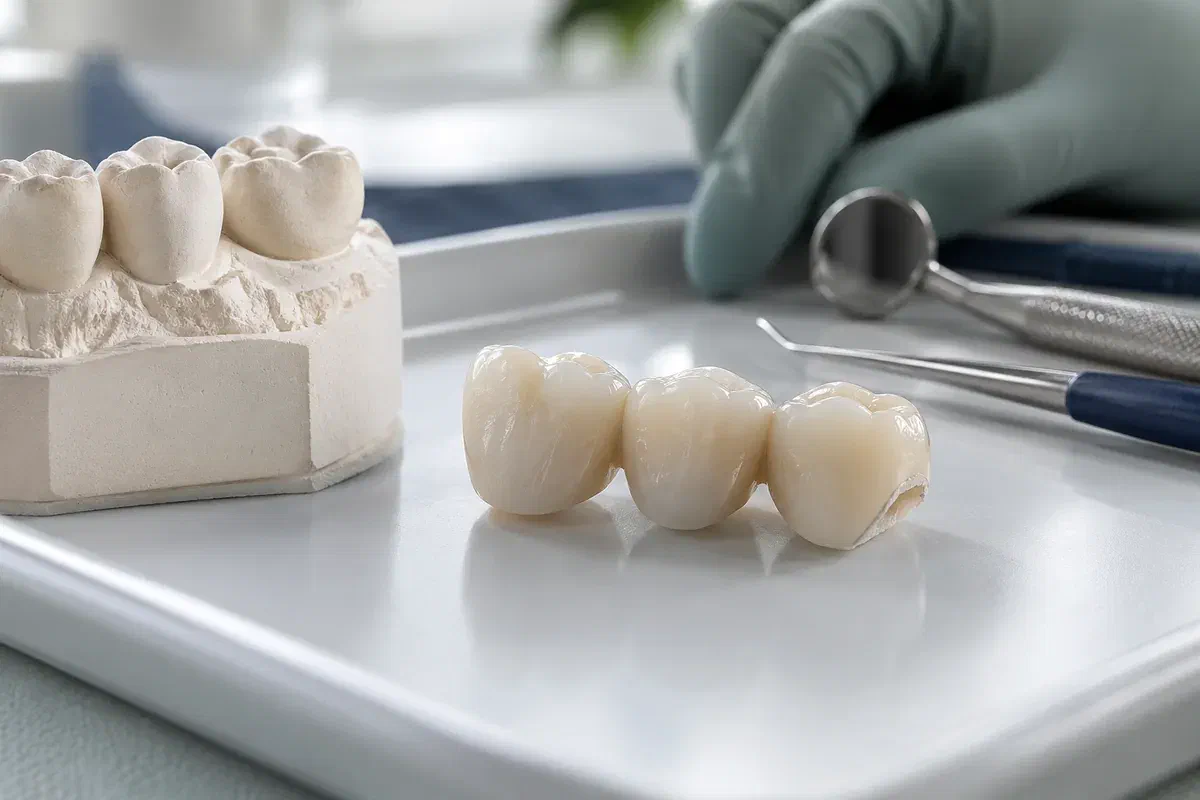
Illustrative ceramic bridge with a chipped edge beside a dental model
Clues in the damage

How it broke hints at why.

You do not need to wait until the bridge drops out. Calling about new damage or a wobble means the team can advise on timing and how to keep the area safe meanwhile.

Chips along the biting edge

Porcelain that breaks along the edge, especially with flat wear facets nearby, may suggest heavy biting or grinding. Whether polishing or a bonded repair is reasonable depends on the chip’s size, position, exposed material, and load.

Rocking at one end

A bridge that lifts on one side can mean the cement has washed out or an anchor tooth has decayed or fractured. Avoid testing it, and keep household adhesives well away.

Ache when you bite down

Pain on biting, cold sensitivity, or gum swelling near an anchor can reflect a problem inside the tooth or under the gum. The dentist assesses anchors, gum health, and bite before deciding what the visible damage means.

Get emergency help if a loose part could be inhaled or swallowed, or breathing is affected. When you book, tell the clinic if the bridge or a piece of it has come away.

Fixing the cause, not just the chip

A repair should make sense for how you bite.

With limited damage and a bridge that still fits well, a repair can be the conservative choice. It aims to restore the defect while leaving sound work in place, provided the material and location support a lasting bond.

Repairs have honest limits. They will not undo general wear on an older bridge, and their strength and appearance depend on the material and on what caused the break. If grinding or a bite change is involved, protecting the repair can matter as much as the repair itself.

Patient information: Cleveland Clinic — dental bridges

The underlying cause identified

The examination separates an isolated chip from a pattern of overload, decay, or anchor failure that would undermine a simple repair.

Bite and comfort reviewed

Sharpness, cleaning access, and how your teeth come together are checked along with appearance, so the plan fits the forces the bridge actually faces.

A grounded replacement discussion

If a repair would not be dependable, you hear why and compare alternatives, including the health of the anchors and how to manage in the interim.

Working it out

Detective work comes before the repair.

Your first visit may be mostly diagnosis and stabilization. Ask what the dentist can finish at that appointment and whether laboratory work or a second visit is likely.

  1. Read the damage

    The dentist studies the break pattern, checks how secure the bridge is, and asks about habits such as clenching. Prior records can help identify materials or implant hardware.

  2. Check anchors, gums, and bite

    The supporting teeth or implants and the gum are examined, and your bite is assessed. Radiographs might be advised to look for decay, root fractures, or other hidden issues.

  3. Repair, reseat, or plan anew

    Depending on findings, care could involve polishing, a localized repair, re-cementing, or planning a replacement. A temporary step is explained, limits included, before you rely on it.

  4. Protect the result

    Fit and comfort are checked, and the dentist may discuss adjusting the bite or a protective guard if overload was a factor. Ask about warning signs and follow-up timing.

Living with the repair

Lighten the load on the bridge.

Aftercare depends on the procedure and material. A bridge held temporarily or awaiting replacement may come with stricter guidance than a finished repair.

Rethink hard-food habits

Popcorn kernels, hard candy, and ice are common culprits. Keep them off the repaired side, never open packages with your teeth, and ask which foods to skip while a temporary measure holds.

Wear a guard if advised

If grinding or clenching contributed, a night guard may be suggested to spread the forces. Clean beneath the bridge daily too, using a threader or interdental brush the team recommends.

Report any repeat of the problem

If chipping, looseness, or bite discomfort recurs, book a review. Save any piece that breaks off and contact us; pushing a loose bridge back repeatedly can complicate the assessment.

Possible paths

Matching the treatment to the failure

Ask how a given repair addresses both the damage and its cause, and how long it may reasonably last. Knowing the alternatives puts a modest fix into context.

For a limited chip

Smoothing or a small bonded repair

A small defect can sometimes be polished or rebuilt when the framework is sound. The material, position, and contact with opposing teeth decide whether it will be useful.

When an undamaged bridge has loosened

Recementation

An intact bridge may be reseated if it fits accurately and its anchors are healthy. Decay, fractures, or poor fit are corrected first rather than sealed under new cement.

When the bridge can no longer be trusted

A replacement approach

A major fracture, a failing anchor, or ongoing overload may make replacement wiser. That might mean a new bridge or another tooth-replacement method, chosen once findings are clear.

What people want to know

Causes, prevention, and repair choices

Bridges break for different reasons. Bring the pieces, mention any habits or symptoms, and ask how your anchor teeth affect the advice.

(905) 876-4488
Can grinding my teeth break a dental bridge?
It can contribute. Grinding and clenching place heavy, repeated forces on porcelain and connectors. If signs of overload are present, the dentist may discuss a protective night guard along with repairing the bridge.
Does a night guard protect a repaired bridge?
For people who grind or clench, a guard can help spread the forces and reduce stress on the repair. Whether one is advisable depends on your bite and the type of bridge, so ask during your visit.
Could a change in my bite have caused the break?
Possibly. Shifting teeth, new restorations nearby, or wear can change how forces land on a bridge. The dentist checks your bite as part of the assessment to see whether an adjustment would help.
What makes a chip suitable for bonding?
Generally, a smaller chip in an area under less pressure, on a bridge that is otherwise sound, is a better candidate. Large defects or chips near a connector are often less predictable to repair.
Can you look at an implant bridge that has a broken screw or part?
Yes. The dentist identifies whether the issue involves the bridge, a screw, an attachment, or the implant. Records of the system are helpful, and some parts may require working with the clinic that placed the implant or a specialist.
If the cause is not fixed, will my bridge break again?
It may. Repairing the damage without addressing overload, decay, or fit can lead to a repeat. Ask what likely caused the failure and what would signal that replacement should be considered.
From Halton Hills

Understand the break before it happens again.

Bring a chipped, cracked, or loosened bridge to our Bronte Street practice. We look for the cause as well as the damage, check the anchor teeth and bite, and talk through realistic repair choices.

Call rather than booking online if the bridge is moving, hurting, or the gum is swollen. Online booking is for non-urgent visits.

Visit Milton Dental Clinic
Unit 1, 342 Bronte St. S, Milton, ON L9T 5B7
Get directions Clinic hours
Monday–Thursday
11am–7pm
Friday–Sunday
By appointment only

Areas we serve

  • Milton
  • Oakville
  • Mississauga
  • Georgetown
  • Halton Hills
  • Acton
  • Campbellville
  • Brampton
  • Burlington
  • Puslinch
  • Rockwood
  • Erin
  • Caledon
  • Etobicoke
  • Old Milton
  • Bronte Meadows
  • Timberlea
  • Dorset Park
  • Dempsey
  • Clarke
  • Beaty
  • Coates
  • Harrison
  • Scott
  • Willmott
  • Ford
  • Bowes
  • Cobden
  • Walker
  • Mountain View
  • Milton Heights
  • Hawthorne Village
  • Valley View
  • Fallingbrook
  • Nassagaweya
  • Trafalgar
  • Esquesing
  • Nelson
  • Brookville
  • Moffat
  • Glen Williams
  • Norval
  • Limehouse
  • Stewarttown
  • Ashgrove
  • Hornby
  • Silver Creek
  • Speyside
  • Scotch Block
  • North Oakville
  • River Oaks
  • Glen Abbey
  • West Oak Trails
  • Palermo
  • Bronte Creek
  • College Park
  • Joshua Creek
  • Uptown Core
  • Preserve
  • Iroquois Ridge
  • Lisgar
  • Meadowvale
  • Meadowvale Village
  • Churchill Meadows
  • Erin Mills
  • Central Erin Mills
  • Streetsville
  • East Credit
  • Creditview
  • Heartland
  • Sheridan
  • Mount Pleasant
  • Credit Valley
  • Huttonville
  • Churchville
  • Springbrook
  • Northwest Brampton
  • Bram West
  • Fletcher's Meadow
  • Fletcher's Creek South
  • Alton Village
  • Orchard
  • Millcroft
  • Headon Forest
  • Tansley
  • Brant Hills
  • Tyandaga
  • Kilbride
  • Lowville
  • Aberfoyle
  • Morriston
  • Arkell
  • Hillsburgh
  • Freelton
  • Carlisle
  • Waterdown
  • Flamborough
  • Mountsberg

How can we help?

Milton Dental Clinic

Have a question about your smile? Choose the option that works best for you.

For urgent dental concerns, please call.
Messages are reviewed during clinic hours.