A rough patch or missing flake
Surface porcelain can chip without the framework failing. The size and location of the defect, what is exposed, and the forces on that tooth guide whether smoothing or a bonded repair might be enough.


Food catching under the bridge, a strange taste, or a faint wobble can be early signs of a failing restoration. From Mississauga, have it examined so we can find the cause, protect the anchor teeth, and plan a sensible fix.
Not every broken bridge breaks loudly. Sometimes the first clue is a lunch that leaves debris wedged in a spot that used to stay clean, a sour taste near one tooth, or a slight movement you notice only when you press with your tongue. These small changes are worth taking seriously.
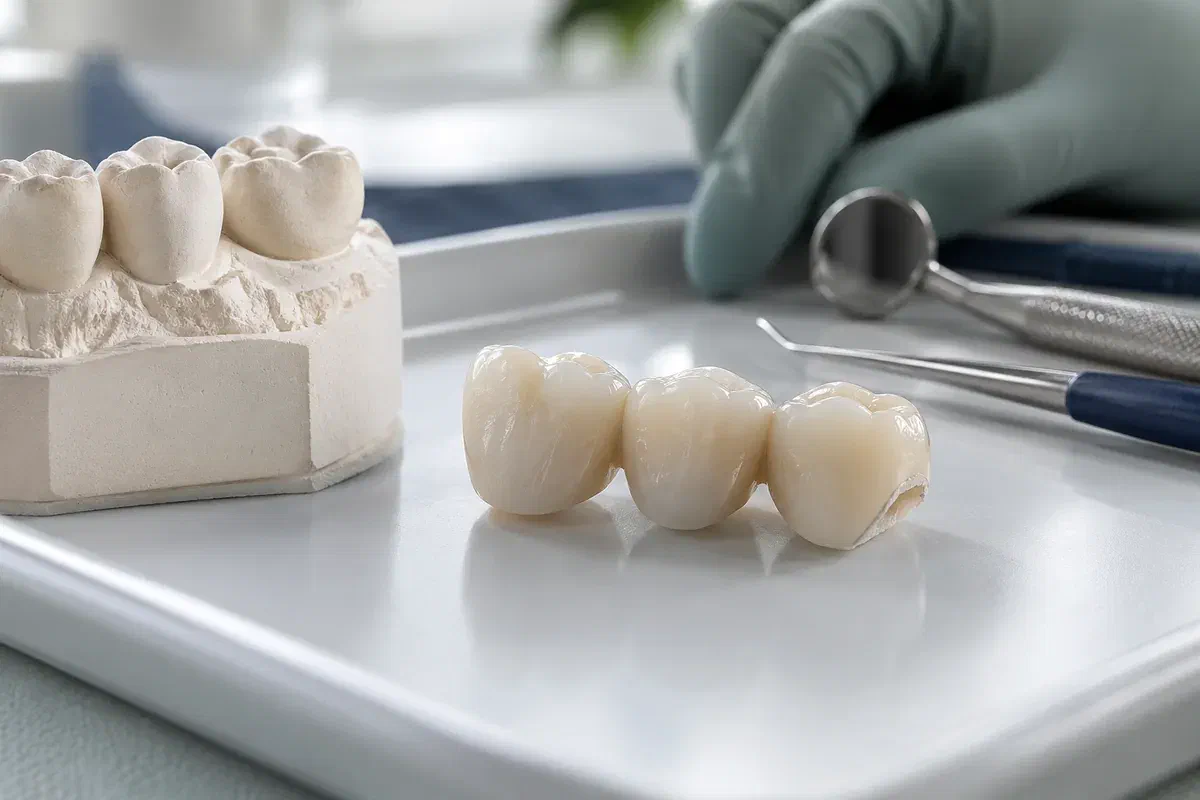
A bridge is a single unit that links one or more false teeth to anchors, which may be natural teeth or implants. If the cement seal breaks down, an anchor decays, or a connector cracks, the bridge can start to shift or leak. Polishing the visible part would do nothing for those problems.
When you call from Mississauga, describe what you have noticed and since when. Tell us if the bridge moves, hurts, or catches your tongue, and keep any piece that breaks off in a closed container. Information about who made the bridge or which implant system it uses is helpful when available.
The bridge does not need to fail outright before you call. Let us know about damage, movement, or an odd taste so the team can advise on timing and how to look after the area.
Surface porcelain can chip without the framework failing. The size and location of the defect, what is exposed, and the forces on that tooth guide whether smoothing or a bonded repair might be enough.
Movement, even a tiny one, may mean the bond or an anchor has failed. Avoid testing it repeatedly, and do not try to fix it in place with any household glue.
A persistent bad taste or sore gum near the bridge can be a sign of leakage, decay, or gum inflammation underneath. The dentist assesses anchors, gums, and bite instead of looking only at the surface.
Seek emergency help if a loose piece could be swallowed or inhaled, or breathing is affected. Tell the clinic when you book if the bridge or part of it has come out.
When the problem is found early and the bridge still fits and functions, a limited repair or reattachment may be possible. The idea is to deal with a contained defect while keeping a restoration that is otherwise working, if the material and site allow it.
Repairs do have limits. They do not reverse wear on an older bridge, and how well they bond, match, and last depends on the material and on why the bridge failed. A clear explanation separates short-term measures from repairs meant for ongoing use.
Patient information: Cleveland Clinic — dental bridges
The examination checks whether a seal has broken or an anchor has decayed, which changes what kind of treatment is appropriate.
Where food traps, how easily you can clean, and how your teeth meet are reviewed along with appearance, so the plan fits everyday use.
If a repair is unlikely to be reliable, the dentist explains why and compares replacement choices, including the state of the anchors and any interim steps.
Your first appointment may centre on finding the cause and stabilizing the bridge, with a final repair afterward. Ask what can happen that day and whether a lab or another visit is needed.
The dentist checks the bridge, tests its stability, and asks about food trapping, taste, or pain. Past records can identify materials or implant parts that influence the repair options.
The supporting teeth or implants and the gum tissue are examined. X-rays may be suggested to look for decay at the edges, root issues, or other findings invisible on the surface.
Treatment may include polishing, a localized repair, re-cementing, or planning a replacement. If a temporary measure is used, its limits are explained before you depend on it.
Fit, bite, comfort, and cleaning access are reviewed afterward. Ask which signs to watch for and whether a follow-up visit to recheck the bridge and anchors would be sensible.
Aftercare depends on what was done and which material was used. If the bridge is held temporarily or awaiting replacement, the guidance on eating and cleaning may be stricter.
Do not bite hard candy, ice, or nutshells with the repaired section, and avoid using it to open anything. Ask which foods to skip while a temporary step is in place.
The area under the false tooth and around the anchors needs extra attention. Ask the team to demonstrate a threader, water flosser, or interdental brush that fits your bridge.
If food trapping, a bad taste, or looseness returns, book a review. Keep any detached part and call; repeatedly pressing a loose bridge back can make diagnosis more difficult.
Bridge problems vary. Bring any pieces, describe what you have noticed, and ask how the anchor teeth affect the advice.
Trapped food, an odd taste, a chip, or a faint wobble are all good enough reasons to come to our Bronte Street practice. The dentist examines the bridge and the teeth anchoring it, explains the repairs that are realistic, and flags any further care worth planning.
Pain, movement, or gum swelling around the bridge is best handled with a phone call. Use online requests for non-urgent visits.
