A missing corner or uneven edge
Outer porcelain can break while the framework underneath holds. The chip’s size, its position, the exposed material, and the bite pressure there help decide whether polishing or a bonded repair is reasonable.


A chip on a front bridge is hard to ignore every time you smile. From Oakville, you can have the damage examined, the supporting teeth checked, and a frank talk about whether a repair will look and hold well enough.
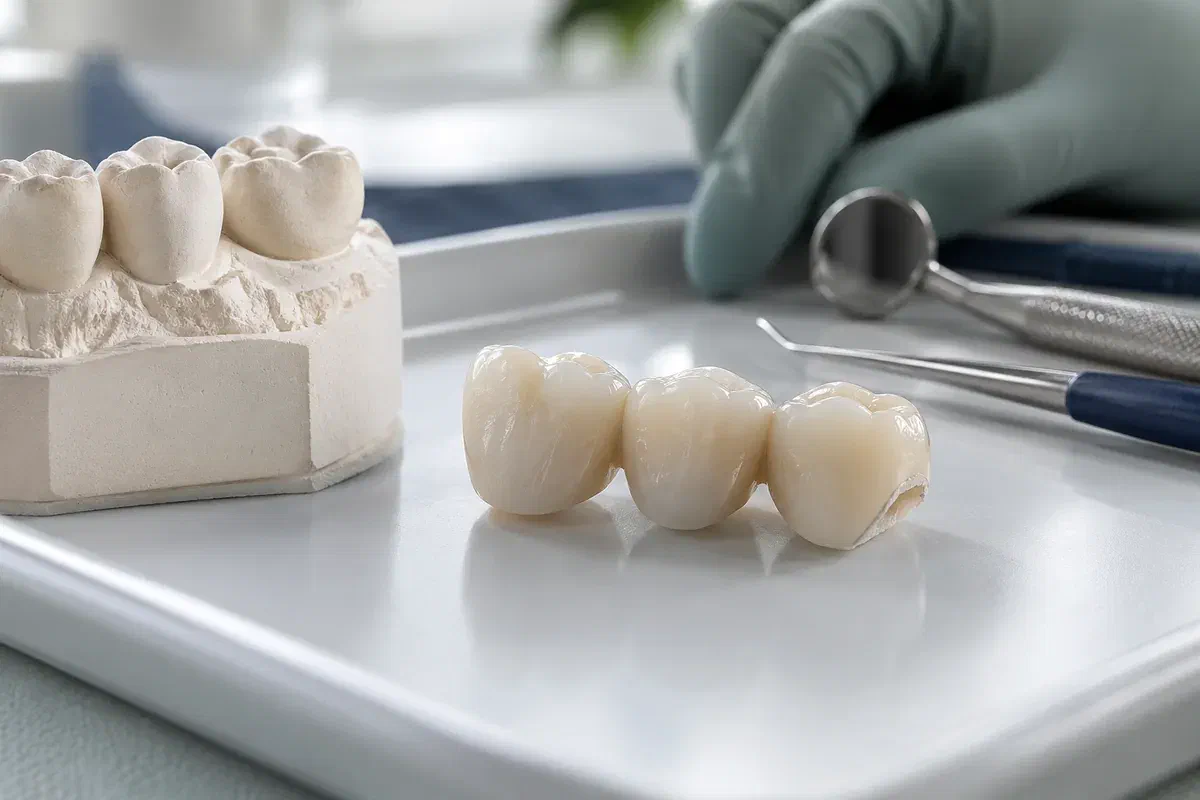
When the damaged bridge sits at the front of your mouth, the first worry is usually appearance. It is a fair concern, and colour and shape matter in the plan. Still, a bridge is a load-bearing structure: false teeth joined to anchor teeth or implants, and how it broke tells the dentist more than how it looks.
A surface chip in porcelain is a different problem from a crack through a connector, and both differ from a bridge that has started to lift. A repair that only restores the look, while an anchor tooth is decayed or the fit has failed, would leave the real issue in place.
If you are coming from Oakville, a quick call first helps us book the right length of visit. Tell us when the damage happened, whether the bridge moves or hurts, and if anything catches your lip or tongue. Keep any fragment in a small container, and bring records of the bridge or implant system if you have them.
Waiting for the bridge to fall out is not necessary. Phone about new damage or any looseness, and the team can suggest timing and simple ways to protect the area.
Outer porcelain can break while the framework underneath holds. The chip’s size, its position, the exposed material, and the bite pressure there help decide whether polishing or a bonded repair is reasonable.
Any rocking suggests the cement or an anchor may have failed. Avoid testing it again and again, and do not reach for an over-the-counter adhesive to hold it.
Soreness, sensitivity, or a swollen gum near the bridge can mean the trouble goes beyond the chip. The dentist examines the anchor teeth, gums, and bite before deciding what the break means.
If a loose part might be swallowed or inhaled, or breathing becomes difficult, seek emergency care immediately. Let the clinic know about any piece that has come away when you book.
For a limited chip on a bridge that still fits and works, repair can be a conservative choice. It aims to correct the defect while keeping a restoration that is otherwise serving you, if the material and location allow a dependable bond.
There are honest limits. A repair on an older bridge may not match perfectly, can wear differently, and does not remove whatever caused the fracture. The conversation should make clear whether the fix is a temporary measure or something intended for longer use.
Patient information: Cleveland Clinic — dental bridges
The exam sorts a surface flaw from damage to the framework or anchors, which helps you understand why one approach is suggested over another.
Smoothness, how easily you can clean around it, and the way your teeth meet are checked, so the repair makes sense for daily use and not only for photos.
If repair is unlikely to last, the dentist explains why and compares replacement options, including the health of the anchors and what to do in the meantime.
Your first appointment might focus on finding the cause and stabilizing the bridge rather than finishing a repair. Ask what can be done that day and whether lab work or another visit is likely.
The dentist inspects the bridge, checks how firm it is, and asks how the damage happened. Earlier records can help identify the material or implant components that shape repair choices.
The supporting teeth or implants and the gum around them are evaluated. X-rays may be advised to look for decay, root concerns, or anything the surface cannot reveal.
Depending on findings, treatment may be polishing, a small bonded repair, re-cementing, or planning a replacement. Any temporary step is explained, including its limits, before you rely on it.
Fit, bite, comfort, and cleaning access are checked when treatment is done. Ask about warning signs and whether a later review of the repair and its anchors is advisable.
Instructions vary with the material and the procedure. A temporarily secured bridge, or one waiting for replacement, may need different habits than a fully restored one.
Avoid biting into hard apples, crusty bread, or ice with a repaired front bridge, and never use it to open packaging. Ask which foods to avoid while any temporary measure is in place.
Plaque gathers beneath the false tooth and along the anchors. Ask the team to show you a threader or small interdental brush that suits your design rather than forcing floss in.
A new rough patch, wobble, or bite change is worth a review. Keep any detached piece and contact us; repeatedly pushing a loose bridge back can complicate the assessment.
Bridges fail in different ways. Bring the pieces, mention any looseness or pain, and ask how your anchor teeth affect the advice you receive.
Come in to our Bronte Street practice with the chip, the crack, or the wobble. Beyond the cosmetic side, the dentist checks the anchor teeth underneath, explains which repairs are worth considering for a front-of-mouth bridge, and tells you what else may follow.
Phone us about a bridge that hurts, moves, or sits beside a swollen gum. Online requests work best for routine visits.
