

Illustrative dental consultation about a damaged bridge
Restorative Dentistry

Broken Dental Bridge Repair in Old Milton

A bridge that has served you for years can still chip, crack or loosen without warning. For Old Milton, our nearby team works out what has worn or failed, protects the anchor teeth, and helps you decide between repair and renewal.

Old Milton bridge care

An old bridge, a new problem

Plenty of people living around Milton's historic downtown have bridges placed a decade or more ago. They work so well that they are easy to forget, until a corner breaks off or the whole thing feels slightly loose. At that point the useful question is not only how to fix the break, but how the bridge and the teeth beneath it have aged.

A bridge fills a gap by joining one or more false teeth to anchor teeth or implants. Over time, porcelain can wear thin, connectors can weaken, and the anchor teeth can develop decay at the edges where they are hard to see. Any of those can show up as a sudden chip, and each one needs a different answer.

Our Bronte Street practice is a short way from the old town core. When you call, describe what you felt and when, and mention whether the bridge rocks or hurts. Bring broken pieces in a small lidded box. Old treatment notes or the name of the dentist who placed the bridge can help us understand its design.

Arrange a bridge assessment
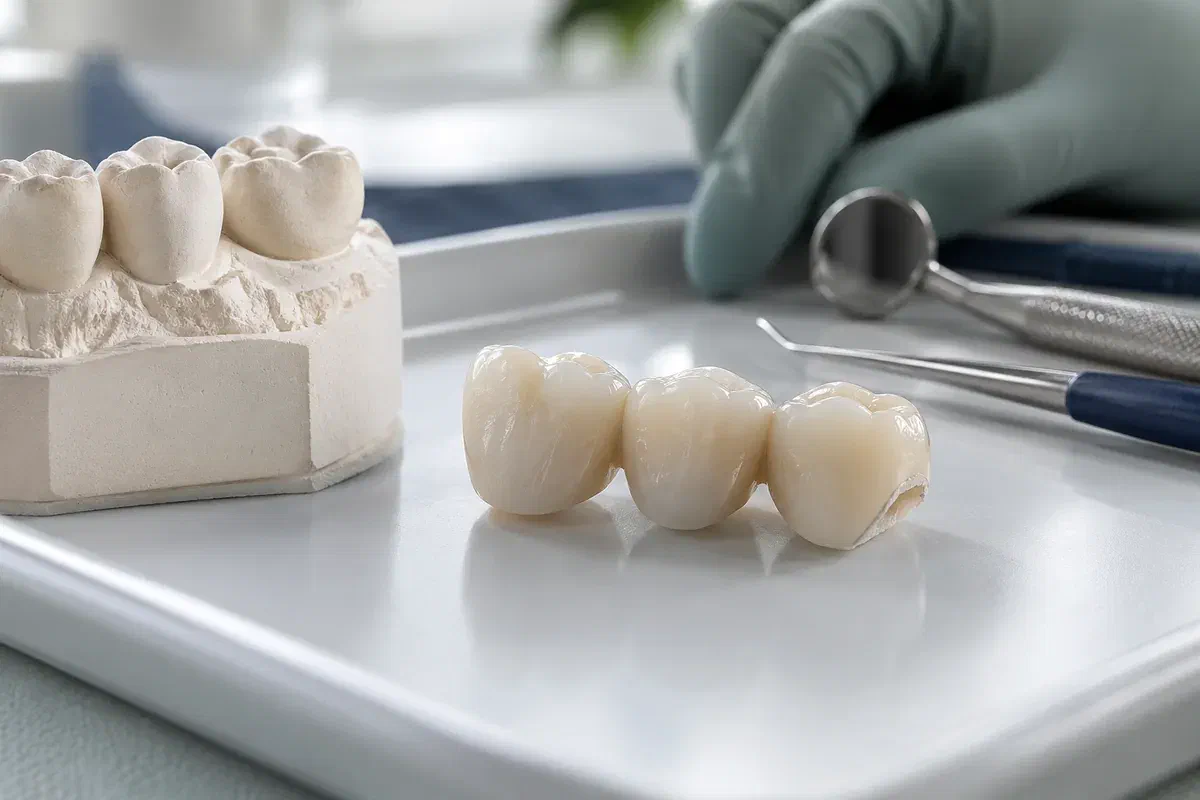
Illustrative ceramic bridge with a chipped edge beside a dental model
What older bridges tend to show

Small changes often come before a bigger failure.

Many bridge problems give a quiet warning first. A phone call when you notice one lets the team advise how soon to be seen and how to keep the area comfortable until then.

Worn or flaking porcelain

Years of chewing can thin the outer porcelain until a piece lifts away, sometimes leaving the core beneath intact. Where it broke, how much is missing, and the forces on that spot help decide if a smoothing or bonded repair is sensible.

A slight give when you bite

Flexing or lifting can mean the bridge has lost its cement seal or have a weakened anchor tooth. Resist the urge to wiggle it, and leave household glues out of it entirely.

A dull ache that keeps returning

Recurring discomfort, cold sensitivity, or a tender gum near the bridge may point to decay or gum trouble under the restoration. The dentist checks anchors, gums, and bite rather than treating only the visible damage.

If a loose piece becomes a choking hazard or breathing is difficult, call emergency services. Tell us about any detached bridge or fragment when you book so time is set aside for it.

The value of a careful look

Not every old bridge needs replacing.

If the damage is limited and the bridge still fits and chews well, a repair may let you keep years of good service. The goal is to correct a contained defect without removing work that is still sound, provided the material and location make a bond practical.

Age does count, though. A repaired surface on a bridge that is already worn will not behave like new, and bonding, colour, and wear all play a part. A good assessment separates a stop-gap measure from a repair that is expected to hold for a meaningful time.

Patient information: Cleveland Clinic — dental bridges

A realistic read on age and wear

The exam weighs the chip against the overall condition of the bridge and its anchors, so you know whether the problem is local or part of broader wear.

Function given equal weight

Sharp edges, cleaning access, and how the teeth meet are reviewed alongside looks, so a repair fits how you really chew and care for the bridge.

A planned decision rather than a rushed one

If renewal makes more sense, you hear why and can compare approaches at your own pace, including what the anchor teeth can support and any short-term needs.

Four steps, start to finish

Find the cause, then choose the fix.

The first appointment may focus on diagnosis and keeping things stable, with the definitive repair later. Ask what is possible on the day and whether a lab or a second visit will be involved.

  1. Review the bridge’s history

    The dentist examines the bridge, tests its stability, and asks how and when the break occurred. Older records help identify materials or implant parts that affect which repairs are possible.

  2. Examine what holds it up

    Anchor teeth, implants, and the surrounding gum are assessed. Radiographs may be recommended to look for decay at the margins, root changes, or anything else hidden below the surface.

  3. Decide together and treat

    Care may involve polishing, a small bonded repair, re-cementing, or planning a new restoration. A temporary step, if used, is explained with its limits before you depend on it.

  4. Check comfort and cleaning

    Afterward, fit, bite, comfort, and cleaning access are confirmed. Ask what would signal a further problem and whether a follow-up visit to recheck the repair is worthwhile.

Keeping a repaired bridge going

A little extra care protects the work.

Your aftercare depends on the material and the procedure. If the bridge is held temporarily or waiting for replacement, eating and cleaning advice may be stricter than for a finished repair.

Chew with some caution

Avoid biting ice, hard crusts, or bones on the repaired side, and never use the bridge as a tool for packaging. Ask which foods to skip while a temporary measure is in place.

Clean the hidden spaces

Plaque collects under the false tooth and along the anchor teeth. Ask the hygienist to show you a threader, water flosser, or interdental brush that suits your bridge rather than forcing floss through.

Notice a repeat of old symptoms

If looseness, roughness, or a bite change returns, book a review. Keep any piece that falls off and phone us; repeatedly pressing a loose bridge back can make assessment harder.

Three possible paths

Repair, re-cement, or replace: what fits your bridge?

Ask how each option deals with the specific failure and how long it might reasonably serve. Seeing the alternatives side by side helps put a modest repair into perspective.

For a small, contained chip

Polish or bond the damaged spot

A limited flaw can sometimes be smoothed or rebuilt when the rest of the bridge is strong. Material, location, and contact with opposing teeth determine whether this is likely to help.

When it loosened but did not break

Re-seat the original bridge

An intact bridge may be re-cemented if it fits accurately and the anchors are healthy. Any decay, crack, or poor fit is dealt with first instead of being sealed under fresh cement.

When the bridge has reached its limit

Plan a replacement

A major fracture or a compromised anchor may make a new restoration the better choice. That may be another bridge or a different tooth-replacement approach, chosen after the findings are reviewed.

Common questions

What people ask about ageing bridges

Every bridge has its own history. Bring the pieces and any records, describe what has changed, and ask how the anchor teeth shape the recommendation.

(905) 876-4488
How long do dental bridges usually last?
There is no fixed lifespan. Many last for years, but materials wear and anchor teeth can change. Good cleaning, regular checkups, and attention to grinding or heavy biting all influence how long a particular bridge serves.
Does an old metal-and-porcelain bridge change what can be repaired?
It can. The type of framework and porcelain affects which bonding methods work and how well a repair blends in. The dentist will examine the bridge and explain what is practical for that specific design.
Could decay under my bridge be the reason it came loose?
Yes, that is one possibility. Decay around an anchor tooth can weaken the seal and the tooth itself. That is why the bridge is not simply re-cemented before the anchors are checked and, if needed, x-rayed.
Is a small chip worth fixing if it does not hurt?
It may be. A sharp edge can irritate your tongue or cheek, and a rough area can collect plaque. The dentist can tell you whether smoothing is enough or whether the chip suggests a deeper weakness.
Can you assess a bridge another dentist placed?
Yes. Records from the original office help, especially for implant-supported bridges where knowing the system matters. Depending on the parts involved, care may sometimes be coordinated with that office or a specialist.
If my bridge is repaired, will I need a replacement later anyway?
Possibly. A repair may buy useful time, but it does not reset the bridge’s age. Ask what likely caused the break, whether adjustment or a night guard could help, and what signs would mean it is time to plan a new one.
Close to Old Milton

Has your bridge done its time, or does it just need a fix?

Book an assessment at our Bronte Street practice to have a chipped, cracked, or loose bridge examined. We look at the restoration and its anchors, discuss which repairs are realistic, and explain any further treatment that may be worth planning.

Please phone if the bridge is loose, sore, or the gum is swollen. Online requests are for non-urgent appointments only.

Visit Milton Dental Clinic
Unit 1, 342 Bronte St. S, Milton, ON L9T 5B7
Get directions Clinic hours
Monday–Thursday
11am–7pm
Friday–Sunday
By appointment only

Areas we serve

  • Milton
  • Oakville
  • Mississauga
  • Georgetown
  • Halton Hills
  • Acton
  • Campbellville
  • Brampton
  • Burlington
  • Puslinch
  • Rockwood
  • Erin
  • Caledon
  • Etobicoke
  • Old Milton
  • Bronte Meadows
  • Timberlea
  • Dorset Park
  • Dempsey
  • Clarke
  • Beaty
  • Coates
  • Harrison
  • Scott
  • Willmott
  • Ford
  • Bowes
  • Cobden
  • Walker
  • Mountain View
  • Milton Heights
  • Hawthorne Village
  • Valley View
  • Fallingbrook
  • Nassagaweya
  • Trafalgar
  • Esquesing
  • Nelson
  • Brookville
  • Moffat
  • Glen Williams
  • Norval
  • Limehouse
  • Stewarttown
  • Ashgrove
  • Hornby
  • Silver Creek
  • Speyside
  • Scotch Block
  • North Oakville
  • River Oaks
  • Glen Abbey
  • West Oak Trails
  • Palermo
  • Bronte Creek
  • College Park
  • Joshua Creek
  • Uptown Core
  • Preserve
  • Iroquois Ridge
  • Lisgar
  • Meadowvale
  • Meadowvale Village
  • Churchill Meadows
  • Erin Mills
  • Central Erin Mills
  • Streetsville
  • East Credit
  • Creditview
  • Heartland
  • Sheridan
  • Mount Pleasant
  • Credit Valley
  • Huttonville
  • Churchville
  • Springbrook
  • Northwest Brampton
  • Bram West
  • Fletcher's Meadow
  • Fletcher's Creek South
  • Alton Village
  • Orchard
  • Millcroft
  • Headon Forest
  • Tansley
  • Brant Hills
  • Tyandaga
  • Kilbride
  • Lowville
  • Aberfoyle
  • Morriston
  • Arkell
  • Hillsburgh
  • Freelton
  • Carlisle
  • Waterdown
  • Flamborough
  • Mountsberg

How can we help?

Milton Dental Clinic

Have a question about your smile? Choose the option that works best for you.

For urgent dental concerns, please call.
Messages are reviewed during clinic hours.