A plate split under load
Acrylic that cracks while you chew may be repairable if the pieces relate accurately, but the clinician will want to know whether a poor fit has been flexing it. An accidental drop is a simpler case.


Did your denture feel loose for a while before it cracked? That detail matters. Our team can see you from Acton, examine the break, check how the base meets your gums and explain whether repair alone will be enough.
Many people notice the signs gradually. More adhesive each morning. A click when chewing. Crumbs sneaking underneath. Then one day the plate gives way down the middle, or a tooth snaps off. It is easy to treat the crack as the whole problem, when the months of looseness may be part of the same story.
Gums and the bone beneath them slowly change shape after teeth are lost, while a denture stays the same. As the gap grows, the appliance can flex and rock with every bite, and stress collects in weak spots. Worn teeth and an uneven bite add to it. Of course, some breaks are simply a drop on a hard floor, and those raise different questions.
Either way, call us from Acton before you put it back in or try a fix. Mention how the denture felt in the weeks before it broke. Gather all the pieces, including any tooth that came free, and keep them together. With the originals, the clinician can judge the damage and the fit, then talk through realistic options.
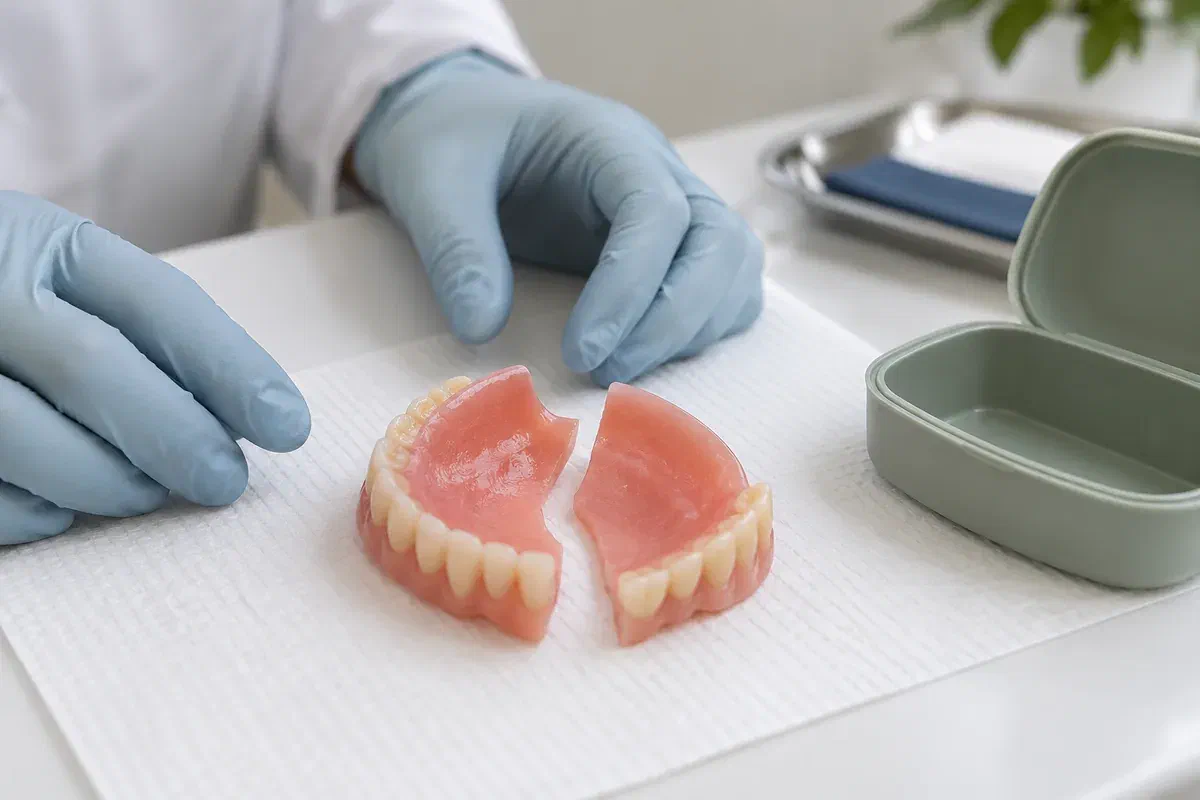
The denture’s material, how badly it is damaged and its general state all shape the plan. Underneath sits a bigger question: does it still fit closely enough to make repairing it worthwhile?
Acrylic that cracks while you chew may be repairable if the pieces relate accurately, but the clinician will want to know whether a poor fit has been flexing it. An accidental drop is a simpler case.
Single teeth sometimes detach when the bite meets unevenly. The tooth’s position, its wear and the acrylic around it help determine whether to rebond it or set a replacement.
On a partial, a cracked frame or worn clasp can leave it unstable. Metal repairs differ from acrylic ones, often need a lab and may prompt a review of whether the design still suits you.
Extra adhesive, glue, bent clasps and filed edges all change how a denture sits. Leave the appliance as it is so the professional repair starts from an accurate picture.
If the denture is otherwise serviceable, a repair can deal with the fracture without the longer process of having a new one made. The clinician looks at how precisely the parts come together and whether the repaired denture will seat and function acceptably.
A repair alone won’t close the gap between a changed ridge and an unchanged denture. If looseness or worn teeth played a part, relining, rebasing or replacement may come up. The aim is a denture that sits well in your mouth, not just one that is back in one piece.
Patient information: ADA — caring for partial dentures
Examining how the base meets your gums, and how your bite comes together, helps explain the break and reveals sore spots or rocking that a repair alone would leave behind.
You’ll understand which problem each step addresses, so you can decide whether to repair, refit or plan a new denture.
Advice on handling and storage helps against drops, while dealing with fit can reduce the stress that leads to chewing fractures.
Timing depends on the damage, the material, any lab stage and availability. If eating is hard without your denture, tell us early so temporary arrangements can be part of the discussion.
Bring the denture, all loose pieces and any earlier repair history. The clinician reviews the material and fracture, and asks whether it was dropped or gave way while you were wearing it.
Your gums, any remaining teeth and the opposing bite are examined. To relate the repair to your mouth, the clinician may take an impression.
Agreed work might rejoin the plate, replace a tooth or repair a clasp, and a reline may be discussed separately. If a lab is involved, you’ll get an idea of when the appliance will be back.
We test fit, retention, bite and edges with the repaired denture in place. Report any pressure or movement, and book any recommended review rather than adjusting it at home.
Use the repaired denture according to the advice for its material. Looseness or soreness that carries on deserves a call, since it may point to a fit issue.
Clean it over a towel or a basin with some water in it. Use products and water temperatures suited to its material; hot water can distort some dentures.
Clean the tissues the denture rests on, plus any natural teeth, as advised. Ask whether it should come out overnight and how it should be stored.
If the repaired denture starts to tip, rub or need more adhesive, contact us. Adhesive isn’t a substitute for assessing a denture that no longer fits.
Let us know what broke, how the denture felt beforehand and whether you can manage without it for now. That helps us judge urgency and the kind of repair that makes sense.
A split plate, a detached tooth or a partial that no longer grips can all be assessed at our Bronte Street practice. Arrive with the denture and each fragment, and we’ll examine the break, see how it seats and map out a realistic timetable.
If it is cutting your gums, or you’re finding meals impossible without it, phone us. A firm repair date can only follow the assessment and depends on open appointments.
