The base has cracked
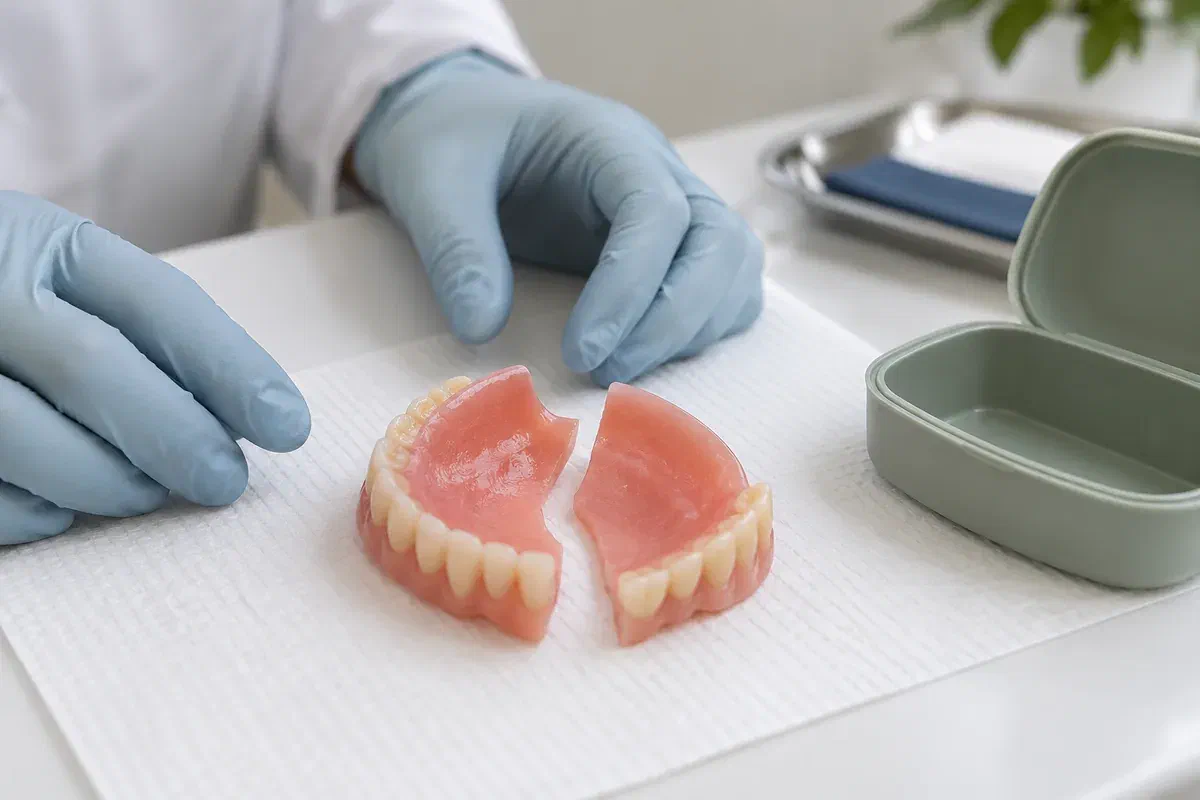
A split acrylic base is often repairable when the parts relate accurately. If the break looks linked to a poor fit or heavy loading, that may tilt the conversation toward relining or replacement.


Sometimes a denture breaks just as you were wondering whether it was time for a new one. From Caledon, our team can assess the damage and the fit, then help you weigh a repair now against planning a replacement.
Perhaps the teeth on your denture have been looking worn, or it has needed a little more adhesive each month. You meant to ask about a new one eventually. Then the plate cracks or a tooth comes away, and the question can’t wait any longer: is this denture worth repairing, or is now the moment to start over?
The answer depends partly on what happened. A sound denture that broke in a fall may repair well and serve for some time yet. One that fractured while you were chewing, especially after months of looseness, may be showing the effects of a changed ridge, flattened teeth or a bite that no longer meets evenly. Repair may still help, but it may not be the whole answer.
Before you wear it or try a fix, call us from Caledon and describe the damage along with how the denture had been feeling. Keep every fragment, any loose tooth included, together in a container. With the original parts and a look at your mouth, the clinician can lay out the repair and replacement paths side by side.
Material, how far the damage reaches and the appliance’s overall condition all affect the advice. The clinician also weighs whether the denture still fits closely enough to justify the time a repair takes.
A split acrylic base is often repairable when the parts relate accurately. If the break looks linked to a poor fit or heavy loading, that may tilt the conversation toward relining or replacement.
One tooth can separate while the plate remains whole. Its location and wear, and the acrylic around it, help determine whether rebonding, a new tooth or a broader rethink makes more sense.
A broken clasp or frame on a partial affects how well it holds. Metal repairs need different methods, often a lab, and may raise the question of whether the design still suits your remaining teeth.
Even if you’re leaning toward a new denture, don’t glue, bend or file the old one. It may still be useful in the interim, and home fixes can spoil the fit.
If the denture is otherwise in reasonable condition, repair can deal with the specific break and keep it in service without the longer process of making a new appliance. The clinician judges how accurately the parts can be rejoined and whether the repaired denture will fit and function acceptably.
Repair can’t reverse every sign of age, though. Worn teeth and a slack fit remain after the crack is closed, and repeated breaks often signal bigger issues. Relining, rebasing or replacement might be suggested. What helps most is knowing what each option will and won’t change.
Patient information: ADA — caring for partial dentures
Checking your gums and bite along with the appliance shows whether a repair would leave sore spots or instability in place.
You’ll understand what a repair fixes and what remains, making it easier to decide whether to repair now, plan a new denture, or both.
Advice on handling, cleaning and storage helps protect the appliance. If it broke during chewing, the review looks at causes beyond an accident.
Timelines vary with the break, what the denture is made of, whether a lab takes part and which appointments are free. If going without the denture is hard, say so; that may influence whether a quicker repair or a longer plan comes first.
Have the appliance with you, plus every fragment and anything you know about its age and past repairs. The clinician looks at the material and fracture and asks how the break happened.
Gums, any remaining teeth and your bite are examined. An impression or other record may help, whether for an accurate repair or as a first step toward a new denture.
You might choose to repair the base, replace a tooth or fix a component, with or without a reline, or to plan a replacement. If a lab is involved, the team will explain expected timing.
A repaired denture is checked for fit, grip, bite and edges. Mention pressure or movement, and arrange any suggested review rather than adjusting it at home.
Follow the advice for your denture’s material and condition. If soreness or looseness persists, contact us; it may help inform the decision about a new denture.
Clean the denture over a towel or a partly filled basin. Use products suited to its material and avoid hot water, which can warp some appliances.
Daily care of the tissues under the denture and any natural teeth matters whichever path you choose. Ask whether to leave it out overnight and how to store it.
A sore spot that lingers, rocking or rising adhesive use is worth mentioning. Adhesive can’t stand in for an assessment of a denture that no longer fits.
Tell us what has broken and how the denture had been feeling beforehand. That helps us separate an urgent need from the bigger decision about repair or replacement.
Reach our Bronte Street practice about a split base, a lost tooth or a damaged clasp. Bring the denture and every piece, and we’ll assess repair possibilities, check the fit and compare the timetable with that of a new denture.
A denture that is rubbing your gums sore, or a gap you can’t live with, is worth a phone call today. We can only fix a repair date once we have examined it and checked the calendar.
