Crack across the plate
A cracked or split acrylic base may be joined if the pieces still match precisely. The clinician considers whether a drop caused it or whether an ongoing fit or pressure issue is involved.


Dentures rarely break on a convenient weekday. For households in Campbellville, a call gets practical advice on getting through the weekend, followed by an assessment of the break, the fit and the repair that makes sense.
It slipped while you were rinsing it after breakfast, and now there’s a crack across the palate or a gap where a tooth was. The clinic is open Friday to Sunday by appointment only, so your first job is simple: keep the pieces safe, keep the denture out if it is sharp or loose, and phone for advice.
Next, think back. Was this a straightforward drop, or has the denture been creaking and shifting for a while? A one-time accident and a fracture that happens during meals call for different thinking. Fit, worn teeth, gradual change in the ridge and the way your bite lands can all influence whether a repair will last.
From Campbellville, call before driving in, and resist any temptation to glue the parts. Explain what happened and how you’re coping. Wrap every fragment and any loose tooth together in a closed container. The original pieces let the clinician see exactly what failed and talk honestly about repair or replacement.
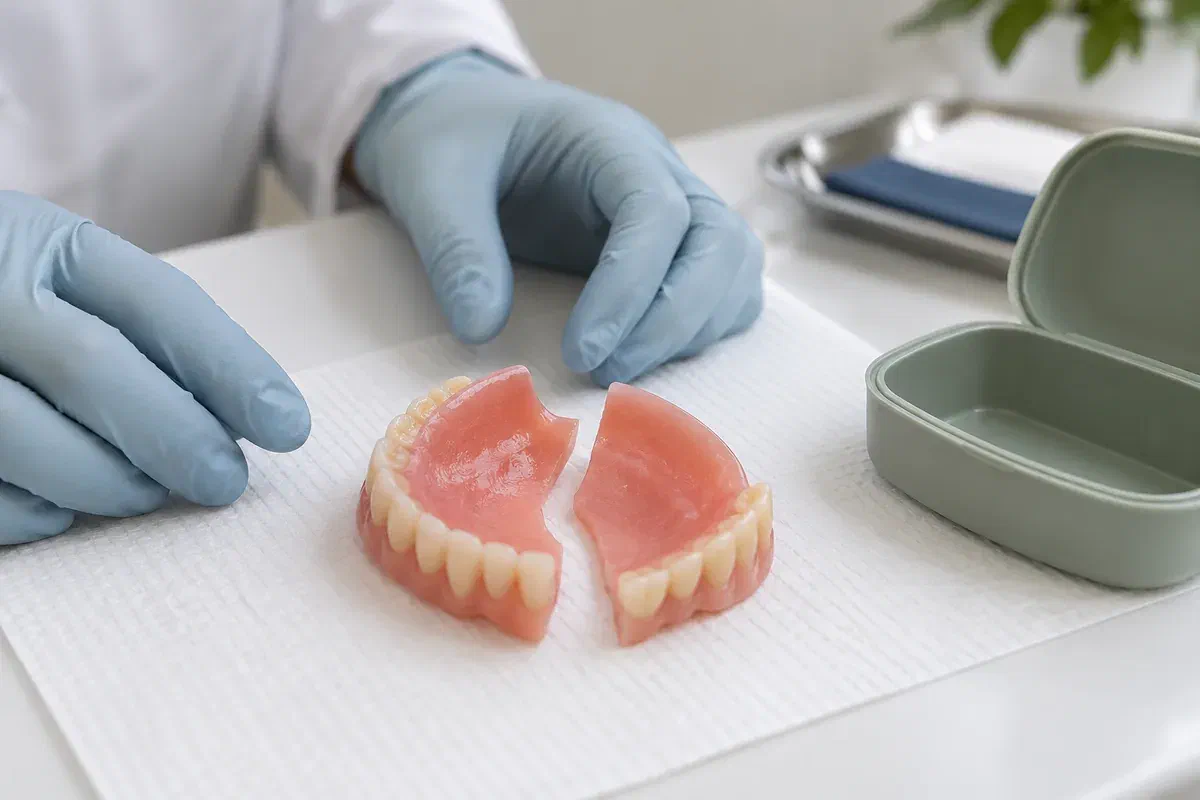
Your denture’s material, how much of it is damaged and its overall condition all affect the plan. The clinician also checks whether it still fits well enough to justify a repair at all.
A cracked or split acrylic base may be joined if the pieces still match precisely. The clinician considers whether a drop caused it or whether an ongoing fit or pressure issue is involved.
The base can survive while one tooth detaches. Its position and condition, and the acrylic surrounding it, decide whether it can be rebonded or a new tooth is the better choice.
Broken clasps or framework can leave a partial denture loose. These repairs use different methods from acrylic work and may need a dental lab or a closer look at the design.
A weekend wait is no reason to improvise. Household glue, bent clasps and filed edges can all alter the fit and make the eventual repair more difficult.
When the appliance was otherwise in good condition, repair can address the specific damage without the longer process of a brand-new denture. The clinician assesses how accurately the parts can be repositioned and whether the result will sit and work as it should.
Some changes in an older denture aren’t fixed by repair. Worn teeth, a loose fit or a history of fractures may make relining, rebasing or a fresh appliance worth discussing. It helps to ask both whether the pieces can be joined and whether the outcome will serve you sensibly.
Patient information: ADA — caring for partial dentures
Checking the mouth as well as the appliance helps identify sore patches or instability that could continue once the visible break is fixed.
You’ll know what the repair solves and what will remain, making it simpler to weigh repair against a new denture.
Advice on handling, cleaning and storage protects the appliance. If it broke during chewing, the clinician also looks for causes beyond an accident.
The kind of break, what the denture is made of, whether a lab is involved and which appointments are open all shape how long a repair takes. If going without the denture is affecting meals, let us know so we can talk about the interim.
Bring the denture, every loose piece and any repair history. The clinician examines the material and the fracture and asks whether it fell or gave way while being worn.
Your gums, any natural teeth and your opposing bite are reviewed. Where it’s needed, an impression helps the repair line up with your mouth.
Work may involve rejoining the base, fitting a replacement tooth or repairing a clasp. Some repairs go to a lab, and the team will tell you when the denture should be ready.
The repaired denture is tried in and checked for comfort, grip, bite and edges. Let the clinician know about pressure or movement, and book any suggested review rather than adjusting it at home.
Follow the instructions for your denture’s material and condition. If it stays sore or unstable, call us; lasting discomfort isn’t always just part of getting used to it.
Work over a folded towel or a basin with some water so a slip does less damage. Choose products and water temperatures suited to the material; hot water can warp some appliances.
Clean your gums and any natural teeth as advised, along with the denture. Ask about removing it overnight and how it should be stored.
If the repair leaves a pressure point or the denture rocks, call the clinic. Extra adhesive won’t fix a denture that no longer fits.
Tell us what broke and whether you can manage without the denture for a few days. That helps separate an urgent problem from a repair that can be planned.
Once the weekend is behind you, our Bronte Street practice can examine the cracked plate, missing tooth or broken clasp. Every fragment helps, so pack them all; we’ll weigh up repair, test the fit and give you a timetable you can plan around.
Call if the denture is cutting your mouth or you can’t manage without it. Repair timing depends on what the assessment shows and on availability.
