A broken base
A cracked or split acrylic base can often be rejoined if the parts relate accurately. If the break suggests an ongoing fit or loading problem, more than a simple repair may be discussed.


The hardest part of a denture repair is often the days in between. From Erin, call us to arrange an assessment of the break and the fit, and to plan how you will manage meals and conversation while the work is done.
Most people think first about the crack itself. Very soon, though, the practical questions arrive. What will I eat tonight? Can I go to that meeting? How long until it’s back? A split plate, a detached tooth or a broken clasp can upend the ordinary rhythm of a week, even without any pain.
Answering those questions starts with the cause. A denture that broke on the floor may need a more straightforward repair than one that has fractured while you chew. Chewing breaks can involve fit, worn teeth, gradual ridge changes or an uneven bite, and dealing with those may take more than one step.
Call us from Erin before trying to wear or fix it. Describe the damage and how you are managing. Collect every fragment, any loose tooth too, and keep them together. With the original parts, the clinician can judge what is possible and help you plan the time in between as well as the repair.
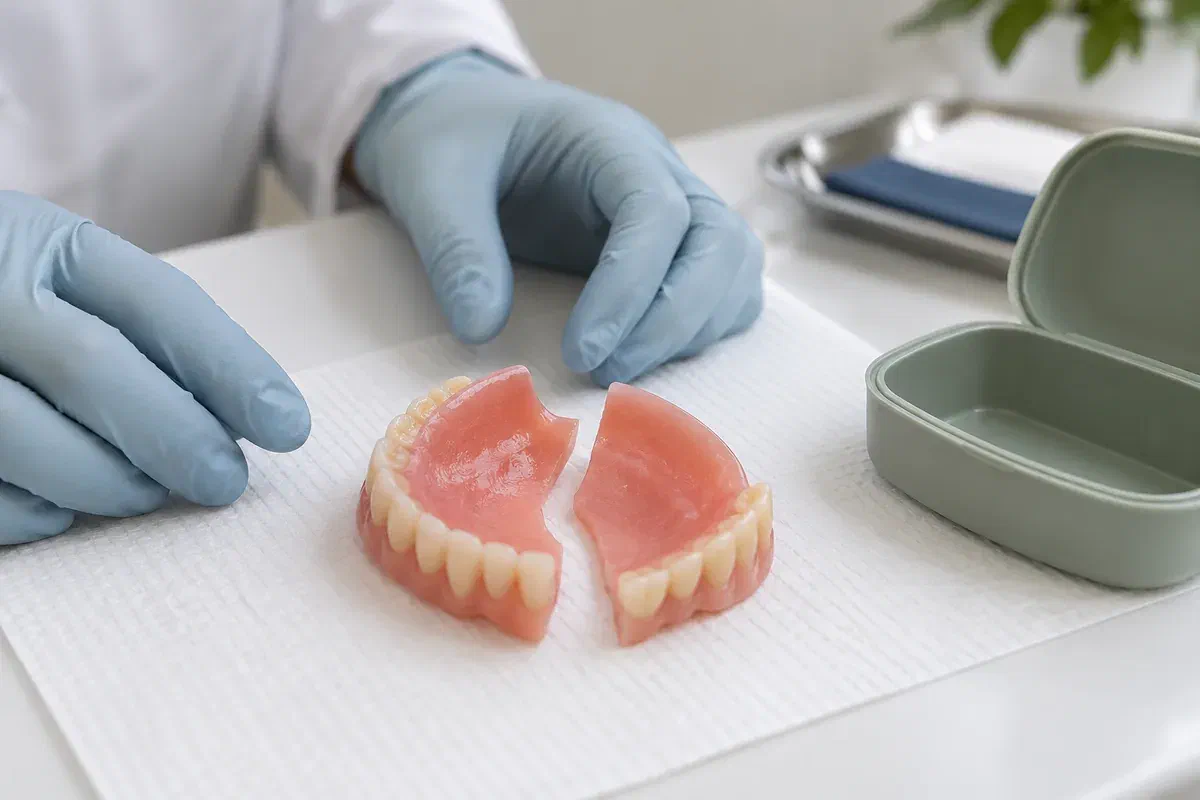
Material, the extent of the break and the denture’s general condition all affect how involved the repair is. The clinician also considers whether it still fits well enough for repair to be the sensible choice.
A cracked or split acrylic base can often be rejoined if the parts relate accurately. If the break suggests an ongoing fit or loading problem, more than a simple repair may be discussed.
When one tooth comes off and the base stays whole, the tooth’s position and condition and the acrylic around it guide whether it is reattached or replaced.
A damaged clasp or framework can leave a partial unstable. Metal repairs are handled differently from acrylic, frequently need a lab and sometimes lead to a review of the design.
Avoid glue, pliers and files, even to get through a few days. Home fixes can change the fit and damage the material, which may lengthen the professional repair.
When the denture was serving you well, repair can fix the damaged area and save you the longer process of a new appliance. The clinician weighs how precisely the parts can be reunited and whether the finished denture will sit and function acceptably.
Some problems call for more than rejoining. Teeth worn smooth, a fit that has slackened or a habit of breaking again may point to relining, rebasing or replacement. Knowing that early helps you plan your time sensibly, rather than going through the gap twice.
Patient information: ADA — caring for partial dentures
Looking at the mouth as well as the appliance helps uncover sore areas or rocking that could otherwise bring you back soon after the repair.
You’ll understand what the repair will solve and what it won’t, making it easier to choose between repair and a new denture.
Handling and storage tips reduce the chance of drops. If it broke while chewing, the clinician investigates causes such as fit or wear.
Repair time depends on the break, the material, any lab stage and appointment availability. If eating or speaking without the denture is hard for you, raise it early so interim arrangements are part of the plan.
Bring the denture, every loose piece and any history of repairs. The clinician examines the fracture and wants to hear the story behind it: a slip from your hand, or a snap mid-bite?
We look at your gums, any remaining teeth and how your jaws close. An impression may be needed so the repaired denture relates accurately to your mouth.
The work might rejoin the base, replace a tooth or fix a component. If a dental lab is involved, ask when the appliance should be ready so you can plan the days in between.
With the repaired denture in place, the clinician checks fit, grip, bite and edges. Mention pressure or movement, and book any recommended review instead of adjusting it yourself.
Follow the care advice for your denture’s material. If discomfort or instability carries on after the first days, let us know rather than assuming it will pass.
Use a folded towel or a basin with a little water beneath the denture while cleaning. Choose suitable products, and avoid hot water, which can distort some appliances.
Clean the tissues that support the denture and any natural teeth as advised. Ask whether to remove it overnight and how it should be kept.
A pressure point that doesn’t ease, or a denture that rocks, should be looked at. Adhesive is not a substitute for checking a denture that no longer fits.
Planning around a repair is easier with a few answers in hand. Share what broke and how the days are going without it, and we can judge what is urgent and what can be scheduled.
Whether it’s the plate, a tooth or a clasp that failed, our Bronte Street practice can take a look. Arrive with the denture and all its pieces; we’ll go over what’s repairable, see how it sits and map out dates you can organize your week around.
Sore gums from a damaged appliance, or no workable way to eat without it, are reasons to phone straight away. We set the repair date after examining it and checking open appointments.
