Base broken through
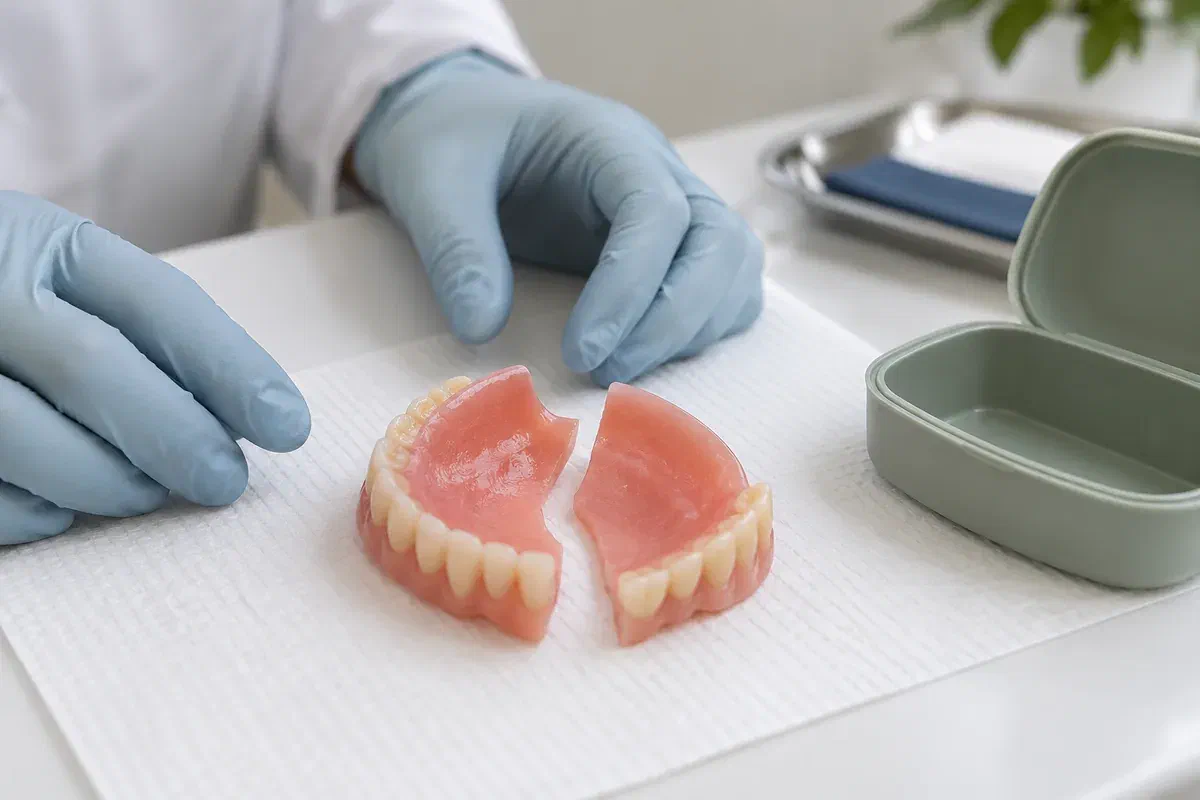
A split acrylic plate can often be repaired when the pieces line up accurately. The clinician considers whether a drop caused it or whether ongoing pressure from a poor fit is the root issue.


Coming from Etobicoke with a cracked or toothless denture means planning well. A call first helps us judge urgency, prepare for the visit, and make every appointment count toward a repair that actually fits.
When a denture breaks and the clinic isn’t around the corner, the first decision is about timing. Is the mouth injured, or is this a practical problem you can manage for a day or two? A cut gum or a sharp, loose fragment needs prompt attention. A neat crack or a lost back tooth usually leaves a little room to plan.
Then comes the question of why. Dentures that crack after a fall are often a one-off. Dentures that fracture while you chew can be hinting at a loose fit, worn teeth, changes in the ridge underneath or a bite that no longer meets evenly. Knowing which applies helps decide whether a single repair visit will be enough.
Give us a call from Etobicoke before setting off, and before trying any home repair. Describe the damage and how it happened. Collect every fragment, any detached tooth included, in one closed container. With the original parts in hand, the clinician can assess the damage properly and set out realistic choices in as few visits as is sensible.
Material, extent and the appliance’s general condition all affect the plan. Just as important is whether it still fits closely enough for repair to make sense, rather than starting afresh.
A split acrylic plate can often be repaired when the pieces line up accurately. The clinician considers whether a drop caused it or whether ongoing pressure from a poor fit is the root issue.
If the plate is intact but a tooth has come away, its position and condition, and the acrylic left around it, decide between rebonding and fitting a new tooth.
Broken clasps or framework can make a partial unstable. These repairs differ from acrylic work and may involve a lab or a fresh assessment of the partial’s design.
Leave the glue, file and pliers in the drawer. Changes made at home can alter the fit, damage the material and limit what a professional repair can achieve.
For a denture that is otherwise in good order, repair can fix the specific damage without the longer process of making a new appliance. The clinician weighs how precisely the parts can be brought together and whether the repaired denture will work acceptably.
Repair isn’t a cure for every ageing denture. Flattened teeth, a loose fit or repeated fractures may make a reline, a rebase or replacement the better use of your time. Asking early whether the result will suit your mouth can save a return trip for the same problem.
Patient information: ADA — caring for partial dentures
Examining gums and bite along with the appliance helps catch sore spots or rocking that might otherwise send you back soon after the repair.
You’ll know what the repair solves and what will remain, which makes deciding about a new denture much easier.
Handling, cleaning and storage advice can protect the appliance. If it broke while chewing, the clinician can look for causes other than an accident.
Time frames depend on the break, the material, laboratory needs and availability. Mention if you can’t eat comfortably without the denture, and ask what the plan means for travel, so both are part of the discussion.
Bring the appliance, every loose piece and any notes about earlier repairs. The clinician studies the material and fracture and asks whether it fell or broke during use.
Next come your gums, any natural teeth and the way the other jaw closes against the denture. Sometimes an impression is needed, giving the repair an accurate reference to your mouth.
The agreed work may rejoin the base, replace a tooth or deal with a clasp. If a dental lab is involved, ask when the appliance is expected so you can plan the return visit.
Fit, grip, bite and edges are all checked once the repair is done. Say if anything presses or moves, and arrange any recommended review rather than trimming a sore area at home.
Use the repaired denture as instructed for its material and condition. If soreness or instability lingers, call us; persistent problems aren’t always just part of adjusting.
Work over a folded towel or a sink with a little water in it. Use cleaners and water temperatures appropriate for the material, since hot water can distort some appliances.
Clean your gums and any natural teeth as advised, as well as the denture. Ask whether it should come out overnight and how to store it.
If the repaired denture rubs or rocks, call before travelling so the team can advise. Adhesive won’t fix a denture that has stopped fitting.
A longer journey makes preparation more valuable. Once we hear what failed and how you are coping, it is easier to tell an urgent need from a planned repair and to shape the visit around it.
Contact our Bronte Street practice about a cracked base, a detached tooth or a damaged clasp. Bring the denture and every available piece so we can assess repair possibilities, review its fit and agree a realistic timetable.
Call if the denture is injuring your mouth or you can’t manage comfortably without it. Repair timing depends on the assessment and on availability.
