A fractured chewing cusp
Part of a back tooth may break around a filling or a weakened area. The dentist checks whether the remaining walls can support a repair and whether the fracture extends farther than the visible edge.


A broken tooth needs a clear assessment, even when it is not painful. Explore repair options in Milton based on the depth of the damage, the health of the tooth, and the structure that remains.
A tooth can break while biting, after an accident, or around a large existing filling. The missing piece may be obvious, but the full extent of the damage is not always visible. A dental assessment checks the remaining tooth, the root, and whether the pulp inside has been affected.
Repair choices depend on what can be supported safely. Some breaks can be restored with a bonded material or a reattached fragment. Others need broader coverage, treatment of the pulp, or a discussion about whether the tooth can be retained at all.
At our Milton practice, start by telling us when the break happened and what you feel now. Pain, swelling, movement, and a change in your bite can affect how urgently the tooth should be seen. Call for advice rather than assuming that a painless break can simply wait.
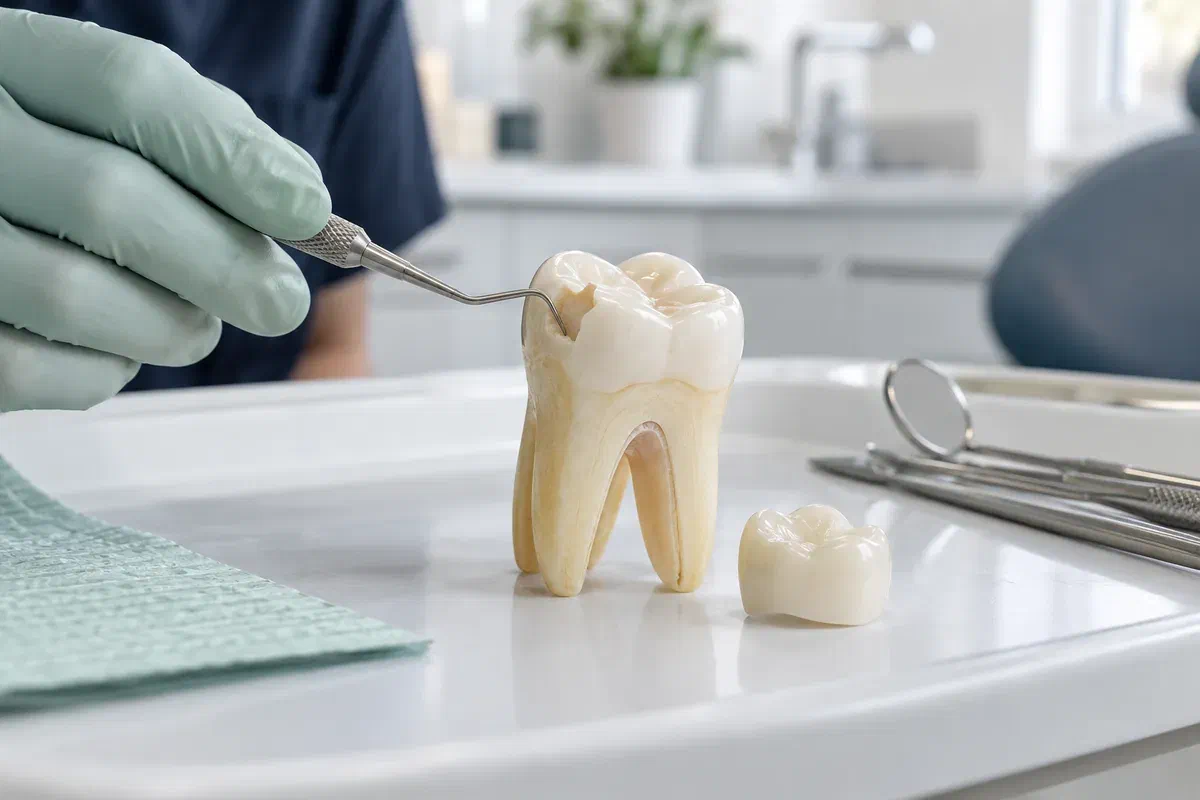
A small-looking break can expose a sensitive layer, while a larger fracture may feel surprisingly quiet. The dentist considers the depth, location, remaining structure, and signs of injury or infection together.
Part of a back tooth may break around a filling or a weakened area. The dentist checks whether the remaining walls can support a repair and whether the fracture extends farther than the visible edge.
A fall or blow can affect nearby teeth and supporting tissues as well as the broken tooth. Mention the circumstances and any movement, changed bite, or injury to the lips and gums.
New symptoms can help identify which tissues need attention. Describe whether discomfort is brief or lingering, whether biting triggers it, and whether swelling or a bad taste has appeared since the break.
If you find a tooth fragment, keep it in milk or your own saliva in a container and bring it to the dentist. Do not scrub it or try to glue it back yourself.
A suitable repair can restore a damaged tooth surface and make it more comfortable to use. Early assessment also allows the dentist to identify problems that a cosmetic patch would not solve, such as deeper cracking, decay, or pulp involvement.
No repair can promise that a severely damaged tooth will last indefinitely. The expected outlook depends on the fracture and the remaining tissues. You should understand whether the proposed care is definitive, temporary, or part of a staged attempt to retain the tooth.
Patient information: NHS — chipped, broken or cracked teeth
Stabilization or restoration may help protect vulnerable surfaces and reduce irritation. The appropriate measure depends on the findings and does not replace treatment of an underlying infection.
The dentist considers what the tooth can realistically support, rather than choosing a material only because it is quick to place or blends with neighbouring enamel.
Where appropriate, the discussion can address large existing restorations, grinding, or a sports injury. Understanding the setting of the break helps guide maintenance and prevention.
The first appointment may focus on diagnosis and immediate needs. Ask what can be completed then, what requires another visit, and how to protect the tooth between treatment stages.
Explain when the tooth broke, whether there was an impact, and what symptoms followed. Bring any fragment and relevant dental history, including previous root canal treatment or large restorations in the tooth.
The dentist assesses the fracture, bite, gums, and pulp response where appropriate. X-rays or other investigations may be needed to evaluate findings that cannot be seen directly.
A temporary covering or another protective measure may be considered while the definitive plan is established. Review the expected benefits, limitations, fees, and alternatives before choosing a restoration.
The selected treatment is completed or coordinated with further care. The dentist checks function and explains follow-up, particularly when trauma, deep damage, or uncertainty about pulp health requires monitoring.
A temporary repair and a completed restoration may need different precautions. Follow the instructions given for your tooth and call if the restoration loosens or symptoms change.
Until you have been advised it is suitable, avoid hard or sticky foods on the affected tooth. Do not repeatedly bite down to test whether the tooth or temporary repair is strong enough.
Continue appropriate brushing and interdental cleaning, taking care around a tender area. Ask for advice if a sharp surface or temporary material makes cleaning difficult rather than abandoning cleaning altogether.
A temporary cover can improve comfort without completing treatment. Keep the follow-up appointment for a definitive restoration, pulp review, or referral so that the tooth is not left with an incomplete plan.
The right advice depends on the injury and symptoms. Contact the clinic with a description of what has happened so the team can help you arrange an appropriate assessment.
Contact our Bronte Street clinic about a tooth that has fractured or lost a piece. Bring any fragment and explain your symptoms so we can assess the damage, discuss appropriate repair, and plan any further care.
Please call for a recent injury, significant pain, or swelling. Online requests are not monitored continuously for emergencies.
