A corner off a chewing tooth
Molars often crack near large fillings. Without pain or swelling, this may be booked for the next suitable time, but the dentist still needs to see whether the walls can hold a repair and how far the crack goes.


Teeth rarely break at a convenient moment. If one gives way on a Friday night in Acton, here’s how to protect it, when to call, and what the repair could involve once it’s examined.
Late dinners, weekend barbecues and holiday treats seem to be when teeth choose to crack. The first hours are mostly about protecting the area and deciding how urgent things are. After that comes the real assessment, where the dentist checks how far the break runs, whether the root is intact and whether the nerve inside has been affected.
Repair follows those findings. A contained chip may be rebuilt with composite, and now and then the original piece is bonded back. A tooth that has lost a large section may need an onlay or crown, and a damaged nerve may need root canal treatment first. Sometimes a fracture goes too deep, and keeping the tooth becomes the topic.
From Acton, give our Bronte Street practice a call as soon as you can. We’re open Monday to Thursday, 11am to 7pm, with Friday to Sunday by appointment. Tell us when it broke and whether there’s pain, swelling, looseness or a changed bite. Comfort isn’t a reason to wait, but it can help the team set sensible timing.
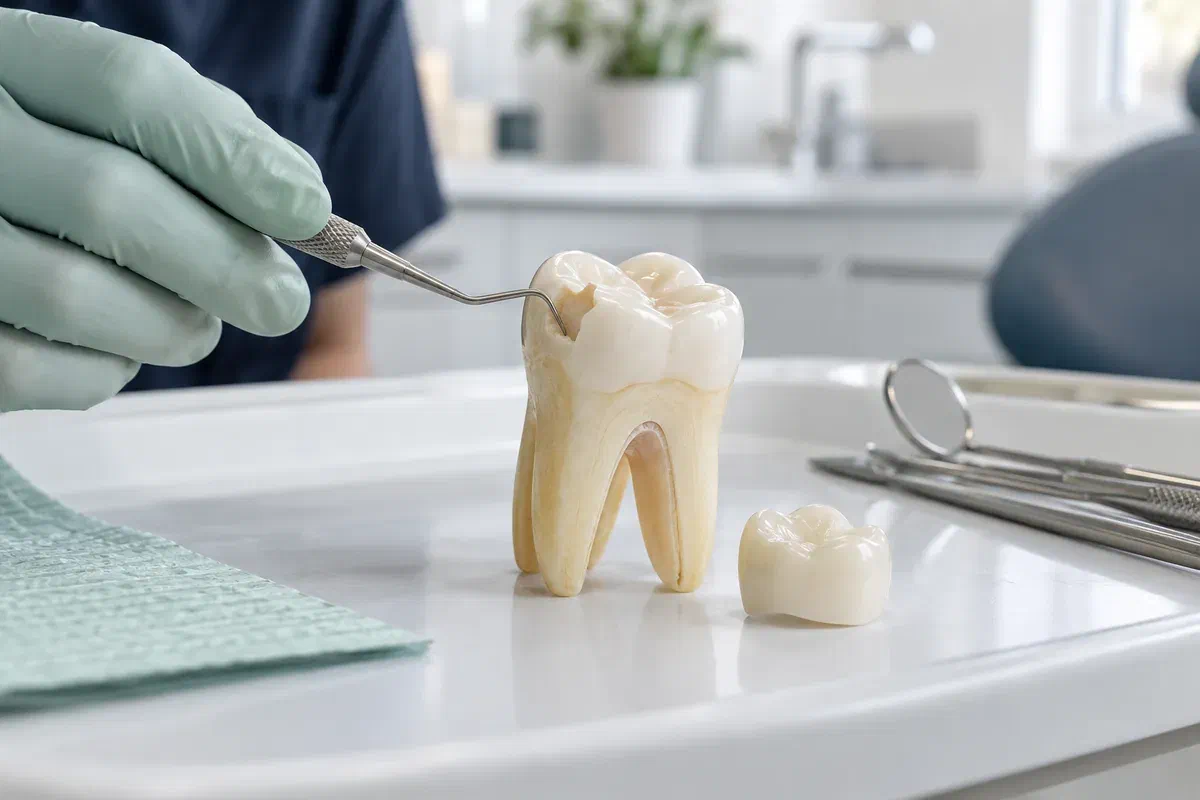
A minor chip may leave sensitive dentine exposed, while a bigger fracture can feel surprisingly calm. The dentist looks at depth, location, what remains and any sign of injury or infection, all at once.
Molars often crack near large fillings. Without pain or swelling, this may be booked for the next suitable time, but the dentist still needs to see whether the walls can hold a repair and how far the crack goes.
A fall or blow can loosen teeth, injure gums and affect neighbouring teeth. Explain what happened when you call, especially if a tooth has moved or your bite now feels wrong.
Increasing pain, a swollen gum or a bad taste suggest the nerve or surrounding tissue may be involved. These deserve an earlier call, and so does pain that lingers after eating.
Keep any fragment moist in a little milk or your own saliva in a container with a lid. Bring it to the appointment without scrubbing it, and resist the temptation to glue it back in place.
Covering a sharp edge at home can get you through a weekend, but it doesn’t address what’s beneath. A dental assessment can rebuild the surface for comfortable chewing and also catch what a stopgap hides: a deeper crack, decay or an affected nerve.
Even the best repair can’t promise that a badly broken tooth will last indefinitely. The outlook turns on the fracture and the healthy tissue that’s left. It’s worth asking whether each step is final, temporary, or one part of a staged effort to keep the tooth.
Patient information: NHS — chipped, broken or cracked teeth
Restoring or covering the exposed area can stop it catching your tongue or cheek. What is suitable depends on the findings, and it doesn’t replace treatment for infection.
The material is chosen for what the tooth can support, not just because it’s fast or matches the colour of nearby teeth.
Where relevant, we can talk about grinding, other large fillings or a mouthguard for sport, so a repeat break is less likely.
The first appointment may focus on diagnosis and comfort. Ask what can be done that day, what needs a further visit, and how to protect the tooth between appointments.
Explain when and how the tooth broke and how it has felt since, including over the days you waited. Bring the fragment, and note any past root canal treatment or large fillings.
The dentist examines the fracture, bite and gums and, where useful, checks the nerve’s response. X-rays may be taken to see beneath the surface.
A temporary cover may be placed while the definitive plan is agreed. Discuss benefits, limitations, fees and alternatives before choosing a restoration.
Treatment is completed or coordinated with other care. Function is checked, and a review is arranged when trauma, deep damage or nerve uncertainty needs watching.
Care before treatment, with a temporary, and after a final restoration differs a little. Follow the advice for your stage, and call if anything loosens or your symptoms shift.
Choose softer foods and use the other side of your mouth. Avoid hard, sticky or chewy foods on the broken tooth, and don’t keep biting down to test it.
Brush and clean between teeth as usual, easing off near tender areas. Covering a sharp edge with dental wax or sugar-free gum may make cleaning and eating more comfortable.
A temporary repair is a bridge, not a destination. Attend the follow-up for the permanent restoration, nerve review or referral so the tooth isn’t left half treated.
Advice depends on the injury and symptoms. Contact the clinic with a description of what happened, and the team will help you arrange an appropriate visit.
Contact our Bronte Street practice when a tooth has cracked, chipped or lost a piece. Keep any fragment and describe your symptoms, so we can advise on timing, assess the damage and arrange a suitable repair.
For a recent injury, severe pain or swelling, please phone rather than book online. Online requests aren’t monitored continuously for emergencies.
