A lost cusp on a chewing tooth
When a back tooth breaks, often near an existing filling, the strength of the remaining walls largely decides the repair. The dentist also checks whether the crack runs past the visible edge.


Bonding, an onlay, a crown or something more: the right fix for a broken tooth isn’t chosen by guesswork. From Brampton, an assessment shows how much tooth is left and what it can carry.
People often arrive with a repair already in mind. A friend had bonding, a parent had a crown, and the internet suggests both. The honest answer is that nobody can pick the right option until the tooth has been examined, because what matters is how far the fracture travels, whether the root is intact and whether the pulp inside has been affected.
Once those facts are known, the choice narrows quickly. Shallow, contained damage may be rebuilt with composite, and sometimes the original fragment can be bonded back. A tooth that has lost a lot of structure may need an onlay or crown to hold it together. If the nerve is involved, root canal care may come first, and occasionally the discussion turns to whether the tooth can be kept.
Families in Brampton juggling school runs and shifts can save time by calling ahead. Tell us when the tooth broke and what you’re noticing: pain, swelling, a tooth that moves, or a bite that feels wrong. Those details guide how soon it should be seen. A painless break still merits a call, since comfort says little about depth.
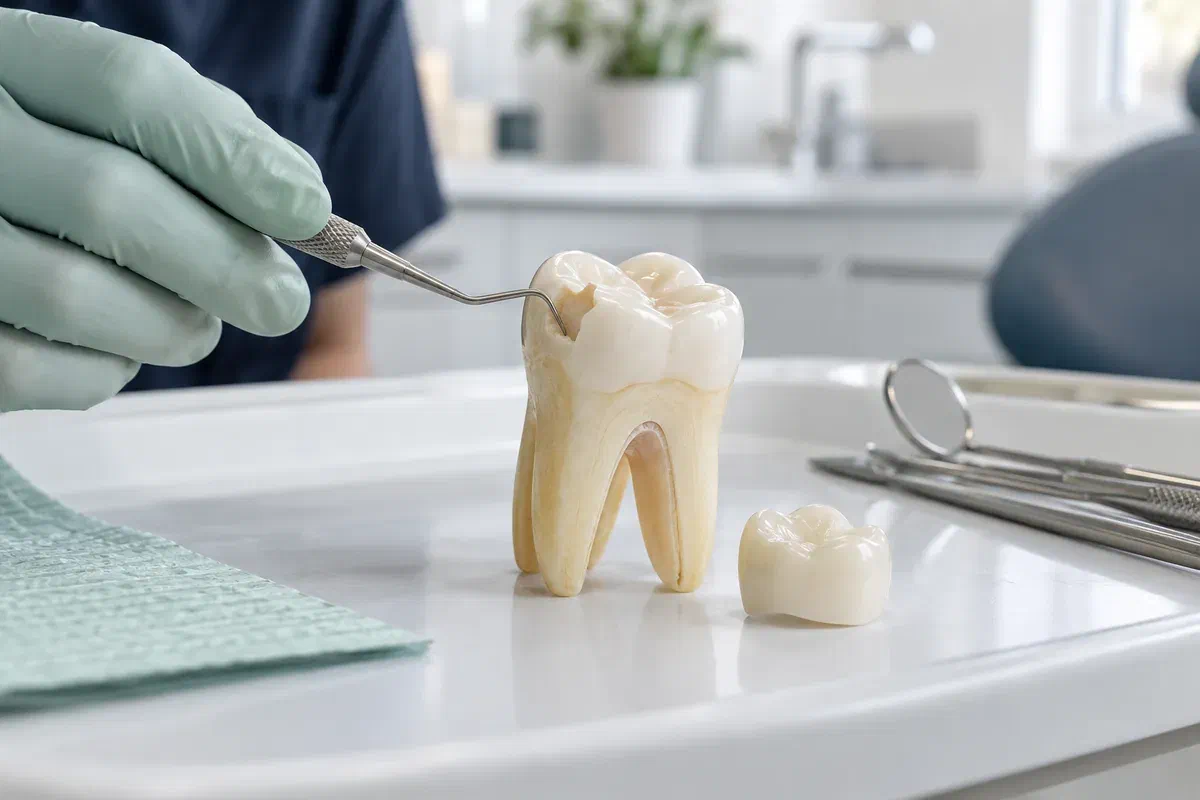
The amount missing is only one input. A small chip may uncover sensitive dentine, and a large fracture may feel surprisingly quiet. Depth, position, remaining tooth and any sign of trauma or infection are weighed together.
When a back tooth breaks, often near an existing filling, the strength of the remaining walls largely decides the repair. The dentist also checks whether the crack runs past the visible edge.
Knocks can affect neighbouring teeth, the gums and the bone as well. Describe the incident, and mention any looseness, a change in how your teeth meet, or injury to the lips.
Pain and swelling help show which tissues need care. Tell us whether sensitivity passes quickly or stays, whether biting makes it worse, and whether a bad taste or swelling has appeared.
If a piece broke off, keep it in a small container of milk or your own saliva and bring it with you. Don’t scrub it, and don’t try to reattach it with any adhesive at home.
When the restoration suits the damage, it can rebuild the tooth’s shape and let you chew in comfort. A thorough early assessment also uncovers problems that a cosmetic patch would only hide, like a deeper crack, decay underneath, or a nerve that needs attention.
It’s worth being clear-eyed, though. No repair can promise that a heavily broken tooth will last indefinitely, and the outlook depends on the fracture and the remaining tissues. For each recommendation, ask plainly: is this the finished repair, a stopgap, or one step in a longer attempt to save the tooth?
Patient information: NHS — chipped, broken or cracked teeth
Covering or restoring a sharp or open surface can reduce irritation and protect it. The right measure depends on the findings and doesn’t replace treating an infection.
The dentist chooses what the remaining tooth can realistically bear. Speed of placement or a close colour match alone isn’t a reason to choose a material.
Where it applies, we can discuss other large fillings, grinding, or a sports mouthguard. Knowing why the tooth broke helps guide care going forward.
The first appointment may focus on diagnosis and immediate needs. Ask which steps happen at that visit, which need another, and how to look after the tooth in between.
Tell us when it happened, whether there was an impact and what you’ve felt since. Bring any fragment and mention earlier root canal treatment or large restorations in that tooth.
The dentist assesses the fracture, your bite and gums, and tests the nerve if appropriate. X-rays or further investigations may reveal what can’t be seen.
A temporary cover may protect the tooth while you decide. Compare the benefits, limitations, fees and alternatives of each suitable restoration before choosing.
The chosen repair is completed or coordinated with other care. Function is checked, and follow-up is planned if trauma, deep damage or nerve uncertainty needs monitoring.
A temporary repair needs more caution than a finished restoration. Follow the instructions you’re given, and call if anything loosens or your symptoms change.
Until the dentist says it’s fine, avoid hard or sticky foods on the treated tooth. Don’t keep biting down to check whether the repair is holding.
Continue brushing and interdental cleaning, gently around tender spots. If a temporary or sharp area makes it difficult, ask for advice rather than skipping that part of your mouth.
If a temporary was placed, it isn’t the end of treatment. Attend the follow-up for the definitive restoration, nerve review or referral so the plan is complete.
The best option depends on the damage and your symptoms. Describe what happened when you contact us, and the team will help arrange an assessment.
Call or book with our Bronte Street practice for a tooth that has cracked or lost a piece. Bring the fragment if you kept it and describe your symptoms, so we can assess it, compare suitable repairs and plan further care.
A tooth injured today, serious pain or a swollen face is a reason to phone. The online form isn’t watched continuously, so it can’t handle emergencies.
