A broken molar cusp
Corners of back teeth often break near existing fillings. Before a final repair is chosen, the dentist confirms whether the remaining walls are strong and whether the crack extends past what is visible.


Some broken teeth are fixed in one sitting; others need a temporary cover first and a lasting repair later. For Burlington households, knowing which stage you’re at makes the whole process easier to plan.
A broken tooth often leaves the first appointment with something on it: a smoothed edge, a temporary filling, perhaps a bonded patch. That can feel like the end of the matter. Sometimes it is. Often it is a holding measure while the dentist works out how deep the fracture reaches, how the root looks and whether the nerve was affected.
The lasting repair depends on what is left. Small breaks can usually be rebuilt with composite, and now and then the broken fragment is bonded back on. Where much of the tooth is missing or the pulp is involved, a crown, an onlay, root canal treatment, or a discussion about removing the tooth may be needed.
When you call from Burlington, tell us when the break happened and how the tooth feels now. Pain, swelling, movement or a bite that suddenly feels high or uneven can all change the urgency. A tooth that isn’t hurting still benefits from a call, because comfort alone doesn’t show how serious the damage is.
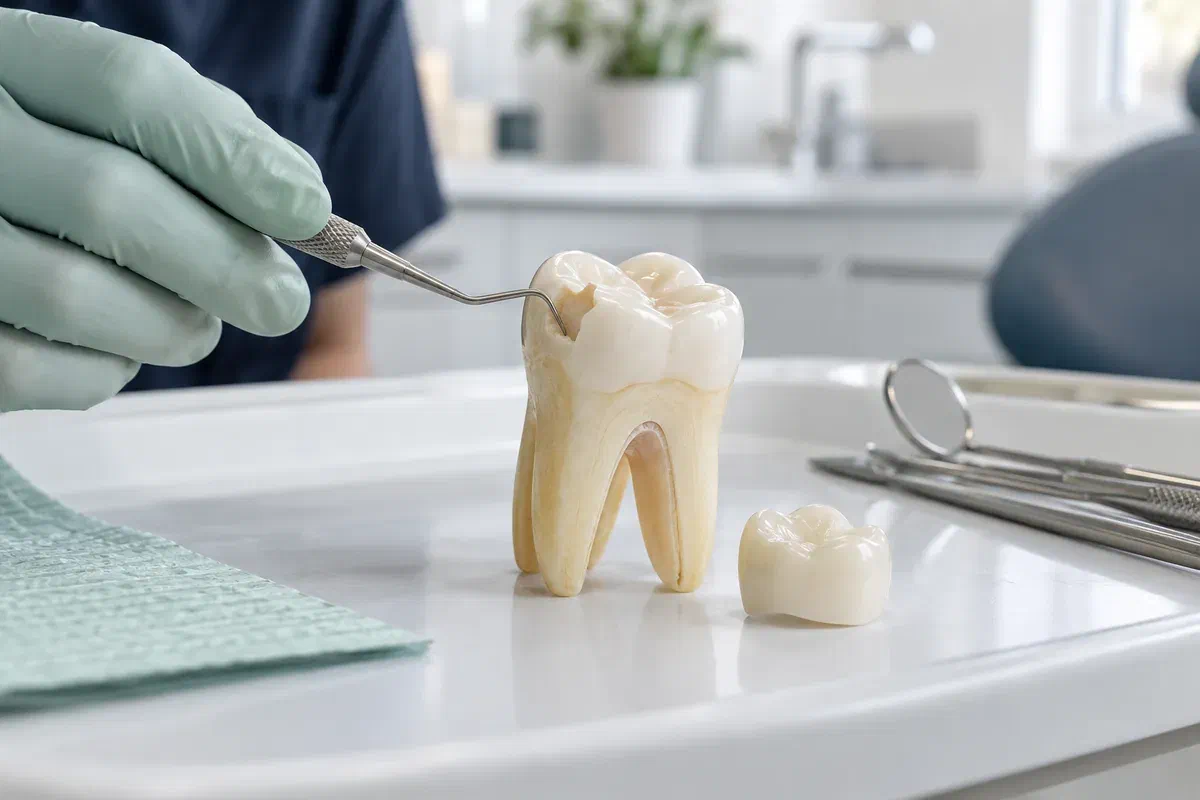
A chip may reveal a layer that reacts sharply to temperature, while a deeper fracture can stay quiet. The dentist puts depth, location, surviving structure and any sign of injury or infection together before deciding.
Corners of back teeth often break near existing fillings. Before a final repair is chosen, the dentist confirms whether the remaining walls are strong and whether the crack extends past what is visible.
Knocks can affect the root, the gums and nearby teeth, and some effects appear later. Tell us how it happened, and mention looseness, a changed bite or cuts to the lips or gums.
Pain and swelling help show what is involved. Notice whether sensitivity is brief or lasting, whether chewing sets it off, and whether swelling or a bad taste has come on.
Keep any fragment in a small container with milk or your own saliva and bring it to us. It shouldn’t be scrubbed, dried out or glued back at home.
A protective first step can calm sensitivity and shield the exposed surface while information is gathered. It also gives the dentist a chance to find what a rushed cosmetic fix might hide, such as a crack extending under the gum, decay, or a struggling nerve.
No repair can promise a severely broken tooth a lifetime of service. The likely result depends on the fracture and the tissues around it. At each stage, it’s reasonable to ask whether this step is definitive, temporary, or part of a staged effort to keep the tooth.
Patient information: NHS — chipped, broken or cracked teeth
Smoothing a sharp edge or placing interim material can reduce irritation and protect a vulnerable spot. It isn’t a cure for an infection, which needs its own treatment.
Once the damage is understood, the restoration is matched to what the tooth can bear, rather than to what is fastest or blends most easily.
With the repair settled, we can discuss grinding, other large fillings or sports protection that might reduce the risk of the next break.
The first visit might cover diagnosis and immediate comfort only. Ask which steps happen today, which need another appointment, and what protects the tooth until then.
Tell us when the break occurred, whether something struck the tooth, and how it has felt. Bring the fragment, and mention any earlier root canal treatment or large filling.
The dentist examines the fracture, bite and gums and, where useful, tests the nerve. X-rays or further tests can show what lies out of sight.
A temporary cover may be placed while a lasting plan is agreed. Ask about benefits, limits, fees and alternatives for each type of restoration.
The final treatment is done here or coordinated with other care. Your bite is checked and review is arranged if trauma or an uncertain nerve calls for monitoring.
Temporary and permanent repairs have different strengths. Follow the advice for your stage of treatment, and call if a cover feels loose, cracks or the tooth changes.
Keep hard, sticky and chewy foods off the tooth until the dentist gives the go-ahead. Repeatedly biting down to test the repair can dislodge it.
Brush and clean between teeth as normal, gently near any tenderness. If temporary material or a rough edge makes this hard, ask for tips instead of skipping it.
A comfortable temporary can tempt you to postpone. Keep the appointment for the final restoration, nerve review or referral so the plan is actually finished.
Every tooth’s timeline is different. Describe what happened when you contact the clinic, and the team will help schedule the right appointment.
Whatever stage your broken, chipped or cracked tooth is at, our Bronte Street team can help. Tell us your symptoms and bring any fragment, so we can assess the damage, explain each stage and plan the care your tooth needs.
Please phone for a recent injury, significant pain or swelling. Online requests aren’t monitored around the clock for urgent problems.
