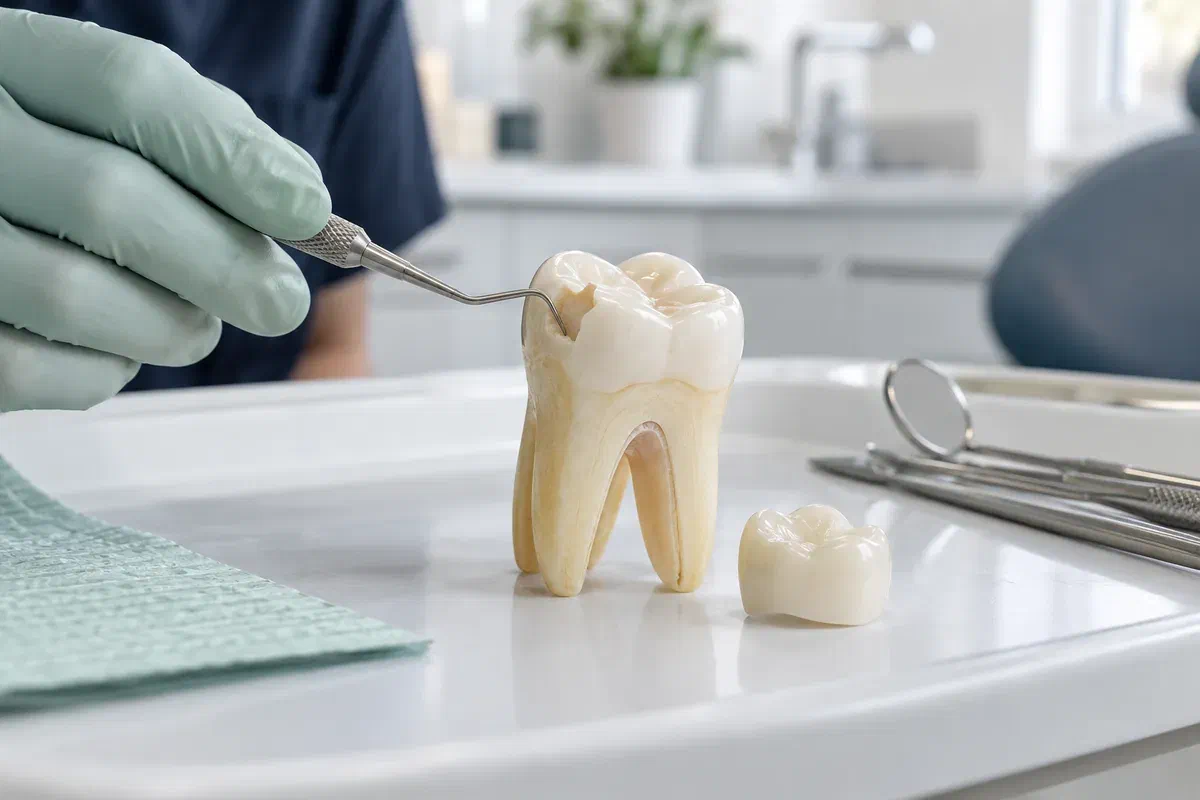
A molar weakened by an old filling
Large fillings can leave thin walls that eventually crack under chewing pressure. The dentist checks the remaining walls and whether the fracture extends beyond what’s visible.


Fixing a broken tooth is half the job; understanding why it broke is the other half. For households in Caledon, an assessment covers both the repair and how to protect your teeth afterwards.
Teeth rarely break for no reason. A large old filling may have left thin walls, night-time clenching may have loaded a molar for years, or an olive pit simply landed in the wrong spot. Knowing the cause helps, but first the dentist needs to know the damage: how far the fracture runs, how the root looks, and whether the nerve has been touched.
With that information, the repair can be matched to the tooth. A limited break may be rebuilt with bonded composite, or occasionally a saved fragment reattached. Where more structure is lost, an onlay or crown can hold the tooth together, and an involved pulp may need root canal care first. In some cases the fracture is too deep, and replacement becomes the topic.
From anywhere in Caledon, from Bolton to the smaller villages, start with a call to our Bronte Street practice. Explain when the tooth gave way and how it feels: any pain, swelling, movement or change in your bite. Those details set the pace. A tooth that feels fine still needs checking, because comfort doesn’t reveal depth.
Small chips can expose a tender layer, and big fractures can be surprisingly painless. Alongside the cause, the dentist considers depth, position, the tooth that remains and whether trauma or infection has left its mark, because each of these changes what a lasting repair looks like.
Large fillings can leave thin walls that eventually crack under chewing pressure. The dentist checks the remaining walls and whether the fracture extends beyond what’s visible.
Accidents at home, on the farm or in sport can affect several teeth and the gums. Describe the event and whether teeth feel loose, your bite has changed, or your lips were cut.
Symptoms help locate the problem. Mention whether pain is fleeting or persistent, whether biting triggers it, and whether the gum has puffed up or tastes unpleasant.
Save any fragment by keeping it moist, in milk or saliva, inside a small closed container, and bring it in. It’s best not to scrub it or try to reattach it at home.
The right repair can rebuild the tooth and restore comfortable chewing. An early look also brings to light problems a cosmetic patch would overlook, like a crack running deeper, decay beneath an old filling, or nerve involvement, and it’s the moment to spot other teeth at risk.
There are limits worth knowing. No restoration can promise that a badly broken tooth will last indefinitely, and the outlook depends on the fracture and the tissue that remains. Ask whether a recommended step is final, temporary, or one stage in an effort to keep the tooth over time.
Patient information: NHS — chipped, broken or cracked teeth
Covering or restoring the exposed area can ease irritation and protect it. The approach depends on the findings and doesn’t replace treating an infection.
If grinding or heavy chewing played a part, the dentist factors that into what the remaining tooth can support. Speed or shade alone isn’t the guide.
We can discuss a night guard for clenching, a sports mouthguard, habits like chewing ice, and other heavily filled teeth that may need attention.
Your first appointment may focus on diagnosis and anything urgent. Ask what can be done immediately, what will need another visit, and how to protect the tooth in the meantime.
Tell us the moment it gave way, what you were biting or doing at the time, and how it has felt over the days since. Mention clenching or grinding, previous root canal work or large fillings, and bring any fragment.
The dentist looks at the fracture, gums and how your teeth meet, and may test the nerve. X-rays can show what’s beneath the surface and reveal other weakened teeth.
If the final repair can’t be done straight away, interim material can guard the tooth while you think it over. Weigh the benefits, limits, fees and alternatives of each restoration before deciding.
The repair is completed or arranged alongside further care. The dentist confirms comfortable function and discusses follow-up and ways to reduce future breaks.
A temporary needs more caution than a finished restoration. Follow the advice for your tooth, and phone the clinic if anything loosens or your symptoms change.
Until you’ve been told it’s ready, avoid hard or sticky foods on the repaired tooth. Don’t bite down repeatedly to see if it holds.
Brush and clean between teeth as normal, easing up near any tenderness. If a sharp edge or temporary gets in the way, ask for advice instead of skipping it.
If a night guard or sports guard is recommended, use it as directed. And keep any follow-up for the definitive restoration or nerve review.
Each break has its own story. Contact the clinic and describe what happened, so the team can help arrange the right assessment.
Call our Bronte Street practice when a tooth has cracked, chipped or broken. Let us know how it feels and what you think caused it, and keep any fragment; that way we can assess the tooth, plan a suitable repair and talk about prevention.
Please phone for a recent injury, strong pain or swelling. Online booking isn’t monitored continuously for emergencies.
