A molar cusp gone near a filling
These are often very restorable, but it depends on the walls left behind. The dentist checks whether they can support a repair and whether the crack extends under the gum or toward the root.


The first thing most people want to know is whether the tooth can be kept. For households across Halton Hills, an assessment of the root, nerve and remaining structure answers that properly.
It’s the question behind almost every broken-tooth call. The good news is that many broken teeth can be restored, sometimes simply. The harder truth is that the answer depends on things you can’t see in a mirror: how far down the fracture runs, whether the root is cracked, how the gum attaches, and whether the pulp has been injured.
Where enough healthy tooth remains, the repair can be modest. Bonded composite may rebuild a corner, and a saved piece can occasionally be reattached. Larger losses may need an onlay or crown for protection, and an affected nerve may need root canal care first. When a fracture runs too deep for a reliable repair, the dentist will say so plainly and talk through replacement.
Wherever you are in Halton Hills, from Georgetown to Glen Williams to Acton, a call to our Bronte Street practice is the best start. Mention when the tooth broke and how it feels: pain, swelling, movement or a bite that suddenly feels different. Those details set the urgency, and a painless break still deserves timely advice.
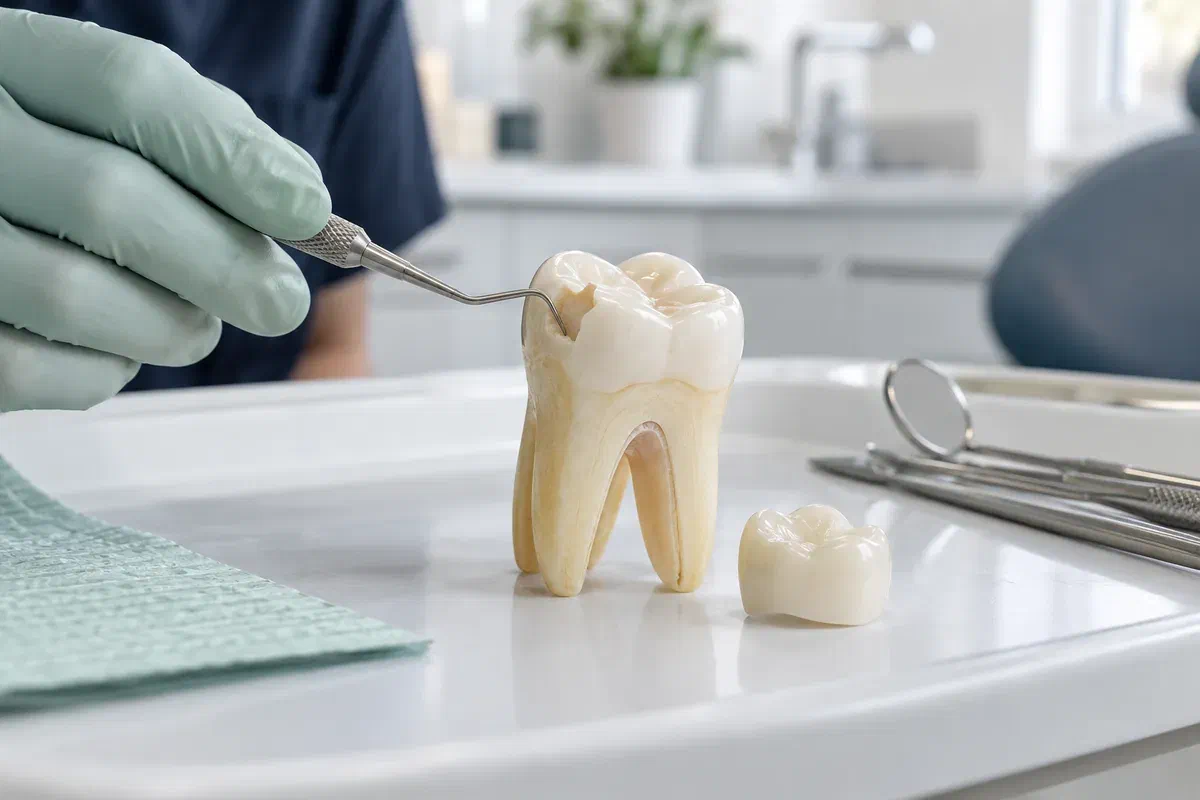
A small chip can expose a sensitive layer, while a large fracture may feel surprisingly comfortable. The dentist weighs depth, location, the remaining structure and any evidence of trauma or infection together before giving a view.
These are often very restorable, but it depends on the walls left behind. The dentist checks whether they can support a repair and whether the crack extends under the gum or toward the root.
Impact can damage the root, the gum and neighbouring teeth as well as the crown. Tell us how it happened, and whether teeth feel loose, the bite has changed or your lips or gums were hurt.
These symptoms can suggest the nerve or surrounding tissue is involved. Note whether pain flashes or throbs, whether biting worsens it, and whether a swelling or foul taste has developed.
If a fragment broke away, keep it in milk or a little of your own saliva in a sealed container and bring it with you. Don’t clean it vigorously or try to stick it back yourself.
A suitable repair can rebuild the tooth and restore comfortable chewing. Seeing it early also brings to light the problems that decide restorability, such as a crack extending deeper, decay beneath an old filling, or a nerve that is beginning to struggle.
That said, nobody can promise a severely broken tooth will last a lifetime. Its future depends on the fracture and the healthy tissue around it. Ask whether the treatment proposed is definitive, temporary, or a staged attempt to keep the tooth, and what would change that view.
Patient information: NHS — chipped, broken or cracked teeth
Covering an exposed or sharp area can reduce irritation and shield it. What’s appropriate depends on the findings, and it isn’t a replacement for treating infection.
The dentist recommends what the tooth can realistically support, rather than a material chosen because it is quick or blends in.
Where relevant, we can discuss grinding, other heavily restored teeth or sports protection. Understanding the cause helps protect the rest of your smile.
The first appointment is often about diagnosis and immediate comfort. Ask what will be decided that day, what needs more information, and how to protect the tooth meanwhile.
Explain when the tooth broke, whether there was an impact, and what symptoms followed. Bring the fragment, and mention any earlier root canal work or large restorations.
The dentist examines the fracture and bite, checks the gum around the tooth, and tests the nerve where appropriate. X-rays may show how deep the damage extends.
A temporary cover may protect the tooth while a plan is agreed. Review the benefits, limits, fees and alternatives, including what would happen if the tooth can’t be kept.
Treatment is completed or coordinated with other care. Your bite is checked, and follow-up is arranged where trauma or an uncertain nerve means the tooth needs monitoring.
A temporary repair needs more caution than a final restoration. Follow the instructions for your tooth, and call if something loosens or feels different.
Until you’re told it’s ready, keep hard or sticky foods away from that tooth. Repeatedly clenching or biting on it to test it can make things worse.
Continue brushing and interdental cleaning, gently near any tenderness. If a sharp edge or temporary filling makes cleaning difficult, ask for help rather than letting plaque build.
A temporary may settle discomfort without finishing the job. Attend the next appointment for the definitive restoration, nerve review or referral so the tooth isn’t left in limbo.
The answer depends on the injury and what remains. Contact the clinic with a description of what has happened, and the team will help you arrange an assessment.
Reach out to our Bronte Street practice if a tooth has cracked, chipped or broken. Bring any fragment and describe how it feels, and we’ll assess whether it can be restored, explain the options and plan what comes next.
Please phone for a fresh injury, severe pain or swelling. Online requests aren’t monitored continuously for emergencies.
