A corner gone from a back tooth
Molars and premolars often lose a cusp near an old filling. The dentist checks whether the remaining walls are sturdy enough for repair and whether the fracture continues out of sight.

That sharp edge your tongue keeps finding is a sign worth acting on. If you’re coming from Mississauga, an assessment shows how far the break runs and which repair the tooth can support.
It’s hard to ignore a jagged tooth. Your tongue returns to it constantly, your cheek catches it when you chew, and floss shreds on it. Those annoyances are real, but the bigger question sits underneath: how deep the fracture goes, whether the root is sound, and whether the pulp has been reached.
Smoothing the edge is sometimes part of the answer, never the whole of it. A limited break may be rebuilt with bonded composite or by reattaching the fragment you saved. More extensive damage can call for a crown or onlay, treatment of the nerve, or a careful conversation about whether the tooth can stay.
From Mississauga, a quick call before you come in lets the team gauge timing. Say when the break happened and describe what you’re feeling: pain, swelling, a loose tooth, or teeth that no longer close evenly. Comfort can be misleading, so ask for advice even if the tooth seems calm. It also helps to have a rough sense of your week ready, since a repair can involve more than one visit.
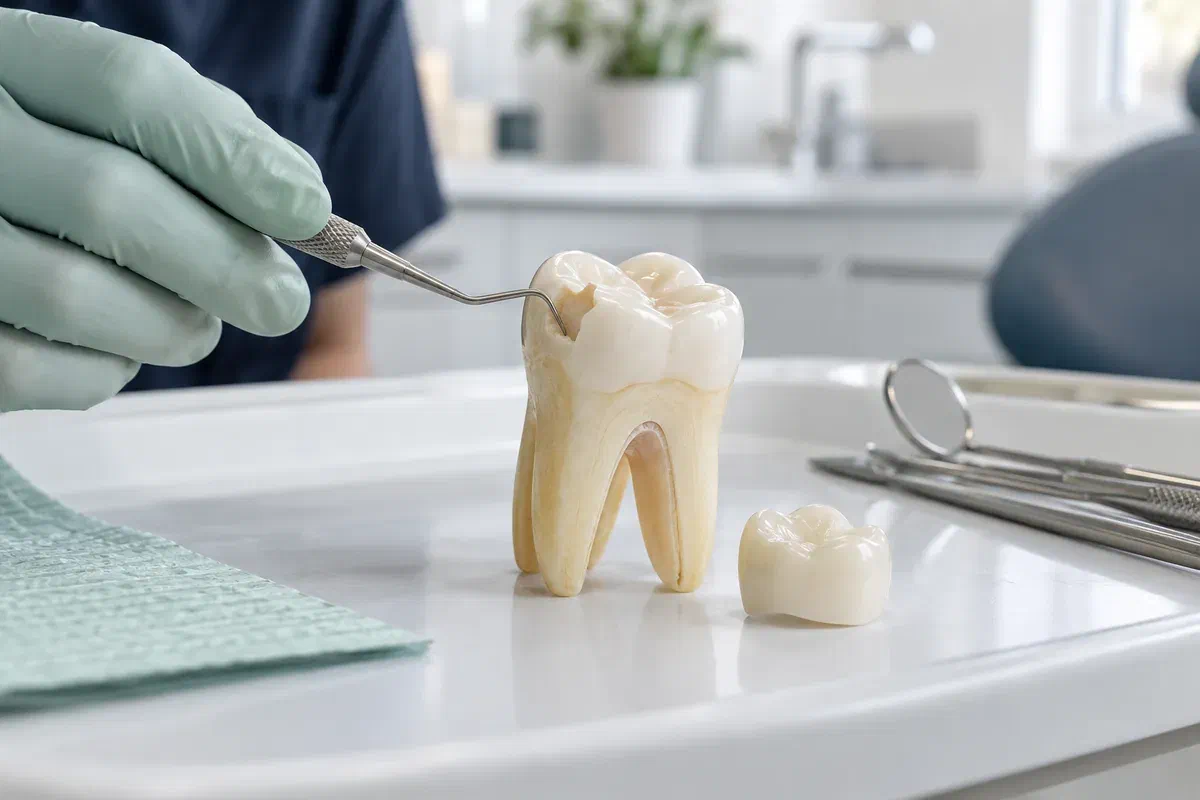
A small chip can expose a layer that reacts to cold or sweets, and a larger fracture may hardly hurt. Depth, location, remaining tooth and signs of injury or infection are considered together, because no single one of them tells the dentist enough on its own.
Molars and premolars often lose a cusp near an old filling. The dentist checks whether the remaining walls are sturdy enough for repair and whether the fracture continues out of sight.
A blow can affect the gums, lips and teeth beside the broken one. Explain what happened, and mention any looseness, a bite that feels different, or cuts inside the mouth.
Your symptoms are useful clues. Let us know if pain is momentary or lingers, whether chewing provokes it, and whether a swelling or bad taste has developed.
Kept the broken bit? Place it in milk or a little of your own saliva in a small container and bring it. Please don’t brush it clean or try to fix it on yourself.
A suitable repair can restore the tooth’s shape and make chewing comfortable again. Having it seen promptly also reveals problems that simply smoothing or patching would leave behind, such as a crack running deeper, decay, or nerve involvement.
Be wary of any promise that a heavily broken tooth will last forever. The outlook rests on the fracture and the tissue that remains. You should know whether your treatment is a definitive repair, an interim cover, or a stage in a longer attempt to save the tooth. If that isn’t clear, ask again; it is a fair question at every appointment.
Patient information: NHS — chipped, broken or cracked teeth
Protecting or rebuilding the exposed area can stop it irritating soft tissue. What’s appropriate depends on the findings, and it doesn’t replace treatment for infection.
The dentist bases the choice on what the remaining structure can support, not on what’s quickest or the nearest shade match.
We can talk about clenching, other large fillings or a sports guard where relevant. Understanding why the tooth broke helps shape how you protect it.
Your first visit may concentrate on diagnosis and immediate comfort. Ask what will be done right away, what needs a second appointment, and how to protect the tooth meanwhile.
Tell us when the tooth broke, whether there was an impact, and what symptoms followed. Bring the fragment and mention any past root canal work or big fillings there.
The dentist looks at the fracture, bite and gums, testing the nerve where appropriate. X-rays may be needed to see damage that can’t be viewed directly.
A temporary covering may go on while the permanent plan is settled. Review benefits, limitations, fees and alternatives before you choose.
Treatment is completed or arranged alongside further care. Your bite is checked, and follow-up is planned where trauma or nerve health needs watching.
Precautions differ between a temporary repair and a finished one. Follow the advice for your tooth, and phone if a repair loosens or symptoms shift.
Until you’re told otherwise, keep hard or sticky foods off that tooth. Biting on it repeatedly to check it can loosen the repair.
Keep brushing and flossing, taking care around tender gums. If a rough edge keeps tearing floss, ask about another way to clean there rather than leaving the gap alone.
An interim repair may feel fine, but the tooth still needs its next step. Keep the appointment for the permanent restoration, nerve review or referral.
Every break is a little different. Contact the clinic and describe what happened, and the team will help you book an assessment that suits.
Reach our Bronte Street practice by phone or online if a tooth has chipped, cracked or broken. Bring any fragment and describe how it feels, and we’ll assess the damage, protect the area and talk through repair.
A recent injury, severe pain or swelling calls for a phone call. Online requests aren’t monitored continuously for emergencies.
