A wall lost beside an older filling
Heavily restored back teeth often break along the edge of the filling. The dentist judges whether the remaining walls can anchor a repair and whether the crack continues beneath the gumline or toward the root.


Old fillings, long-serving teeth and one unlucky bite: that is how many breaks begin. From Old Milton, have the tooth examined so repair is based on how much sound structure is really left.
Teeth that have carried a large filling for twenty or thirty years can lose a wall with very little warning. Sometimes the filling comes out in one piece; sometimes a corner of enamel goes with it. The gap you can see rarely tells the whole story, so the dentist also checks the root, the tooth around the old filling, and whether the nerve has been disturbed.
What happens next depends on how much healthy tooth is still standing. A modest break might be rebuilt with bonded composite or, in some cases, by reattaching the fragment. A tooth that has been filled many times may need fuller coverage, nerve treatment, or a candid discussion about keeping it versus replacing it.
From Old Milton, Milton’s historic downtown, our Bronte Street practice is close at hand. When you call, mention when the tooth broke and how it feels now. Throbbing, swelling, a tooth that moves or a bite that suddenly feels off all change how quickly it should be seen, and a painless break still deserves a call.
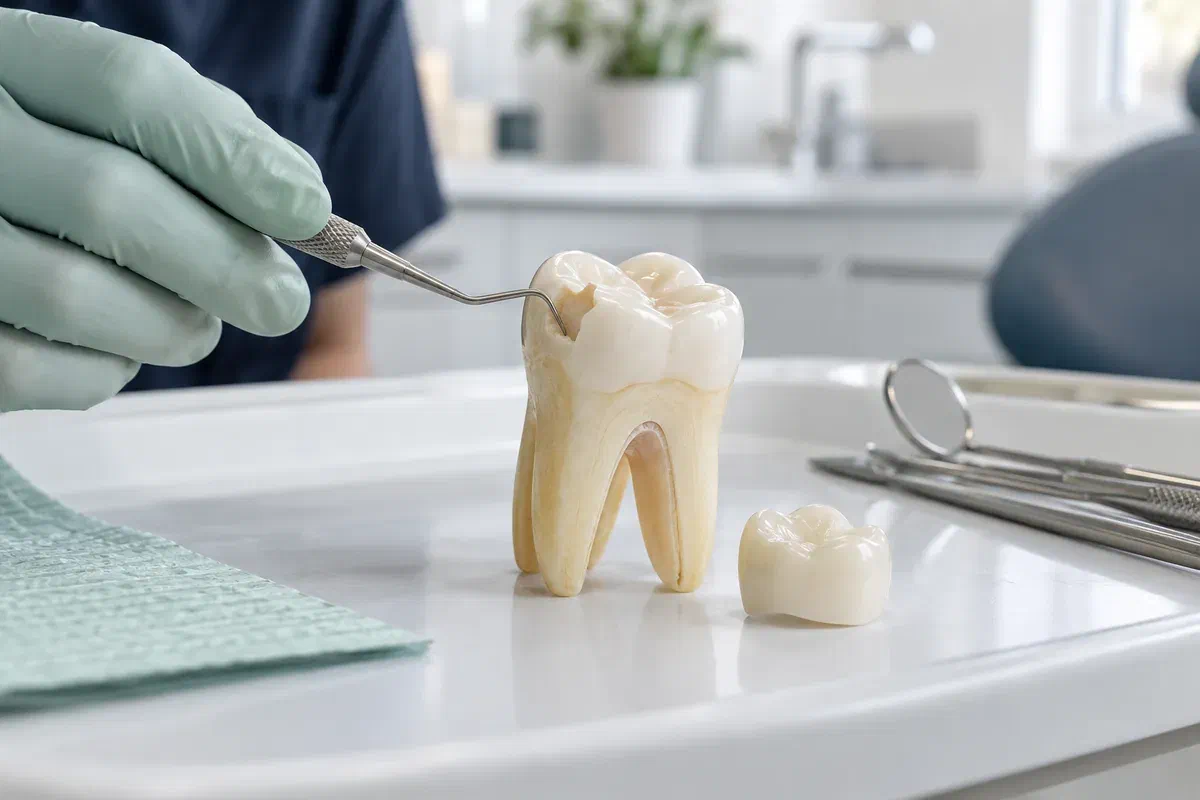
A minor chip can leave sensitive inner layers exposed, while a larger fracture may barely register. The dentist weighs depth, location, how much tooth remains and any sign of injury or infection together.
Heavily restored back teeth often break along the edge of the filling. The dentist judges whether the remaining walls can anchor a repair and whether the crack continues beneath the gumline or toward the root.
A trip on a step or a knock to the face can involve other teeth, the gums and the lips. Explain how it happened and whether any teeth feel loose or your bite has changed since.
Your symptoms help show which tissues are affected. Note whether pain is a quick flash or a lingering ache, whether chewing triggers it, and whether swelling or a sour taste has developed.
If a fragment came away, store it in a little milk or your own saliva in a closed container and bring it in. Don’t rinse it hard, scrub it or try to glue it back yourself.
The right repair can rebuild the broken surface and let you chew comfortably again. Having it checked early also uncovers what a simple patch would hide, like decay under the old filling, a crack running deeper, or inflammation in the pulp.
Even so, a heavily broken tooth comes with no lifetime guarantee. Its prospects depend on the fracture and what tissue survives. Before you agree to treatment, find out whether it is meant as a final repair, a temporary measure, or one step in a staged effort to keep the tooth.
Patient information: NHS — chipped, broken or cracked teeth
Smoothing or covering a jagged area can protect it and stop it catching your tongue. What’s suitable depends on the findings, and it doesn’t take the place of treating infection.
The dentist looks at what the remaining tooth can reliably hold. A material isn’t picked simply because it is fast to place or matches the shade of the teeth beside it.
Older mouths often have several large fillings. Where helpful, we can talk about those teeth, night-time clenching or grinding, and how to lower the risk of the next break.
The first appointment often centres on diagnosis and anything that can’t wait. Ask what will be done today, what needs another visit, and how to keep the tooth safe in between.
Let us know when it broke, whether there was a fall or blow, and what you have noticed since. Bring any fragment, and mention past root canal treatment or large fillings in that tooth.
The dentist inspects the fracture, your bite and the gums, and tests the nerve’s response where appropriate. X-rays may be taken to see what lies below the surface.
A temporary filling or other protection may be placed while a lasting plan is agreed. Ask about the benefits, limitations, fees and alternatives of each restoration.
Treatment is completed here or coordinated with other care. Function is checked, and follow-up is explained, particularly after trauma, very deep damage or an uncertain nerve.
Precautions change with the stage of treatment. Follow the advice for your particular tooth, and call if a filling or cover loosens or symptoms change.
Until the dentist says otherwise, keep hard, chewy or sticky foods off that side. Resist the urge to bite down repeatedly to see whether the tooth or temporary material holds.
Keep brushing and cleaning between teeth, easing up around any tender spot. If a rough edge or temporary filling makes flossing tricky, ask for a different approach rather than stopping.
A temporary cover may feel comfortable, but it isn’t the finished job. Keep the next appointment for the permanent restoration, nerve review or referral so nothing is left half done.
Advice depends on the injury and how the tooth feels. Call and describe what happened, and the team will help arrange a suitable assessment.
Get in touch with our Bronte Street practice about a tooth that has cracked, chipped or lost a filling and a piece with it. Bring any fragment and describe your symptoms, and we’ll assess the tooth, talk through repair and plan what comes next.
Call for a recent injury, severe pain or swelling. Online booking requests aren’t checked continuously and aren’t suitable for emergencies.
