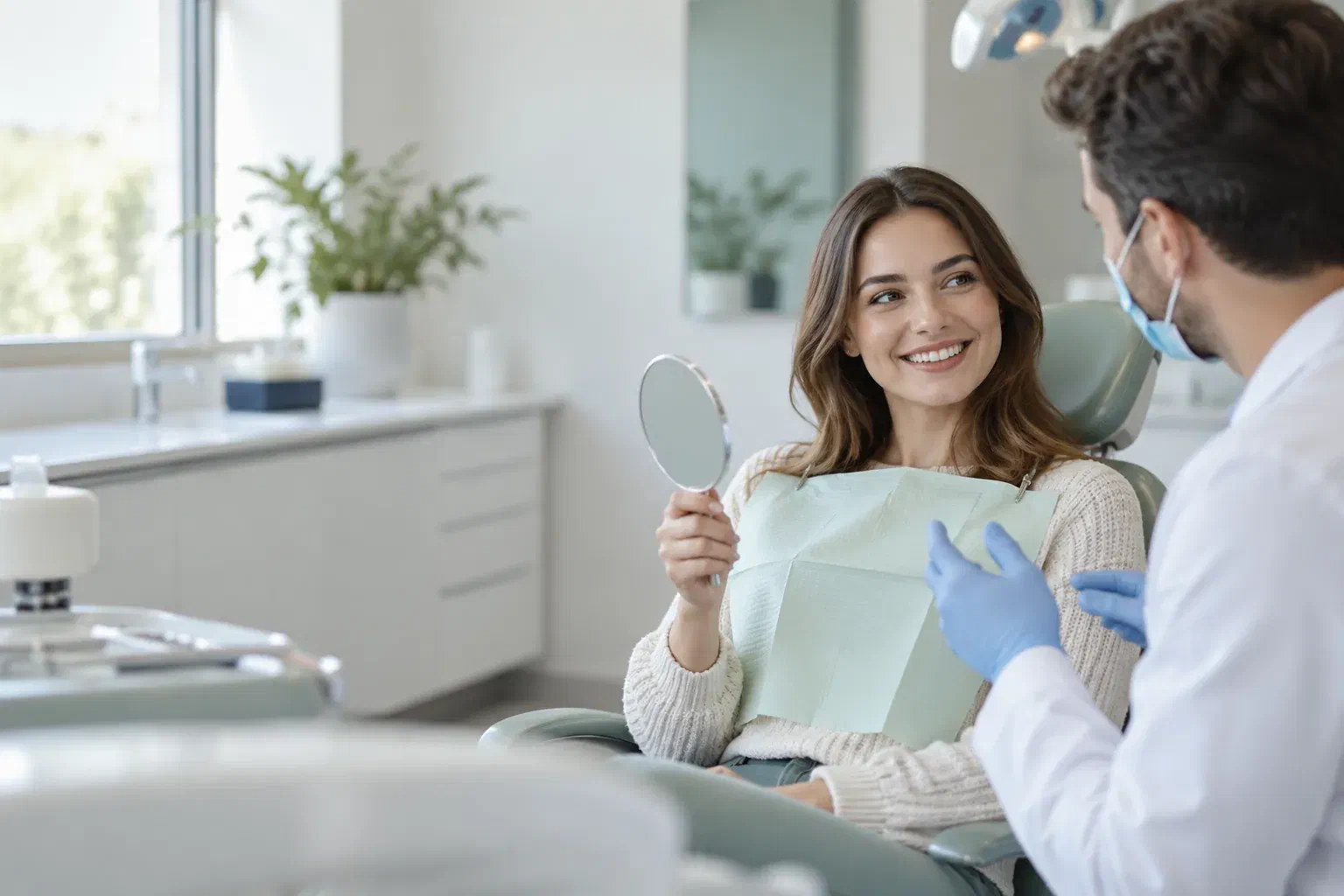
Illustrative consultation about the appearance and comfort of a chipped tooth
Restorative Dentistry

Chipped Tooth Repair in Acton

Holding nails between your teeth, snipping fishing line or twisting off a bottle cap can cost you a corner. From Acton, have the chip checked and repaired in a way that suits the tooth and your habits.

Teeth used as a third hand

The tool that was never meant to be one

Hands full in the workshop, the garden or the barn? Plenty of people grip screws, wire or twine between their front teeth without thinking, until one day an edge gives. Chips from these habits are common, and they tend to land on the same corner again and again because that is the spot doing the work.

Whatever the habit, a chip means lost tooth surface, and the size and depth of it, the tooth involved and the way your bite meets it all shape the repair. Smoothing may be enough for a faint rough patch. An obviously missing corner needs a different approach, and a chip that exposes a more sensitive layer or comes with pain needs attention before anything else.

Coming in from Acton to our Bronte Street practice, it helps to be candid about how the chip happened. The dentist is not there to judge habits, only to understand the forces on the tooth. Tell us how you would like it to look, too, though the tooth’s health and function lead every decision.

Have the edge checked
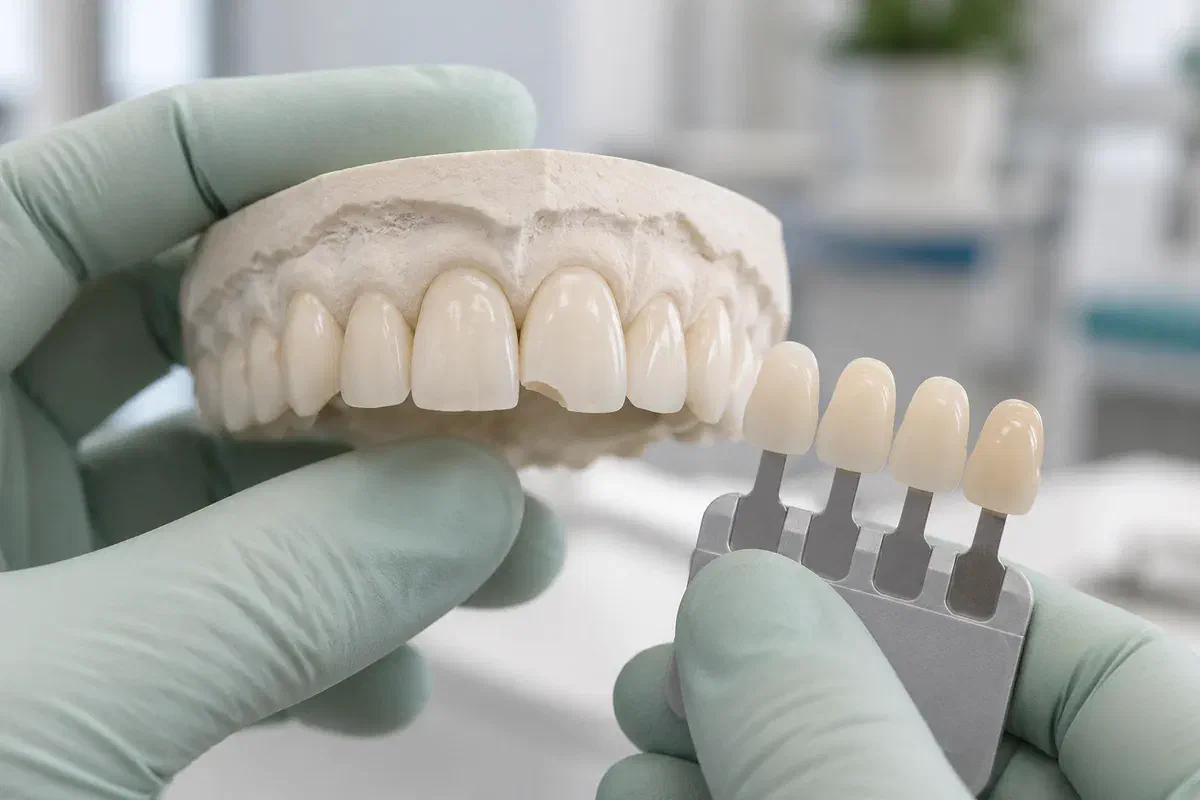
A front-tooth study model with a small chipped corner beside a shade guide
Beyond the visible notch

Why the habit matters to the repair

A chip may be a shallow enamel defect, or it may be one sign of repeated stress, decay at an older filling or a crack beneath the surface. Assessment distinguishes these, so the repair suits the real problem.

A notch that fits a nail exactly

Habit chips often have a recognizable shape. The dentist checks how deep the notch goes and what remains before deciding whether smoothing will help or would weaken the edge further.

A front tooth that looks uneven

Repeated gripping can wear a small groove or take off a corner, changing the look of your smile. Describe what you have noticed, and an older photo can show how the tooth used to look.

A repair that broke the same way

If a previous repair failed in the same spot, the dentist looks at the habit, your bite, grinding and the condition of that restoration. Rebuilding it without changing the cause is likely to give the same result.

If the chip followed a slip, a fall or a tool springing back, mention any looseness, bleeding or change in the bite. An injury may need checking beyond the chip.

Sensible goals for the repair

Fix the edge, change the habit.

For a small chip, treatment may focus on smoothing the sharpness away or rebuilding the missing piece. Composite bonding can be an option when there is good surface to bond to and the forces on that edge are not too heavy.

Any repair has limits, and a habit that keeps loading the same corner will test them. Shade, texture and strength need consideration, and composite can stain or chip over time, especially if used as a tool. Expect a frank explanation of what your tooth can support, without any promise of a permanent fix.

Patient information: NHS — chipped, broken or cracked teeth

An edge that stops snagging

Taking care of a rough spot can stop it catching your lip or tongue, provided the habit or other cause is part of the conversation.

A shape that fits your bite

You can talk about how much length to restore. The repair is planned with your neighbouring teeth and natural smile in mind.

No more work than necessary

An exam helps keep a small chip from being treated with more than it needs. If a larger restoration is recommended, ask what rules out the smaller option.

At your appointment

Examine, choose, repair, check.

A small chip can often be looked after at one visit, though the exam guides that. Allow time to talk about what was found, what caused it and how you would like the tooth to look.

  1. Check the chip and the pattern

    The dentist examines the chip, the tooth around it, the gums and signs of habit wear. Any injury or symptoms decide whether an X-ray or other test is needed first.

  2. Talk through approaches

    Smoothing, reattaching a saved fragment, bonding or another option may be discussed. Ask how each changes the tooth and what to expect for strength and upkeep.

  3. Complete the repair

    A suitable edge may be polished, or the missing part rebuilt with composite selected for colour and contour, then hardened and finished.

  4. Confirm the fit

    Your bite and the polished surface are reviewed, and you can say how it feels. Monitoring may be advised after an injury or if symptoms continue.

Protecting the repaired corner

Keep a pouch handy, not your teeth.

Care afterwards depends on the type of repair. Ask about short-term precautions, and think about practical ways to keep the habit from returning.

Find a substitute for the habit

A nail pouch, a small knife or scissors in your pocket, or a bottle opener on your key ring can take the place of your teeth. Small changes help protect both natural edges and repairs.

Clean around the repair daily

Brush with fluoride toothpaste and clean between teeth each day. If floss catches or the edge feels rough, let us know rather than trying to file it smooth.

Watch for repeat chips

Report any new chipping or a change in how your teeth meet. Night grinding or weekend hockey? A fitted guard might be worth a conversation.

Matching repair to damage

From a quick polish to a broader plan

Most habit chips are small, and a crown or veneer is seldom the first answer. Find out how much enamel each route would cost you, and what about your notch makes one route better than another.

For a slight rough area

Smoothing the notch

A shallow groove worn by gripping can sometimes be rounded off with polishing, if there is enamel to spare and the result still looks like your tooth. The dentist measures depth before touching it.

For a contained missing piece

Bonding or reattaching

Tooth-coloured composite can fill out a corner that broke away, and now and then a saved fragment goes back on. How much sound enamel there is to grip, and how hard that edge works, steer the decision.

When the damage goes deeper

A wider restoration

A deeper break, repeated failure or a large older filling may suggest another approach. The dentist can explain, after diagnosis, whether a crown, veneer or other option fits.

Chips from everyday habits

Questions people ask about tool chips

Habit-related chips raise practical questions about prevention and repair. These answers can help before your visit from Acton.

(905) 876-4488
Can holding nails or pins in my teeth really chip them?
It can. Gripping hard objects puts concentrated force on a small area of enamel, and over time that can wear a notch or break a corner. The dentist can look for these patterns and suggest ways to protect your teeth.
My bite feels high after a repair. Is that normal?
A repaired edge should feel comfortable when you close. If it feels high or you notice it touching first, call the clinic. A small adjustment can often help, and leaving it may put extra stress on the tooth.
Is it a crack or a chip?
A chip is a missing piece of surface, while a crack is a line through the tooth that may or may not be visible. Pain on biting, especially when releasing, can suggest a crack. The dentist can check for both during the exam.
Why did the chip make my tooth sensitive to cold?
Losing enamel can expose a deeper layer that reacts to temperature. Some sensitivity settles, but if it lingers or worsens, contact the clinic. The dentist can assess whether the chip needs covering or further investigation.
Can a lower front tooth be repaired too?
Yes, lower front teeth can be assessed and repaired. Their thin edges and the way they meet the upper teeth affect which options work. The dentist will explain what is realistic for that tooth.
How can I break the habit of using my teeth as tools?
Keeping the right tool within reach is often the simplest step. Some people find it helps to notice when they reach for their teeth and pause. Mention the habit at your appointment, and the dentist can explain how it affects your teeth.
Acton chipped-tooth repair

Bring us the notched edge.

Show us the corner that has been doing the gripping. At our Bronte Street practice we will examine it, explain which repairs fit a tooth that works this hard, and help you find a way to keep it from happening again.

Did a tool slip and hit the tooth, or is it now loose, swollen or badly painful? Phone first, and we will talk about how soon it needs attention.

Visit Milton Dental Clinic
Unit 1, 342 Bronte St. S, Milton, ON L9T 5B7
Get directions Clinic hours
Monday–Thursday
11am–7pm
Friday–Sunday
By appointment only

Areas we serve

  • Milton
  • Oakville
  • Mississauga
  • Georgetown
  • Halton Hills
  • Acton
  • Campbellville
  • Brampton
  • Burlington
  • Puslinch
  • Rockwood
  • Erin
  • Caledon
  • Etobicoke
  • Old Milton
  • Bronte Meadows
  • Timberlea
  • Dorset Park
  • Dempsey
  • Clarke
  • Beaty
  • Coates
  • Harrison
  • Scott
  • Willmott
  • Ford
  • Bowes
  • Cobden
  • Walker
  • Mountain View
  • Milton Heights
  • Hawthorne Village
  • Valley View
  • Fallingbrook
  • Nassagaweya
  • Trafalgar
  • Esquesing
  • Nelson
  • Brookville
  • Moffat
  • Glen Williams
  • Norval
  • Limehouse
  • Stewarttown
  • Ashgrove
  • Hornby
  • Silver Creek
  • Speyside
  • Scotch Block
  • North Oakville
  • River Oaks
  • Glen Abbey
  • West Oak Trails
  • Palermo
  • Bronte Creek
  • College Park
  • Joshua Creek
  • Uptown Core
  • Preserve
  • Iroquois Ridge
  • Lisgar
  • Meadowvale
  • Meadowvale Village
  • Churchill Meadows
  • Erin Mills
  • Central Erin Mills
  • Streetsville
  • East Credit
  • Creditview
  • Heartland
  • Sheridan
  • Mount Pleasant
  • Credit Valley
  • Huttonville
  • Churchville
  • Springbrook
  • Northwest Brampton
  • Bram West
  • Fletcher's Meadow
  • Fletcher's Creek South
  • Alton Village
  • Orchard
  • Millcroft
  • Headon Forest
  • Tansley
  • Brant Hills
  • Tyandaga
  • Kilbride
  • Lowville
  • Aberfoyle
  • Morriston
  • Arkell
  • Hillsburgh
  • Freelton
  • Carlisle
  • Waterdown
  • Flamborough
  • Mountsberg

How can we help?

Milton Dental Clinic

Have a question about your smile? Choose the option that works best for you.

For urgent dental concerns, please call.
Messages are reviewed during clinic hours.