A corner that snags your lip
When a piece of old bonding breaks away, the step it leaves can feel sharp. The dentist checks whether the break is in the composite or the tooth, and how deep it runs, before suggesting a fix.


An old bonded edge that has chipped, stained or worn thin raises a fair question: patch it or start again? From Bolton or elsewhere in Caledon, we check the tooth underneath before recommending either.
Composite placed on a chipped tooth years ago can serve well for a long time, yet it is not permanent. One day a flake comes off the corner, or you notice a yellowish line where the repair meets the enamel. Sometimes it is the composite that broke; sometimes the tooth itself has chipped beside it.
Working out which matters. The size and depth of the new damage, the state of the old material, the tooth involved and how your bite falls on that edge all help decide between a touch-up, a full replacement or something else. A small nick in the composite is a different job from a fresh break in the natural tooth behind it.
If you are travelling in from Caledon, our Bronte Street practice can look at the old repair and the tooth beneath it in one visit. Bring along anything you remember about when it was placed and why. Your preferences for colour and shape are welcome, while the tooth’s health and bite come first.
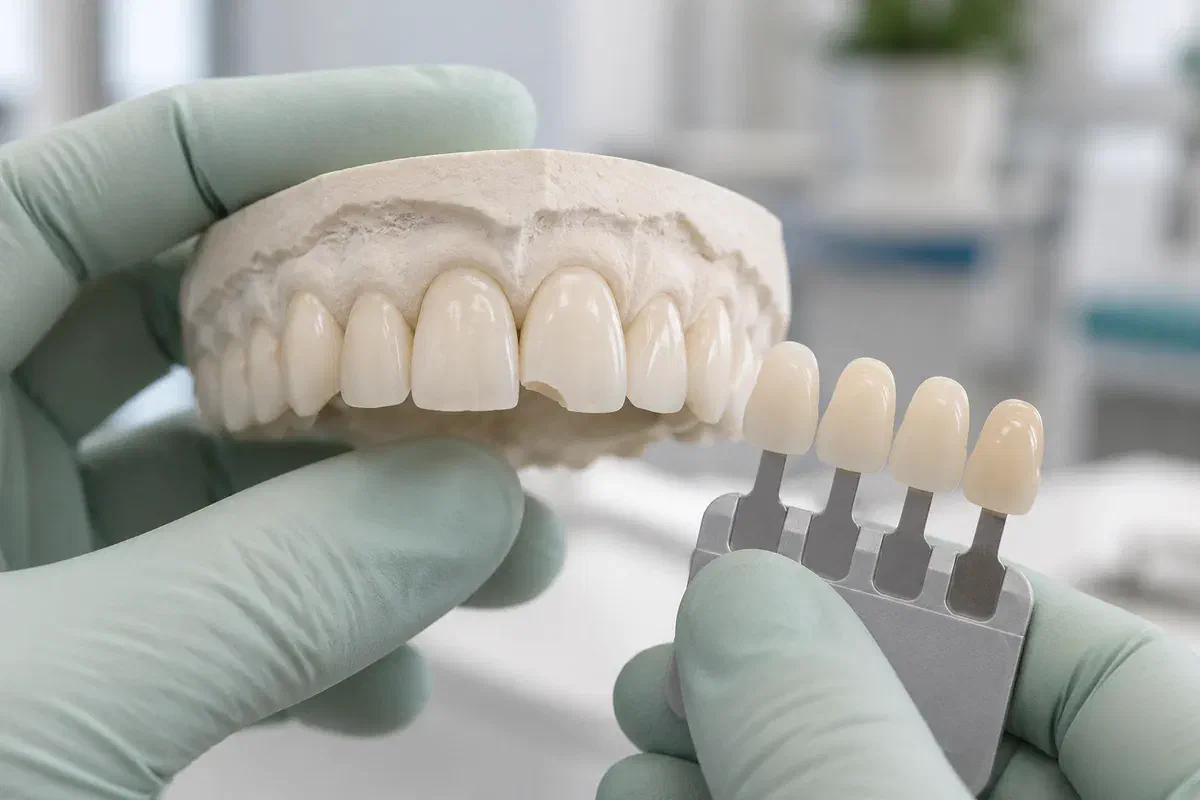
Ageing composite may simply be worn. It may also have let decay creep in at its margin, or be sitting on a tooth that has developed a crack. Examination tells a tired repair from a tooth that needs more.
When a piece of old bonding breaks away, the step it leaves can feel sharp. The dentist checks whether the break is in the composite or the tooth, and how deep it runs, before suggesting a fix.
Composite can darken or pick up stain while the natural tooth stays lighter, or the reverse after whitening. Describe what bothers you, and a photo of the repair when it was new can help.
Repeated failure in one spot often points to heavy contact on that corner, grinding, a habit or a repair that is carrying too much load. Rebuilding it the same way may repeat the result.
If this latest chip came from a fall or blow, tell us about any loosening, bleeding or change in your bite, as an injury may need a broader look than the repair alone.
Sometimes only the chipped part of an old repair needs attention, and new composite can be added or the surface reshaped and polished. In other cases, removing the old material and rebuilding the edge from sound tooth gives a better foundation.
Neither choice lasts forever. New composite can be shaded to suit your current teeth, but matching is never exact, and any bonded edge may stain, wear or break over time. A clear explanation should cover how long you might reasonably expect it to serve without any guarantee of permanence.
Patient information: NHS — chipped, broken or cracked teeth
Repairing or replacing a broken edge can stop it catching your tongue or lip, as long as the cause of the repeated chipping is looked at too.
If the old bonding has darkened, a new layer or full replacement can be shaded to suit your teeth as they are now, within the limits of the material.
Patching rather than replacing may save sound tooth. If full replacement or a larger restoration is advised, ask what the exam showed that rules out a simpler repair.
Touching up old bonding can often be done at one visit. Replacing it, or treating a tooth that has changed beneath it, may take more planning. Allow time to hear the findings and talk through your goals.
The dentist checks the old composite, its margins, the natural tooth around it and the gums. An X-ray may be suggested if decay or a deeper crack is suspected.
You will hear whether adding to the existing repair, replacing it or another option makes most sense, and what each means for appearance, strength and future upkeep.
Old material may be polished, added to or removed. New composite is chosen for shade and contour, hardened and finished to blend with the tooth.
How the edge meets the opposing teeth is checked carefully, since heavy contact may have caused the original failure. A review may be suggested to see how it holds up.
Care afterwards depends on whether the old bonding was patched or replaced. Ask about any short-term precautions, especially if the edge has a history of chipping.
Biting through tough crusts, opening bags or nibbling nails with that tooth adds to the strain on a repaired edge. Use your side teeth or a tool where you can.
Brush twice a day with fluoride toothpaste and clean between teeth each day. Skip harsh whitening pastes on bonding, and let us know if the surface loses its smoothness.
If grinding or contact sport has contributed to repeated chips, ask whether a fitted protective appliance would help. Report any new chip, colour change or bite shift.
When a repair you have had for years starts to fail, the questions shift from what to do to what will last. These answers can help.
Our Bronte Street practice can examine an old bonded edge that has chipped, stained or worn, along with the tooth beneath it. You will hear whether a patch, a full redo or another repair makes sense, with looks, comfort and function considered together.
If a tooth has moved, the chip followed a recent impact, or you have severe pain or swelling, please call first so we can discuss how quickly it should be seen.
