A sharp ledge your tongue keeps finding
Broken cusps often leave a ridge that rubs the tongue or cheek. Before smoothing, the dentist judges how much sound tooth remains, so that rounding the edge does not leave a cusp even weaker.


Not every chip is on show. A broken cusp on a back tooth can hide behind your cheek yet carry the heaviest chewing load. From Campbellville, have it assessed before deciding how to rebuild it.
Midway through a steak or a handful of nuts, something small and hard turns up in your mouth that is not food. Your tongue finds a sharp ledge at the back. Chips on molars and premolars are easy to miss in the mirror, yet these teeth do the grinding work, so a broken point, or cusp, deserves a proper look.
Front or back, a chip is missing tooth structure. Its size and depth, the position of the tooth and how the opposing teeth strike it all influence the repair. A slight rough spot on a back tooth may be simple to deal with, while a broken cusp beside a large filling, or one that leaves a sensitive inner layer exposed, often needs more.
From Campbellville, a visit to our Bronte Street practice starts with the chewing history: what you were eating, whether that tooth had a big filling and whether it now twinges on biting. Appearance matters less at the back for most people, but say if it matters to you; the tooth’s strength and health still come first.
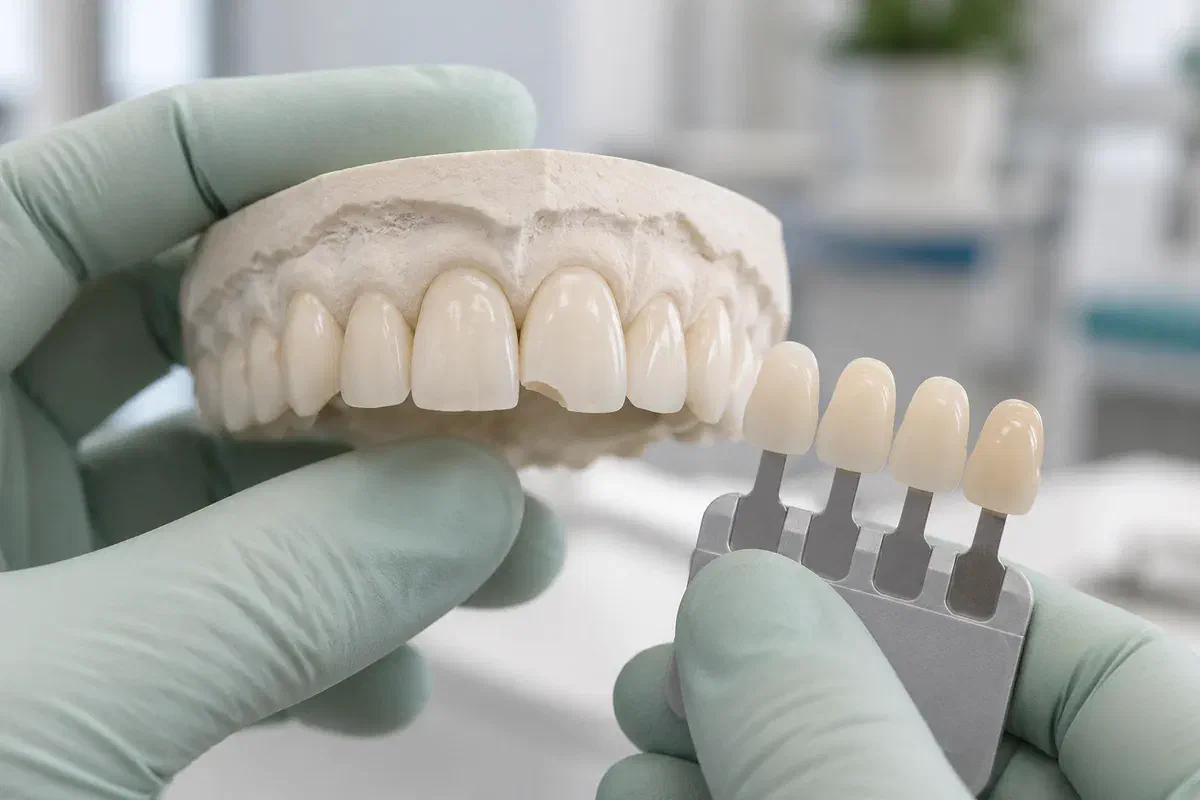
A chip on a back tooth can be a clean break in enamel, or it can uncover decay under an old filling, a crack running toward the root or a cusp weakened by years of chewing. The exam tells which.
Broken cusps often leave a ridge that rubs the tongue or cheek. Before smoothing, the dentist judges how much sound tooth remains, so that rounding the edge does not leave a cusp even weaker.
Premolars show in many smiles. If the chip is visible, say so, and a photo from before the break can help when the shape and shade of the repair are planned.
Repeated chipping around a large filling suggests the remaining walls of the tooth are under strain. Patching the same corner without reviewing the bite, grinding and filling size can lead to another break.
A twinge with cold that lingers, or soreness as you bite down or let go, can point to a crack rather than a simple chip. Tell us about it when you book.
With a small chip, it may be enough to smooth the ledge or rebuild a little lost structure with composite, provided there is solid enamel to bond to and the bite will not overload the spot. Back teeth chew hard, so that judgement carries more weight here.
Larger losses raise different questions. A cusp that broke beside a big filling may be better protected by a restoration that covers more of the tooth. Whatever is chosen, materials can wear, stain or chip with time, and the dentist should explain the trade-offs without promising a permanent fix.
Patient information: NHS — chipped, broken or cracked teeth
Dealing with the sharp edge can end the rubbing, as long as the reason the cusp broke, such as a large filling or grinding, is understood.
A well-planned repair aims to let you use that side normally again. You can discuss what to expect and whether any foods are best approached with care.
An exam helps match the repair to the damage. If wider coverage is suggested, ask what makes a simple bonded patch unlikely to hold.
Some back-tooth chips are repaired in one visit; others need more planning once the dentist sees how much tooth remains. Leave time to talk about the findings and the trade-offs.
The broken area, the remaining walls, any old filling and the gums are examined. Bite tests, cold tests or an X-ray may help reveal cracks or decay beneath the chip.
Smoothing, bonding, replacing a filling or covering more of the tooth may be discussed. Ask how much structure each preserves and how well it is likely to handle chewing.
A small chip may be refined or rebuilt with composite, shaped to fit your bite. A larger restoration may need more than one appointment, with temporary protection in between.
How the repaired tooth meets the opposing one is checked carefully, since back teeth take strong forces. A review may be suggested if symptoms suggested a crack.
Aftercare depends on the type and size of the repair. Ask about foods to avoid in the short term and how to keep the area clean, especially if a temporary is in place.
Ice, hard candy, unpopped kernels and bones can break natural cusps and repairs alike. Cutting tough foods into smaller pieces spreads the load more kindly.
Brush with fluoride toothpaste and clean between the back teeth each day. If floss snags or shreds at the repair, tell us; a rough contact can trap food.
Report sharp pain on biting, a tooth that feels high or another chip. If you clench or grind, ask whether a night guard would help protect your back teeth.
Chips you cannot see raise their own questions about strength and chewing. These answers may help.
Come to our Bronte Street practice to discuss a sharp ledge, a broken cusp or a filling that keeps chipping. We will examine and test the tooth, explain repair choices and plan for strength and comfort before anything is decided.
Please call about severe pain, swelling, a recent blow or a tooth that feels loose, so the team can talk about how urgently it should be seen.
