A sharp spot rubbing your tongue
Wax can help for now. At the visit, the dentist checks how deep the chip runs and how the edge would look after smoothing, so that a quick fix does not remove more tooth than it should.


There are often a few days between a chip and the appointment that fixes it. From Erin or Hillsburgh, here is how to protect the tooth meanwhile, and what the visit will check before repairing it.
Unless the tooth hurts or the chip followed an injury, a small break can usually wait for a booked appointment. The days in between still matter. Chew on the other side, choose softer foods, and if a sharp corner is scraping your tongue, cover it with dental wax from a pharmacy. Resist the urge to file it.
When you do come in, the plan depends on what the chip involves. Its size, how deep it goes, which tooth it affects and how your bite meets it all count. A faint roughness in the enamel is not handled like a missing corner, and a chip that has uncovered a sensitive layer may need to be seen sooner than you planned.
For a household in Erin juggling farm work, school runs or commuting, it often helps to fold the assessment and, where it suits, the repair into a single trip to our Bronte Street practice. Tell us what happened and how the tooth feels now. Appearance is part of the discussion, but health and function steer it.
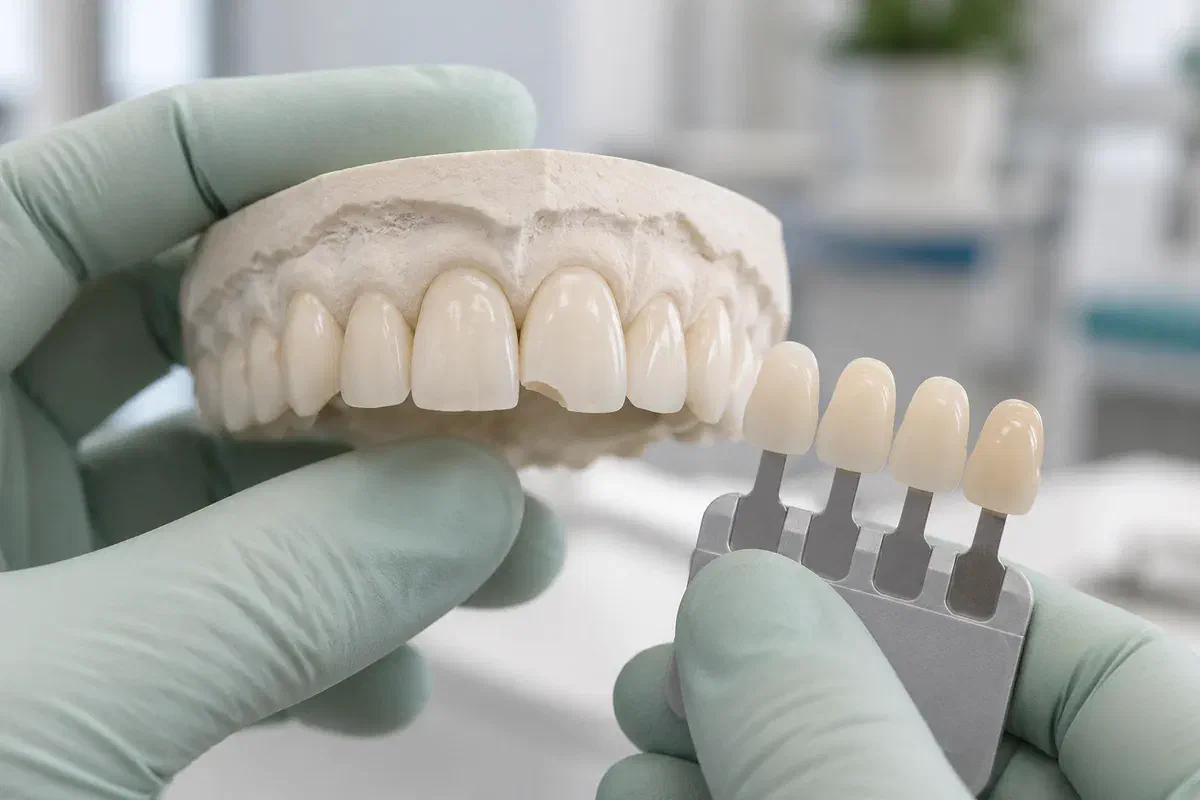
Most chips stay in the enamel. A few uncover decay, run deeper as a crack or come from an injury that affected the tooth’s nerve or gum. Your symptoms while waiting help show which.
Wax can help for now. At the visit, the dentist checks how deep the chip runs and how the edge would look after smoothing, so that a quick fix does not remove more tooth than it should.
Losing a front corner can leave the tooth a touch shorter or lopsided next to its neighbour. Describe what changed, and an older photo of your smile can help the dentist plan the outline of any repair.
Repeated chipping points to something stressing that edge: the way your teeth close, night grinding, a habit or an older filling. Repairing it without looking for the cause may lead to another break.
Call rather than waiting if, after a knock, the tooth feels loose, bleeds at the gum, darkens or makes your bite feel different. Those signs need prompt assessment.
With a modest chip, care may mean rounding off a sharp edge or replacing a small missing piece. Composite bonding is a common option when there is sound enamel for it to grip and your bite leaves that spot a reasonable workload.
Every material has its limits. Tooth-coloured composite can be shaded closely, though not perfectly, and may dull, stain or chip in time. A clear explanation should cover what is realistic for your tooth, without any promise that the repair will be invisible or last indefinitely.
Patient information: NHS — chipped, broken or cracked teeth
Once the rough spot is dealt with, the tongue and cheek can stop catching on it, as long as the reason for the chip has also been addressed.
You can discuss how much to rebuild and how it should look beside the neighbouring teeth, keeping the natural line of your smile.
An assessment helps prevent a minor chip from being over-treated. If more extensive work is suggested, ask why the simpler repair would fall short.
A simple chip can often be assessed and repaired in a single visit, though the exam makes the final call. Allow time to talk through the findings and your hopes for the tooth.
The dentist examines the chip, the tooth around it and the nearby gums. Your account of the past few days, including any sensitivity, helps decide whether an X-ray is needed.
You may hear about polishing, putting a saved fragment back, composite bonding or something more involved. It is fair to ask what each would alter and how well it tends to last.
Depending on the plan, the rough spot is softened or the missing area rebuilt with composite in a matching shade, then hardened, shaped and polished.
Your bite and the new surface are checked. If the chip came from an injury, or symptoms appeared while waiting, a follow-up may be recommended.
A polished edge needs less caution than a rebuilt corner, so advice varies. Ask whether anything should be avoided for the first day, and carry on with the cleaning habits the team suggested.
Biting baler twine, cracking nuts or opening packets with your teeth puts sharp force on one spot. Keep a small knife or scissors handy, and think about what caused the original chip.
Use fluoride toothpaste twice a day and clean between teeth daily. If floss snags or the repair feels rough, tell us rather than trying to smooth it yourself.
Let us know about new chips or a change in your bite. Clench at night or play hockey in winter? A fitted guard may be worth discussing.
The days before a visit bring their own questions. These answers cover home care, warning signs and what the repair involves.
Whenever the wait is over, our Bronte Street practice can look at the jagged edge, the lost corner or the tooth that never seems to stay whole. You will hear what the exam shows and which repairs fit, with shape, comfort and function weighed side by side.
Please call about a recent impact, a tooth that has moved, severe pain or swelling, so the team can help you decide how soon to come in.
