A rough edge each morning
Small irregular edges can feel prominent. The dentist checks their depth and shape before deciding whether careful smoothing will help or would just thin an edge that is already under stress.


Chips that appear without any obvious accident often trace back to clenching or grinding. From anywhere in Halton Hills, book an exam that looks for the cause before the edge is rebuilt.
Some people cannot remember chipping anything. They wake up, run their tongue along their teeth and find a fresh rough spot, or they notice a lower front tooth looking slightly jagged in the mirror. Clenching and grinding during sleep can wear and flake small pieces from tooth edges with no single dramatic moment to blame.
Regardless of cause, a chip is missing tooth surface. What to do about it depends on how much broke, how deep the break goes, which tooth it is and how your teeth meet. A shallow flake on a worn edge needs a different response from a lost corner, and both differ from a chip that leaves a sensitive inner layer exposed.
Halton Hills covers Georgetown, Acton, Glen Williams and the hamlets between, and from any of them our Bronte Street practice can look at the chip and the pattern behind it. Mention jaw tiredness in the morning, headaches or a partner hearing you grind. Your goals for appearance matter, and the tooth’s health and bite set the plan.
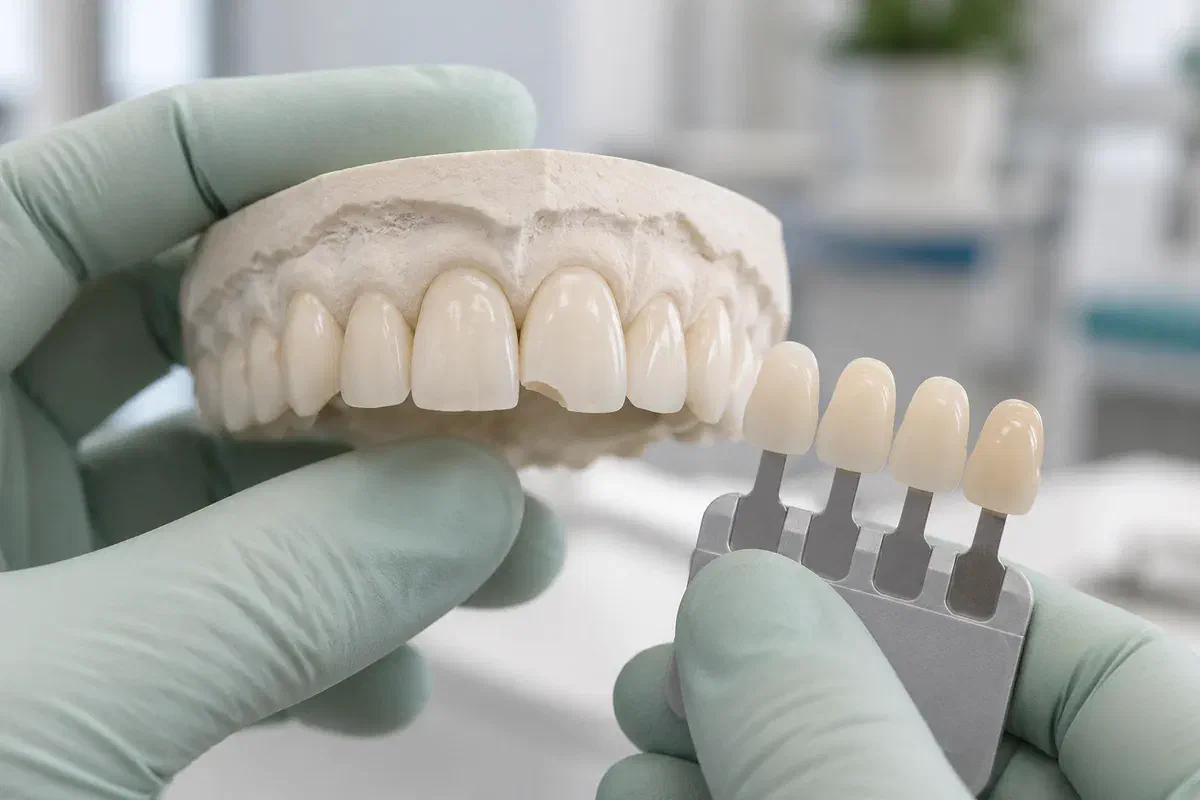
A chip can be a simple enamel defect, or it can signal heavy biting forces, decay at an old filling or a crack that runs deeper. Examination helps identify which, so the repair is not set up to fail.
Small irregular edges can feel prominent. The dentist checks their depth and shape before deciding whether careful smoothing will help or would just thin an edge that is already under stress.
Grinding can shorten front teeth gradually and then chip a corner. Describe what you have seen change; holiday pictures from a few years back often reveal how much length has gone.
When several edges chip, or one keeps breaking, the dentist looks at your bite, clenching habits, wear and earlier repairs. Bonding each chip without addressing the force behind them may simply lead to more chips.
If a chip did follow a knock or fall, mention any loosening, bleeding or change in your bite. Injury assessment may need to go beyond the chip itself.
For a limited chip, care may involve smoothing a sharp edge or adding back a little missing structure. Composite bonding is one possibility when the surface allows it and the forces on that tooth are manageable, which is exactly why the grinding question matters.
Repairs on teeth that take heavy night-time forces have particular limits. Shade, texture and strength all need consideration, and composite under constant clenching may chip or wear sooner. The dentist should explain what is realistic and whether protection would help, without promising a perfect or permanent repair.
Patient information: NHS — chipped, broken or cracked teeth
Dealing with jagged spots can stop the tongue constantly finding them, provided the clenching or other cause is also addressed.
You can discuss how much edge to rebuild. Adding too much to a tooth under heavy force may be risky, so changes are balanced against your bite.
Assessment can stop minor chips being over-treated while still tackling the cause. If a larger restoration is recommended, ask which findings rule out a smaller repair.
A small chip can sometimes be repaired at one visit, but when grinding may be involved, the exam often covers the whole bite. Allow time to discuss findings and what you would like the teeth to look like.
The chipped area, the remaining tooth, the gums and signs of wear across other teeth are all examined. Your symptoms help decide whether X-rays or other tests are needed.
Smoothing, bonding or another approach may be suggested, along with whether a night guard should come first or alongside. Ask what each would change and how long it may last.
A suitable rough spot may be refined, or the missing part rebuilt. Composite is selected for shade and shape, then hardened and polished to blend with the tooth.
Before you leave, we confirm how the repaired edge meets the opposing teeth, including side-to-side movements. Follow-up may be suggested to see how the repair copes with your bite.
Polished and bonded edges each come with their own short list of dos and don’ts. Ask about precautions in the first day or two and about protecting the edge while you sleep.
If clenching or grinding is suspected, ask whether a custom protective appliance should be part of your care. It can help shield natural edges and repairs from heavy night-time contact.
Brush with a fluoride toothpaste and clean between your teeth each day. If floss shreds near the repair or the edge feels rough, mention it rather than using an abrasive product at home.
Many people clench while concentrating, driving or lifting. Try to notice when your teeth are pressed together, and tell us about any new chips or changes in your bite.
When chips appear without an accident, the questions often turn to cause and prevention. These answers can help you prepare for your visit from Halton Hills.
Chips that turn up with no story behind them are worth a proper look. At our Bronte Street practice we will check the edges and the wear around them, then talk you through repair and protection that suit how your teeth actually meet.
Call promptly about a recent impact, a tooth that has moved, severe pain or swelling, so the team can discuss how urgently you should be seen.
